


Most parents notice something before they have words for it. A change in energy. A withdrawal that feels different from normal moodiness. A physical complaint that keeps coming back without a clear cause.
Children don’t always have the language to explain what they’re going through — and even when they do, they don’t always share it. That’s why knowing what to look for matters more than waiting for a child to ask for help.
The seven signs below aren’t a diagnosis checklist. They’re patterns worth paying attention to — especially when they persist for two weeks or more, show up across multiple settings, and start to affect daily life at home, school, or with friends.
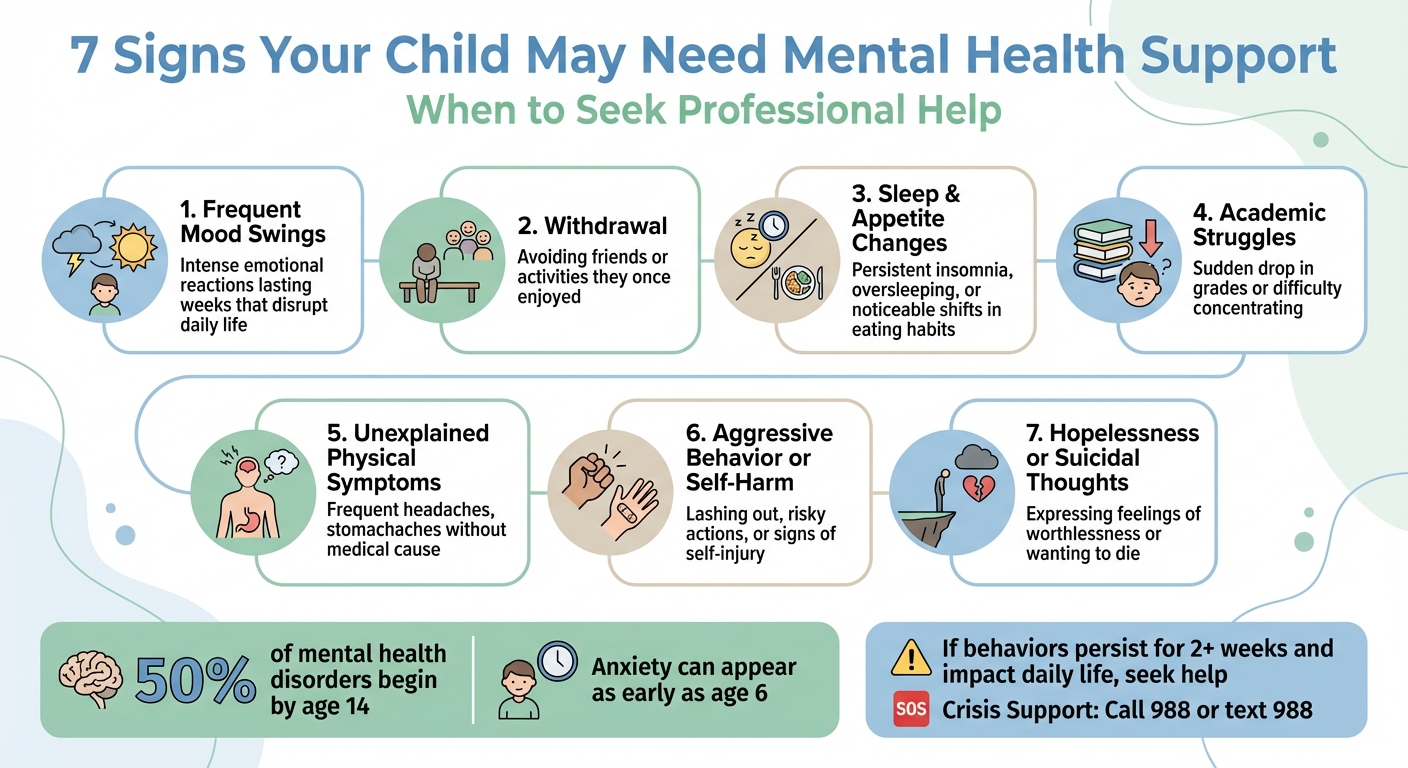
The infographic below summarizes all seven signs at a glance — including when to seek help and where to turn in a crisis:
For a practical guide on how to recognize these signs in everyday situations — and how to start the conversation with your child — the video below offers useful context for parents and caregivers:
How to Identify When Your Kid is Having Mental Health Issues
1. Frequent Mood Swings and Difficulty Managing Emotions
Every child has their off days, but when mood swings become a regular disruption to daily life, it might be more than just a phase. If your child takes a long time – sometimes minutes or even hours – to recover from being upset, it could point to something deeper than typical childhood challenges.
Take a closer look at how often these mood swings occur, how long they last, and how much they interfere with your child’s life. For example, a tantrum or two each week that resolves quickly is part of normal development. But if your child frequently has intense emotional reactions, struggles to engage in school or family activities, or faces difficulties with friends due to their moods, it’s worth paying attention. When these patterns show up in various settings, it’s a sign that more focused observation may be needed.
“The warning signs for psychiatric illness are often differentiated from behavior that’s not problematic by how long the behavior lasts, whether it impacts a child’s functioning, or whether it affects other people.” – Child Mind Institute
Be mindful of extreme energy shifts, sadness that lingers for two weeks or more, or angry outbursts that seem disproportionate to the situation. Sometimes, these mood changes follow a cycle or last for months. You might also notice sudden, overwhelming fear that doesn’t seem to have a clear cause, often accompanied by physical symptoms like a racing heart or quickened breathing.
It’s helpful to gather input from teachers, coaches, or extended family members when these behaviors occur in different environments – not just at home. When issues arise across multiple settings, like school, social interactions, and family life, they are more likely to suggest an underlying mental health concern than if they were limited to one area.
2. Avoiding Friends and Activities They Once Enjoyed
When a child who used to love soccer suddenly refuses to play or a once-social kid starts eating lunch alone, it’s easy to brush it off as “just a phase.” But persistent withdrawal can point to something deeper.
The difference between normal changes and a potential mental health issue often lies in what replaces those old interests. It’s natural for kids to outgrow hobbies, but completely pulling away from activities and social interactions may signal depression or anxiety. Mental health advocate Emmie Pombo, writer and mental health advocate, explains:
“Things like conflict and distance between peers, spending more time isolated, and a general disinterest in things they loved are signs that there could be a deeper struggle going on”.
Depression, for instance, can sap a child’s interest and leave them feeling empty. Social anxiety might make them avoid group settings out of fear of judgment or criticism. In some cases, withdrawal may even be a way to hide other challenges, like learning difficulties or sensory issues, which can make busy environments feel overwhelming.
Pay attention if isolation lasts for two weeks or more. Notice if they stop sharing details about their day, friends, or feelings as they used to. Look for patterns – does this behavior show up at home, school, and during social activities?. Often, social withdrawal comes hand-in-hand with other changes that deserve attention.
Physical signs can also offer clues. For example, a child wearing long sleeves or pants in hot weather might be hiding signs of self-harm. If these changes persist, Pombo suggests having an open conversation. Ask how they’re feeling and what kind of support they might need.
3. Changes in Sleep Habits and Appetite
When your child starts experiencing noticeable sleep issues – like struggling to fall asleep, waking up frequently, or sleeping excessively – it could indicate more than just a rough patch. Major shifts in sleep patterns, whether it’s insomnia or oversleeping, are often linked to underlying issues such as anxiety or depression. These changes, often referred to as cross-cutting symptoms, should be closely monitored.
Similarly, changes in eating habits can also be a red flag. A sudden shift in appetite – whether it’s skipping meals, overeating, or eating significantly less – can point to emotional struggles. Appetite fluctuations often reflect feelings of sadness or hopelessness. More alarming behaviors, such as refusing to eat, intentionally vomiting, or using laxatives to lose weight, may signal the presence of an eating disorder.
The key factors to focus on are duration and impact. According to the Child Mind Institute, the difference between typical behavior and a warning sign of a psychiatric condition lies in how long the behavior persists and how much it affects daily life:
“The warning signs for psychiatric illness are often differentiated from behavior that’s not problematic by how long the behavior lasts, whether it impacts a child’s functioning, or whether it affects other people”.
If disruptions in sleep or appetite last for two weeks or more, it’s time to pay closer attention. Look for additional signs like irritability, difficulty concentrating at school, restlessness, or withdrawing from friends and family.
For guidance, consider using the free screening tool available at MHAScreening.org to determine whether consulting a pediatrician is necessary. Acting early can make a big difference. These physical changes often go hand in hand with the emotional symptoms discussed earlier.
4. Falling Grades and Trouble Focusing
A child’s academic performance can often serve as a window into their mental well-being. If you notice a sudden decline in grades, it might be more than just a rough patch – it could signal underlying mental health challenges. Struggles with concentration, memory, or clear thinking can disrupt learning and point to deeper emotional concerns.
The distinction between typical academic hurdles and those tied to mental health lies in how frequent and intense the symptoms are, as well as their overall impact. Persistent difficulty focusing for extended periods may indicate something more serious. Dr. Ariana Hoet, Clinical Director of The Kids Mental Health Foundation, explains:
“By tracking the behavior, you can figure out if it’s typical developmental ups and downs or something you should be more concerned about.”
In addition to trouble focusing, watch for other signs like irritability, restlessness, or frequent angry outbursts in the classroom. A shift in how your child talks about their day can also be a clue. As Emmie Pombo, a Mental Health Advocate at NAMI, points out:
“If you see a very noticeable lack of or issue with communication… an example of this is if your child seems to be sharing less and less with you about school, their friends, their feelings, etc.”
If these concerns persist for weeks and begin to disrupt both school and home life, it’s time to act. Start by talking with your child’s teacher to see if they’ve observed similar patterns in the classroom. Sharing these insights with your child’s pediatrician can help initiate further evaluation and support.
Taking action early is essential. The CDC emphasizes that, “Without early diagnosis and treatment, children with mental health conditions can have problems at home, in school, and in forming friendships.” Work closely with teachers, school staff, and mental health professionals to address these challenges head-on.
5. Unexplained Physical Symptoms
If your child frequently complains of headaches or stomachaches, your first thought might be to look for a physical cause. But when medical tests come back normal, it’s worth considering whether their mental health might be at play. Emotional distress often manifests physically, as the nervous system processes trauma and stress over time. This connection between emotional and physical health is especially common in children.
Take the gut, for example. It’s highly sensitive to emotional states, which is why anxiety can lead to stomach pain, nausea, or even a loss of appetite. Chronic stress can also show up in other ways, like muscle tension, jaw clenching, back pain, or a racing heart. These physical symptoms are often your child’s way of signaling they need help.
Pay attention to physical complaints that linger for two weeks or more without a clear medical explanation. Symptoms such as headaches, dizziness, chest tightness, shortness of breath, or persistent fatigue should not be ignored.
Just as you would take mood or behavior changes seriously, persistent physical symptoms deserve the same level of attention. What matters most is whether these issues are interfering with your child’s daily life. If they are, it’s time to consult your pediatrician. Start by ruling out any medical causes. If everything checks out, a mental health evaluation might provide the answers you’re looking for.
sbb-itb-23f89d4
6. Aggressive Behavior or Self-Harm
When a child starts slamming doors, lashing out over small issues, or getting into frequent fights, it might be a sign that they’re struggling with emotions they don’t know how to handle. Similarly, if you notice unexplained cuts, burns, or bruises – especially on areas like the arms, legs, or stomach – or a sudden preference for wearing long sleeves even in warm weather, these could be indicators of self-harm. These behaviors deserve attention, especially if they persist or escalate.
Research published in PMC describes how adolescents who self-harm often seek relief from a “terrible state of mind” — the physical pain temporarily releases unbearable feelings and inner tension that feel impossible to manage any other way.
Keep an eye out for long periods spent alone behind locked doors, possession of sharp objects, vague explanations for injuries, and risky behaviors like substance use or disordered eating.
To better understand what’s happening, consider the frequency, duration, and impact of these behaviors. Ask yourself three key questions: How often does the behavior occur? How long does it last? And how much does it interfere with daily life – like school, family time, or friendships? If these behaviors are frequent, ongoing, and disruptive, it might be time to reach out for professional support. It’s also a good idea to check in with teachers or coaches to see if the same patterns are showing up in other environments.
If your child talks about suicide, shows an unusual focus on death, or starts giving away personal belongings, call the National Suicide & Crisis Lifeline at 988 right away.
7. Talking About Feeling Hopeless or Wanting to Die
When a child expresses feelings of hopelessness, talks about wanting to die, or mentions being a burden, these statements should never be ignored. Such declarations, especially when combined with noticeable changes in behavior, are critical signals of emotional distress. For instance, if your child says something like, “I wish I was dead”, or suggests, “Everyone would be better off without me”, these words – whether spoken, drawn, or acted out during play – need your full attention.
These verbal cues often accompany other warning signs, such as giving away cherished belongings, researching ways to harm themselves, or making what seem like final arrangements. Even a sudden and unexplained shift to a calm or peaceful demeanor after a period of distress can be a red flag, as it may indicate they’ve made a decision to act on suicidal thoughts.
If you suspect your child is having suicidal thoughts, ask them directly. As the Child Mind Institute explains:
“If you are wondering if your child is suicidal, experts say that asking them is the best way to find out”.
This straightforward approach not only shows your concern but could also save their life.
If there’s an immediate risk, don’t hesitate to act. Call 911 or text 988 for help. Remove any access to firearms, medications, or other potentially lethal items. Contact your child’s pediatrician or a mental health professional as soon as possible.
The American Association of Suicidology highlights the importance of recognizing hopelessness as a serious warning sign:
“Feelings of hopelessness are a major warning sign of potential suicide risk. Such feelings can take many forms and are often associated with a sense of despair, futility, or a belief that things will never get better”.
Whether these thoughts are expressed passively or through active planning, they require immediate professional attention. Identifying and addressing these verbal signals is an essential step in supporting your child’s mental health and safety.
When to Seek Professional Support
Knowing when to seek professional help for your child comes down to three key factors: frequency, duration, and impact. While occasional tantrums or mood swings are a normal part of growing up, certain patterns should raise concern. If troubling behaviors occur most days, last for hours instead of minutes, or persist for four weeks or more without improvement, it’s time to consider professional support .
These behaviors can directly affect your child’s ability to function day-to-day. Pay attention to whether they disrupt school, family life, or social activities. When such disruptions become consistent, it’s a strong indicator that professional intervention may be necessary . Dr. Ariana Hoet from the Kids Mental Health Foundation highlights the importance of noticing patterns across different settings:
“If the concerning behavior is happening in multiple places and is ongoing (lasting for several weeks), this could be a sign that your concerns go beyond typical developmental changes”.
Early action can make a big difference. Mental health advocate Emmie Pombo, writer and mental health advocate, via NAMI Blog underscores this point:
“Getting them help sooner rather than later could be the difference between a healthy and unhealthy childhood, and even possibly into adulthood”.
Here’s a sobering fact: 50% of mental health disorders begin by age 14, with anxiety often appearing as early as age 6. Addressing these issues early not only reduces the need for more intensive treatments later but also helps prevent them from becoming deeply rooted.
To get started, consider reaching out to your child’s pediatrician. They can perform initial screenings and refer you to specialists like child psychologists or psychiatrists . You can also explore free, anonymous online screening tools to gather preliminary insights before your appointment. Keeping a behavior tracker – documenting the frequency, duration, and triggers of concerning behaviors – can offer valuable information to professionals assessing your child’s needs.
In urgent situations, such as if your child gives away possessions, fixates on death, or threatens self-harm, act immediately. Call 911 or text 988 for emergency assistance .
Next Steps for Parents and Caregivers
Now that you’ve identified the warning signs and understand the importance of professional support, it’s time to take action. Treat mental health with the same urgency as you would a physical injury – early intervention can make all the difference.
Start by fostering an environment where open communication is a regular part of family life. Make emotional check-ins a routine. When these discussions feel natural, children are more likely to share their struggles before they escalate.
The National Alliance on Mental Illness (NAMI) puts it perfectly:
“While you may not understand what is upsetting your child, making your home a place where your child can share openly without fear can suggest you’re eager to hear about their life in a supportive, non-judgmental way.”
Listening without judgment and validating their feelings is key. Mental health advocate Emmie Pombo highlights the importance of collaboration in this process:
“The first step to getting help is having them want it themselves as much as you want it for them, too.”
Ask your child how they’d like to be supported and involve them in decisions about their care. This not only builds trust but also encourages them to take an active role in their treatment.
Beyond these daily conversations, practical steps include reaching out to professionals. Your child’s pediatrician can provide evaluations and refer you to specialists. School counselors are another important resource, offering insights into how your child is coping academically and socially. Additionally, free online screening tools like MHAScreening.org can help pinpoint specific concerns to discuss with healthcare providers.
For a more comprehensive approach, consider services like Modyfi Health, which offers virtual psychiatric evaluations, therapy, and personalized treatment plans designed to address your child’s unique needs.
You Know Your Child Best. We’re Here to Help You Figure Out the Next Step.
Noticing the signs is the hardest part — and you’ve already done that. Whether you’re looking for a formal evaluation, a second opinion, or just guidance on where to start, Modyfi’s network of providers brings psychiatry, therapy, nutrition, and exercise together to support both children and the families caring for them.
👉 Explore Providers to Book an Appointment and Start Your Care Plan
(Note: Modyfi proudly accepts most major commercial insurance plans. We do not accept Medicare or Medicaid.)
Conclusion
Recognizing these signs is an act of care — and the earlier it happens, the more options are available. Mood swings, withdrawal, sleep changes, physical complaints, academic struggles, aggressive behavior, and expressions of hopelessness don’t always mean something is seriously wrong. But when they persist, intensify, and start affecting daily life across multiple settings, they deserve a closer look.
The most important thing a parent or caregiver can do is stay curious rather than reactive — and reach out for support before things reach a crisis point. A pediatrician, school counselor, or mental health professional can help make sense of what you’re seeing and what to do next.
FAQs
How can I tell if my child’s mood swings are normal or a sign of a mental health issue?
It’s not always easy to tell the difference between normal mood swings and potential mental health concerns in children, but there are some key distinctions that can help. Normal mood swings tend to be short-lived, often tied to specific events, and usually resolve within a few hours or a day. On the other hand, mental health issues are characterized by emotional changes that are more intense, long-lasting, and disruptive – sometimes persisting for weeks or longer.
Some warning signs to look out for include significant changes in behavior, such as losing interest in activities they used to enjoy, having trouble at school, or being unable to calm down even with support. Persistent feelings of sadness, irritability, or hopelessness that start to interfere with their daily life may also signal the need for professional help. If these patterns continue or get worse, reaching out to a mental health professional is an important step.
What should I do if my child seems to be withdrawing socially?
If your child seems to be pulling away socially – like avoiding friends, skipping favorite activities, or spending too much time alone – it’s important to pay close attention. Take note of any patterns or noticeable changes in their behavior that could hint at underlying issues.
Start by having a gentle, open conversation. Create an environment where they feel safe to express themselves without fear of judgment. Let them know you’re there to listen and support them, no matter what. If their withdrawal continues or seems to get worse, it might be time to consult a mental health professional who works with children and teens. Addressing these challenges early can help your child work through their emotions and feel more connected again.
How do I know if my child needs professional mental health support?
It’s crucial to seek professional guidance if your child consistently displays changes in behavior, emotions, or physical health that disrupt their daily life. Some warning signs include frequent mood swings, pulling away from friends or activities they once loved, difficulty sleeping, or noticeable shifts in appetite. If these patterns occur almost every day, persist over time, or grow more intense, it may be a signal that they need support.
You should also consider contacting a mental health professional if your child shows prolonged sadness, struggles to focus, expresses intense anger, or exhibits any signs of self-harm. Addressing these concerns early can play a key role in helping your child navigate their mental health and succeed at home, in school, and with friends. Trust your gut – if something feels off, don’t hesitate to reach out to an expert.
At what age can a child be diagnosed with a mental health condition?
Earlier than most people expect. Mental health conditions can be diagnosed in very young children — including toddlers and preschoolers — when symptoms are persistent, significantly impairing, and consistent across different settings and caregivers.
Anxiety disorders can appear as early as age 6, and some, like separation anxiety, even earlier. ADHD is commonly diagnosed between ages 4 and 7. Depression, while less common in young children, can occur in children as young as 3 when symptoms meet diagnostic criteria. Autism spectrum disorder is typically identified between ages 2 and 3, sometimes earlier with developmental screening.
The key factor at any age is whether the symptoms cause meaningful impairment — affecting a child’s ability to learn, make friends, participate in family life, or feel safe and regulated. A child’s age doesn’t determine whether a diagnosis is appropriate; the functional impact does. If you’re concerned about a young child’s behavior or development, a pediatric evaluation is the right starting point.
How do I talk to my child about mental health without scaring them?
The most important thing is keeping the conversation simple, honest, and age-appropriate — and starting it before there’s a crisis, not in the middle of one.
For younger children, using concrete language works best. Instead of “mental health,” you might talk about feelings, worries, or “big emotions” that are hard to manage. Normalize the conversation by connecting it to physical health: “Just like we go to the doctor when our body hurts, sometimes we talk to someone when our feelings are really hard.”
For older children and teens, directness tends to work better than dancing around the topic. Ask open questions — “I’ve noticed you seem different lately. How are you feeling?” — and then actually listen without immediately problem-solving or minimizing. Teens in particular are sensitive to feeling dismissed or lectured.
A few things that help regardless of age: pick a calm moment rather than a tense one, let the child set the pace of the conversation, and make it clear that having hard feelings isn’t something to be ashamed of. You don’t need to have all the answers — saying “I’m not sure, but we’ll figure it out together” is enough.
What is the difference between a child psychologist and a child psychiatrist?
Both specialize in children’s mental health, but they have different training and different roles in care.
A child psychologist holds a doctoral degree (PhD or PsyD) in psychology. Their training focuses primarily on assessment and psychotherapy — talk-based treatments like CBT, play therapy, or family therapy. Psychologists conduct formal evaluations, diagnose conditions, and provide ongoing therapeutic support. In most states, they cannot prescribe medication.
A child psychiatrist is a medical doctor (MD or DO) who completed medical school followed by residency training in psychiatry and then a fellowship in child and adolescent psychiatry. Because of their medical background, psychiatrists can prescribe and manage medication, conduct psychiatric evaluations, and provide therapy — though in practice, many focus primarily on medication management and coordinate with therapists for the psychotherapy component.
In terms of who to see first: if you’re primarily concerned about behavior, emotions, or relationships and want a thorough evaluation or therapy, a child psychologist is often a good starting point. If symptoms are severe, if medication might be part of the picture, or if a previous therapist has recommended a psychiatric evaluation, a child psychiatrist is the right next step. Many families work with both as part of an integrated care plan.