
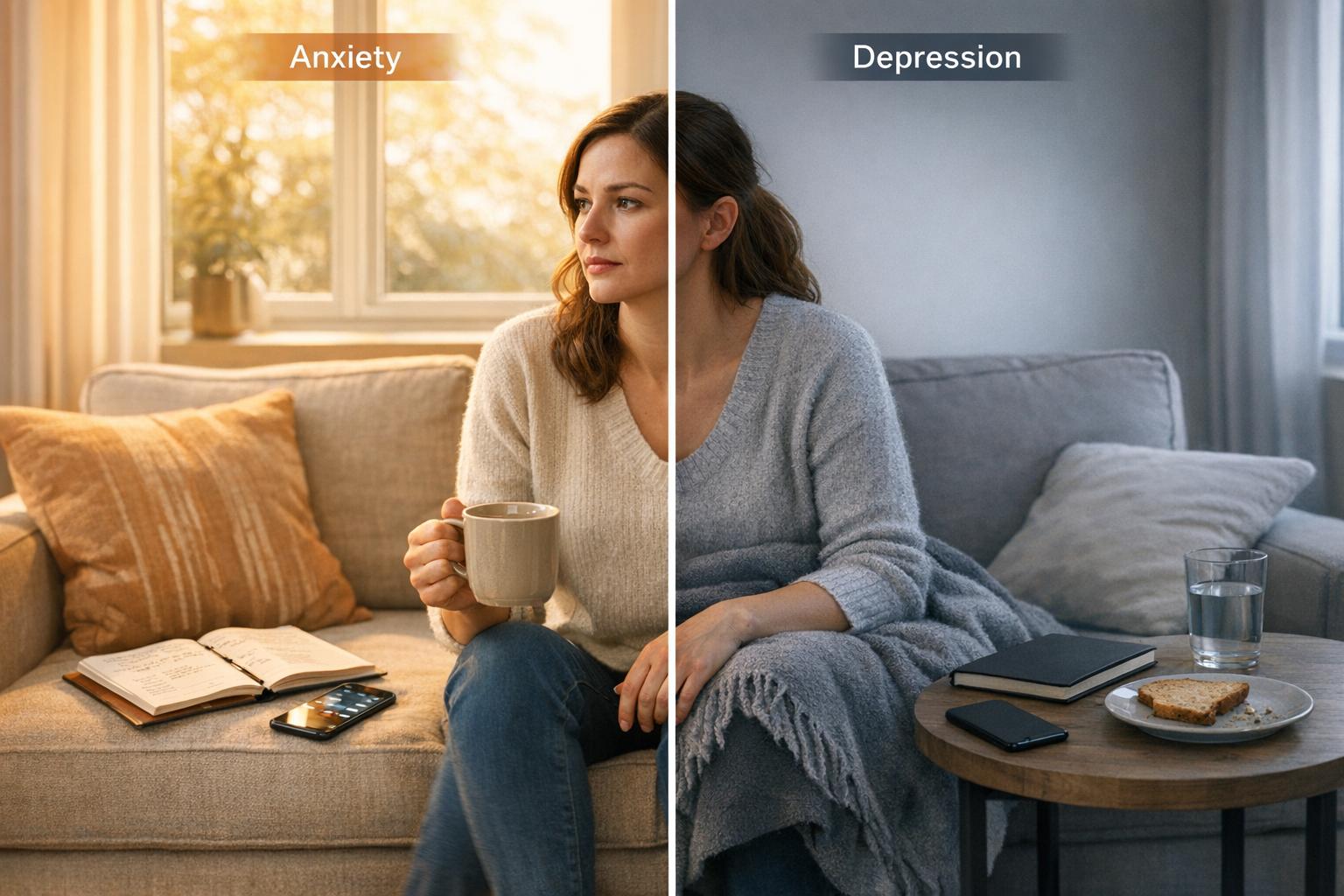

Anxiety and depression are two of the most common mental health conditions in the U.S., affecting millions of adults. While they often overlap – nearly 60% of people with one also experience the other – they are distinct in their symptoms and effects:
- Anxiety: Focuses on excessive worry about the future, often with physical symptoms like a racing heart or muscle tension.
- Depression: Centers on persistent sadness, hopelessness, and a loss of interest in activities, with symptoms like fatigue and slowed thinking.
Understanding these differences is key to identifying the right treatment, which may include therapy, medication, or lifestyle adjustments. If symptoms disrupt daily life or persist for weeks, seeking professional help is essential.
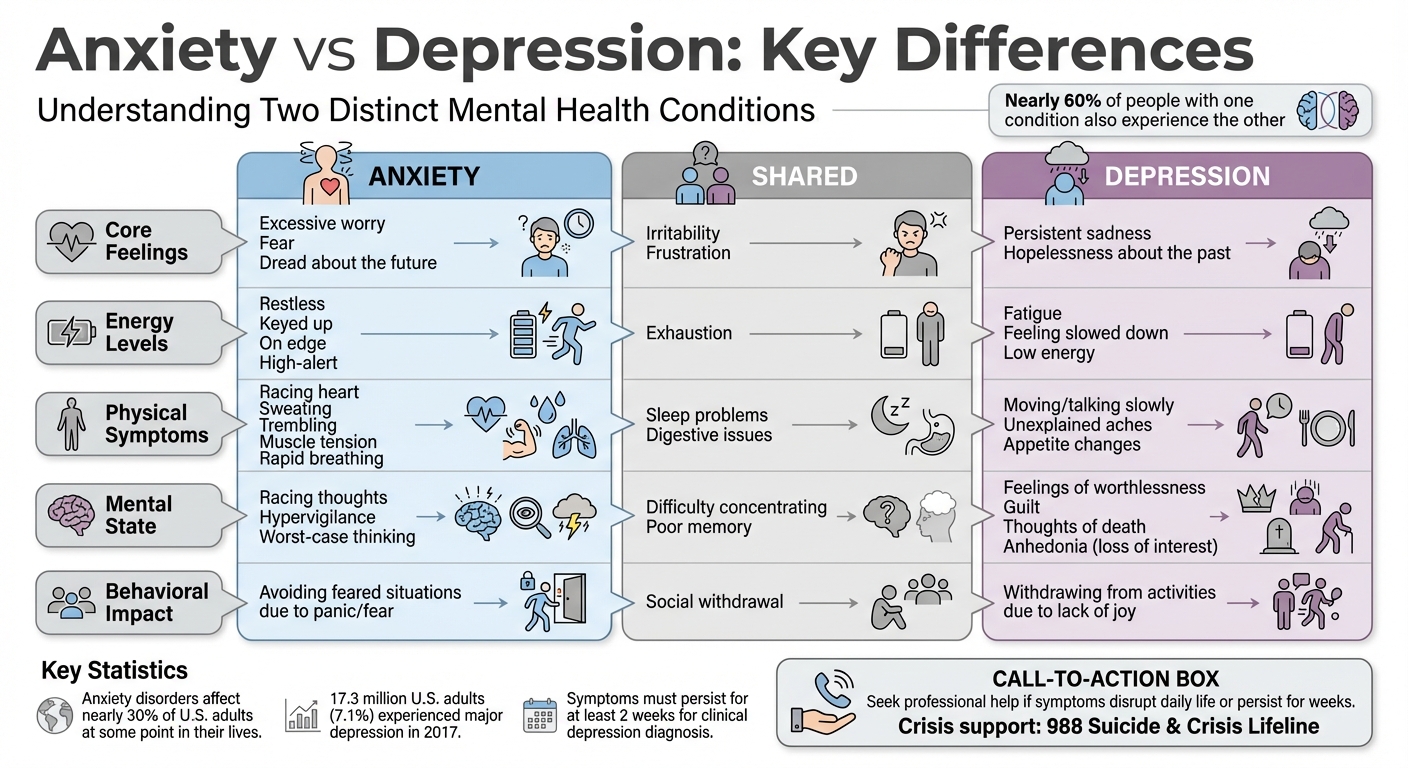
Anxiety vs Depression: Symptoms, Causes, and Daily Life Impact Comparison Chart
Anxiety and Depression: What’s the Difference?
What Are Anxiety and Depression?
Anxiety and depression might seem similar at first glance, but they are distinct conditions with different emotional roots. Anxiety revolves around fears of what might happen, while depression focuses on feelings of sadness tied to the past. Let’s take a closer look at what sets these two apart.
What Is Anxiety?
Anxiety is characterized by constant worry and fear, often centered on future events or perceived dangers. While it’s normal to feel nervous before something like a big presentation or job interview, anxiety disorders take these feelings to another level. They involve an overwhelming sense of dread that disrupts everyday life.
“Anxiety can make you feel high-alert and full of dread… fueled by racing thoughts and worry.”
– Karen Jacobs, DO, Psychiatrist, Cleveland Clinic
People with anxiety often experience racing thoughts, worst-case scenario thinking, and physical symptoms like a pounding heart, rapid breathing, sweating, trembling, or muscle tension. Digestive issues are also common. Many avoid situations that trigger their anxiety, which can strain relationships, work, and school life. In fact, anxiety disorders impact nearly 30% of adults in the U.S. at some point in their lives.
What Is Depression?
Depression, or major depressive disorder, is a serious mood condition that affects how someone feels, thinks, and handles daily activities like eating, sleeping, or working. It’s marked by a deep, persistent sadness or a sense of emotional numbness.
A key feature of depression is anhedonia – a loss of interest in activities that once brought joy. Other symptoms include feelings of worthlessness, guilt, or helplessness, along with low energy, chronic fatigue, and even unexplained physical pain or stomach issues. Clinically, these symptoms must last for at least two weeks to qualify as depression.
“Depression is a condition in which a person feels discouraged, sad, hopeless, unmotivated, or disinterested in life in general for more than two weeks and when the feelings interfere with daily activities.”
– Anxiety and Depression Association of America (ADAA)
You are definitely not alone in this struggle. In 2017, around 17.3 million adults in the U.S.—representing about 7.1% of the adult population—experienced at least one major depressive episode. While anxiety constantly pushes your mind to worry about what is coming next, depression often feels like a heavy weight tied to the past, stealing your motivation and clouding your hope for tomorrow
How Symptoms Differ Between Anxiety and Depression
Building on their definitions, anxiety and depression each bring their own set of physical and mental challenges. These differences are key to identifying and addressing your mental health needs effectively.
Symptoms Specific to Anxiety
Anxiety activates the body’s “fight-or-flight” response, keeping you on edge. You might notice a racing heart, shallow or rapid breathing, and tense muscles that could lead to trembling. Other symptoms include sweating, dizziness, or even a choking sensation, often appearing without any clear danger.
Mentally, anxiety fills your mind with racing thoughts and constant worry about the future. Persistent fears about potential failures can frequently cloud your thinking, leaving you overly alert.
Symptoms Specific to Depression
Depression, on the other hand, slows everything down – both physically and mentally. You might find yourself speaking or moving at a slower pace, paired with a fatigue that no amount of sleep seems to fix. A hallmark symptom is a lingering sadness or hopelessness that persists most of the day for at least two weeks, along with anhedonia, or losing interest in things you once loved.
Feelings of worthlessness or guilt may become overwhelming, and thoughts of death or suicide can arise. Physical symptoms like unexplained aches, changes in appetite, or noticeable weight shifts are also common.
“Anxiety can make you feel high-alert and full of dread. Depression can leave you in a low, even hopeless mood.”
– Cleveland Clinic
Symptoms That Overlap
While anxiety and depression have distinct profiles, they share some common ground. Both can disrupt sleep – anxiety often makes it hard to fall asleep due to racing thoughts, while depression might cause oversleeping or waking up too early.
Concentration issues are another shared symptom, though they differ in origin. Anxiety-related focus problems stem from constant worry, whereas depression clouds your thoughts, making them feel slow or foggy. Both conditions can lead to restlessness and digestive problems, which is why consulting a clinical professional is the most reliable way to receive an accurate diagnosis.
| Symptom Type | Anxiety | Depression | Shared by Both |
|---|---|---|---|
| Core Feeling | Excessive worry, fear, dread | Persistent sadness, hopelessness | Irritability, frustration |
| Energy Level | Restless, “keyed up”, on edge | Fatigue, feeling “slowed down” | Exhaustion |
| Physical Signs | Racing heart, sweating, trembling | Moving/talking slowly, aches | Sleep problems, digestive issues |
| Mental State | Racing thoughts, hypervigilance | Feelings of worthlessness, death thoughts | Difficulty concentrating, poor memory |
| Behavior | Avoiding feared situations | Withdrawing from activities | Social withdrawal |
Paying attention to when your symptoms started, how long they last, and how they affect your daily life can help healthcare providers determine the best course of action for you.
What Causes Anxiety and Depression?
Now that we’ve outlined the symptoms, let’s dive into what actually causes anxiety and depression. While these conditions share some common origins, each has its own unique triggers. Understanding these distinctions is key.
What Causes Anxiety
Anxiety is often rooted in a mix of genetics, brain chemistry, environmental stress, and early traumatic experiences. According to the Anxiety and Depression Association of America (ADAA), “anxiety disorders run in families, and… they have a biological basis, much like allergies or diabetes and other disorders”.
Chemical imbalances in the brain play a major role too. For example, when neurotransmitters like serotonin and GABA are out of sync, the nervous system can stay stuck in overdrive, making it hard to relax. Add to this the impact of high-stress environments or early-life trauma, and the result can be a heightened sense of fear or constant worry. Even personality traits, such as perfectionism or a tendency toward overthinking, can increase susceptibility to anxiety.
What Causes Depression
Depression shares some similarities with anxiety – genetics and neurotransmitter changes are big factors – but it also has some unique contributors. Hormonal shifts, particularly during pregnancy, postpartum, or menopause, can play a significant role.
Environmental triggers for depression are often tied to prolonged stress rather than immediate fears. Chronic stress, the loss of a loved one, or long periods of isolation can all lead to depression. As the National Institute of Mental Health explains, “genetic, biological, environmental, and psychological factors play a role in the disorder”. Even medications prescribed for physical conditions can sometimes bring on depressive symptoms.
Risk Factors for Both Conditions
Some risk factors overlap for anxiety and depression, including chronic health problems, unresolved trauma, and long-term stress. The connection between the two is striking: nearly half of those diagnosed with depression also experience anxiety. The relationship is a two-way street – severe anxiety can lead to social withdrawal, which might spark depression. On the flip side, the fatigue and low energy from depression can trigger anxiety when trying to return to everyday routines.
Next, we’ll take a closer look at how these conditions shape daily life, giving us a clearer picture of their real-world impact.
sbb-itb-23f89d4
How Anxiety and Depression Affect Daily Life
Anxiety and depression disrupt daily life in distinct but often overlapping ways. Understanding their impact can help in recognizing and managing these conditions.
Anxiety keeps you on edge constantly. Everyday decisions might feel like massive hurdles as overthinking spirals into overwhelming doubt. Racing thoughts can lead to indecision and a fixation on worst-case scenarios. Social interactions might dwindle because of fear of judgment or rejection. At work, even though you’re physically present, anxiety can make it hard to focus or complete tasks. Physically, anxiety often manifests as restlessness, muscle tension, or an inability to relax, making self-care feel out of reach.
Depression, on the other hand, slows everything down, making even simple tasks feel insurmountable. Unlike anxiety, where avoidance stems from fear, depression leads to withdrawal because activities no longer bring joy – a symptom called anhedonia. Everyday responsibilities feel like heavy burdens. Energy levels plummet, and even hobbies you once loved lose their appeal. In relationships, depression can create emotional distance and disconnection. At work or school, it brings a lack of motivation and slower cognitive processing, making productivity a challenge.
| Impact Area | Anxiety’s Effect | Depression’s Effect |
|---|---|---|
| Social Life | Avoidance due to fear of judgment or panic | Isolation from lack of interest or energy |
| Work/School | Indecisiveness and overthinking | Low motivation and reduced productivity |
| Relationships | Irritability and being “on edge” | Emotional distance and loss of intimacy |
| Physical State | Restlessness, muscle tension, high alert | Fatigue, appetite changes, physical aches |
These effects often overlap, creating a cycle that complicates daily life further. For instance, severe anxiety might make leaving the house seem impossible, leading to isolation and, eventually, depression. On the flip side, depression’s fatigue can cause responsibilities to pile up, triggering anxiety.
“It’s almost like we’re trying to sort out the chicken and the egg. We’re trying to figure out which one occurred first, and then if one caused the other.”
– Dr. Karen Jacobs, Cleveland Clinic
Recognizing these interconnected patterns is an important step toward finding the right strategies for support and management.
When to Seek Help and How Modyfi Health Can Support You
Understanding the signs that professional help is needed can make a huge difference in managing mental health challenges. Here’s how to recognize those moments and how Modyfi Health steps in to provide support.
Signs You Should Seek Professional Help
If symptoms persist daily for two weeks or more, it’s time to consider reaching out for professional assistance. When it comes to anxiety, experiencing excessive worry for six months or longer – especially if it disrupts work, relationships, or daily activities – is a clear signal to seek help.
Take immediate action if you’re having thoughts of self-harm. If you’re struggling with thoughts of death, suicide, or self-injury, contact the 988 Suicide & Crisis Lifeline by call or text right away. These situations are medical emergencies. Additionally, if physical symptoms persist despite treatment, a mental health evaluation may be necessary.
“If your anxiety, or the anxiety of a loved one, starts to cause problems in everyday life – such as at school, at work, or with friends and family – it’s time to seek professional help.”
– National Institute of Mental Health
Key warning signs to look out for include:
- Difficulty controlling worry that feels disproportionate to the situation.
- Loss of interest in once-enjoyed activities (anhedonia).
- Symptoms that worsen or leave you feeling “out of control”.
This is where Modyfi Health steps in with a tailored approach to care.
Modyfi Health’s Approach to Treatment
It all begins with a comprehensive 60-minute psychiatric evaluation. This helps pinpoint whether you’re dealing with anxiety’s “high-alert” state, depression’s “low energy” or “numb” state, or both – conditions that overlap in 50% to 60% of patients. Understanding this distinction is critical, as effective treatment varies significantly between these conditions.
Personalized treatment plans are at the core of Modyfi Health’s approach. For anxiety, cognitive behavioral therapy (CBT) is used to confront fears and reduce avoidance behaviors. For depression, the focus shifts to challenging negative thought patterns and rediscovering joy. Medication options might include SSRIs or SNRIs, which can address both conditions, or more targeted solutions like benzodiazepines for acute anxiety symptoms such as panic attacks or muscle tension.
Modyfi Health also integrates functional lab testing into its care strategy. By analyzing nutrient levels, hormones, gut microbiome health, and inflammation markers, they address biological factors that can impact mood and anxiety.
Ongoing follow-up sessions ensure continued progress. These 30- to 60-minute appointments allow for medication adjustments, therapy updates, and symptom tracking. The ultimate goal? Achieving sustainable recovery and long-term mental well-being – not just managing symptoms.
Conclusion
Anxiety and depression, while often interconnected, have distinct characteristics that set them apart. Anxiety typically involves heightened alertness, racing thoughts, excessive worry about the future, and physical symptoms like heart palpitations or muscle tension. On the other hand, depression manifests as persistent sadness, a lack of interest in activities, and feelings of hopelessness or emptiness. The diagnostic criteria for these conditions differ, and so do their treatments. For instance, Cognitive Behavioral Therapy (CBT) for anxiety focuses on managing excessive worry, while CBT for depression works to address deep-seated sadness and loss of motivation. Importantly, both are legitimate medical conditions rooted in biology – not personal shortcomings or signs of weakness.
If symptoms are disrupting your daily life, relationships, or work, reaching out to a professional is crucial. Alarmingly, the risk of suicide is 26 times higher for individuals with depression alone and 54 times higher for those managing both conditions compared to those without either disorder. Early intervention can make a significant difference, potentially preventing these conditions from worsening or occurring together.
Modyfi Health offers a holistic approach to mental health care, addressing the intricate overlap between anxiety and depression. Their services include thorough psychiatric evaluations, tailored treatment plans, functional lab testing, and ongoing support to guide you toward lasting recovery. Remember, mental health challenges are treatable. Seeking help can pave the way to improved well-being and a more fulfilling life.
FAQs
How can I tell if I’m experiencing anxiety, depression, or both?
Understanding whether you’re experiencing anxiety, depression, or both starts with identifying their distinct symptoms. Anxiety often shows up as constant worry, fear, or a sense of being on edge. This can be paired with physical signs like a racing heart, sweating, or restlessness. Depression, on the other hand, is characterized by a lingering low mood, feelings of hopelessness, a lack of interest in activities, fatigue, and difficulty concentrating.
It’s also possible to experience both at the same time, as some symptoms – like fatigue or trouble focusing – can overlap. If you’re noticing ongoing sadness, loss of interest, or hopelessness alongside excessive worry or physical signs of anxiety, it may be a combination of the two. Connecting with a mental health professional is essential for a proper diagnosis and tailored treatment. Both conditions are manageable, and help is available.
What are the main treatments for anxiety and depression?
The main treatments for anxiety and depression typically involve therapy, medication, or a combination of both. Cognitive-behavioral therapy (CBT) is a widely used method that helps individuals identify and shift negative thought patterns that contribute to these conditions. Depending on personal needs, other approaches like interpersonal therapy or problem-solving therapy may also be useful.
Medications, such as selective serotonin reuptake inhibitors (SSRIs) and serotonin-norepinephrine reuptake inhibitors (SNRIs), are commonly prescribed to help manage symptoms. These are often most effective when paired with therapy, especially for more severe cases.
Treatment plans are tailored to each person, taking into account the intensity of symptoms and unique circumstances. If you’re dealing with anxiety or depression, reaching out to a healthcare professional can guide you toward the right treatment path.
What factors increase the risk of developing anxiety or depression?
Several elements can heighten the risk of developing anxiety or depression. One of the most influential factors is a family history of these conditions, as genetics often play a role. Life stressors, such as traumatic events, chronic illnesses, or significant life transitions, also contribute to increased risk. Social factors, including isolation, lack of a support system, or financial struggles, can further amplify vulnerability.
Certain medical conditions, like chronic pain or sleep disorders, are known to exacerbate or trigger symptoms. Substance abuse is another key factor that can either worsen or initiate these mental health challenges. Additionally, personality traits – such as being highly sensitive to stress – along with demographic factors like youth or being female, are linked to a higher likelihood of experiencing anxiety or depression. In the end, it’s a combination of genetic predisposition, environmental pressures, and personal characteristics that shapes an individual’s risk.
You Don’t Have to Navigate This Alone
Trying to handle overlapping symptoms of anxiety and depression can feel incredibly overwhelming—especially when you are trying to find different providers on your own. At Modyfi Health, we believe mental health care should feel supportive and seamless. Our dedicated team of psychiatric nurse practitioners and therapists work together under one virtual roof. We take the time to look at the big picture, combining evidence-based therapy with functional wellness tools to build a gentle, practical roadmap tailored entirely to your lifestyle.
Let’s take the first step toward your balance together.
👉 Schedule Your Initial Evaluation Today
(Note: Modyfi proudly accepts most major commercial insurance plans in MD, DC, VA, and WV; currently, we do not accept Medicare or Medicaid.)