


What you eat has a more direct effect on how you sleep than most people realize — and the connection runs in both directions.
A diet high in sugar, refined carbohydrates, and saturated fats can spike blood sugar, trigger inflammation, and disrupt the gut microbiome — all of which interfere with sleep. At the same time, poor sleep increases hunger hormones and cravings for exactly those foods, creating a cycle that’s hard to break without addressing both sides.
The good news is that specific nutrients — magnesium, tryptophan, omega-3 fatty acids, and antioxidants — have meaningful evidence behind their role in supporting sleep quality. And meal timing matters as much as food choice. Small, consistent dietary adjustments can produce noticeable improvements in how quickly you fall asleep, how long you stay asleep, and how you feel the next day.
For a visual overview of how nutrition and sleep are connected — including the key mechanisms behind the diet-sleep relationship — the video below offers a useful starting point before diving into the specifics:
Nutrition Essentials | The Connection Between Diet and Sleep
How Poor Nutrition Disrupts Sleep and Mental Health
What you eat has a direct impact on your sleep and mood. Diets filled with refined sugars and saturated fats can lead to rapid spikes in blood sugar, followed by insulin surges. These fluctuations trigger hormones like adrenaline and cortisol, which not only keep you awake but can also make you feel anxious.
Additionally, poor food choices can damage your intestinal barrier, allowing toxins and bacteria to enter your system. This triggers chronic inflammation, which negatively affects your nervous system and disrupts your sleep patterns. Your gut microbiota – those trillions of bacteria living in your digestive system – play a key role here. They produce important compounds like short-chain fatty acids, GABA, and serotonin, all of which communicate with your brain via the vagus nerve to regulate sleep. When your diet is out of balance, this system falters.
“The gut microbiota may play an important role in the integrity and proper functionality of the human gut: certain dietary factors may affect the intestinal microbiome, resulting in the alteration of nutrient absorption, weakening of the intestinal barrier against toxins and bacteria per se, the determination of chronic inflammation, and subsequently, the activation of neural pathways that directly affect the functionality of the central nervous system.” – Giuseppe Grosso, Department of Biomedical and Biotechnological Sciences, University of Catania
Foods and Habits That Interfere with Sleep
Some foods and drinks are notorious for disrupting sleep. Caffeine, for example, blocks adenosine receptors in your brain – the ones responsible for making you feel tired. Even if you have caffeine six hours before bedtime, it can still interfere with falling asleep. Alcohol, on the other hand, might help you fall asleep initially, but it fragments your sleep later in the night as your body processes it, reducing the amount of REM sleep you get.
High-glycemic foods, such as white bread, pastries, and sugary snacks, are also problematic. While a high-glycemic meal eaten four hours before bed might help you fall asleep faster, long-term consumption of these foods increases the risk of chronic insomnia. Why? These foods trigger inflammation and disrupt your gut microbiome, both of which harm sleep quality. Saturated fats are another culprit, linked to shorter periods of deep, restorative sleep and more frequent waking during the night.
These disruptions don’t just ruin a single night of sleep – they can kickstart a cycle of poor eating habits and ongoing sleep issues.
The Cycle of Poor Sleep and Unhealthy Eating
Lack of sleep and bad eating habits feed into each other, creating a tough cycle to break. When you don’t sleep enough, your body produces less leptin (the hormone that signals fullness) and more ghrelin (the hormone that makes you feel hungry). Studies show that sleeping less than 5.5 hours a night can significantly increase your calorie intake, especially from fats and carbs.
But it’s not just about feeling hungrier – sleep deprivation changes how your brain reacts to food. When you’re sleep-deprived, the reward centers in your brain light up more strongly in response to high-calorie, sugary, and fatty foods. This makes junk food feel more irresistible, even if you know it’s not the best choice. Sleep deprivation can even alter your taste buds, making you crave sweeter foods.
This creates a vicious cycle: poor nutrition disrupts your sleep, and that lack of sleep drives cravings for the very foods that make it harder to sleep. Breaking this cycle requires addressing both sleep and diet together.
The table below summarizes the key nutrients that support better sleep — including their best food sources and the primary mechanism behind each one:
Nutrients and Foods That Support Better Sleep
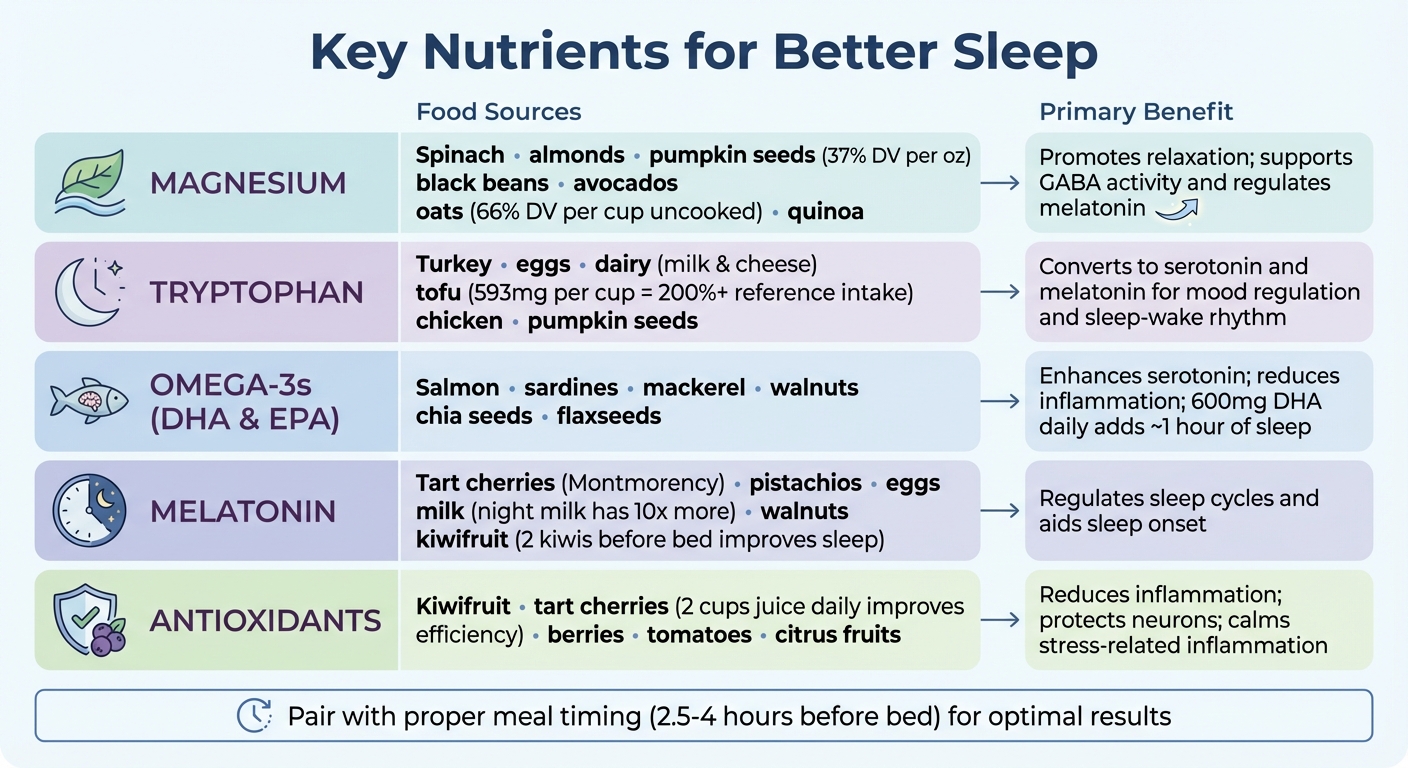
The right nutrients can play a big role in breaking the cycle of poor sleep and low mood. By making smart food choices, you can naturally support your body’s sleep mechanisms and improve your mental health.
Magnesium-Rich Foods
Magnesium is like a natural chill pill for your body. It binds to GABA receptors and helps regulate melatonin, which keeps your sleep-wake cycle in check. If anxiety or racing thoughts are keeping you up, magnesium can help your brain shift into a more relaxed state.
“If anxiety or racing thoughts keep you from getting to sleep or wake you up, magnesium may shift the balance toward the relaxing set.” – Denise M. Millstine, M.D., Mayo Clinic
For magnesium-packed options, reach for spinach, almonds, pumpkin seeds (just one ounce provides 37% of your daily value), black beans, or avocados. Whole grains like oats and quinoa are also excellent – one cup of uncooked oats delivers a whopping 66% of your daily magnesium needs. If you’re considering supplements, aim for 250–500 mg of magnesium glycinate at bedtime. It’s easier on your stomach compared to magnesium citrate.
Tryptophan and Melatonin-Boosting Foods
Tryptophan is a key player in your body’s sleep system. It converts into serotonin and melatonin, which are essential for mood regulation and maintaining your sleep-wake rhythm. To get the most out of tryptophan, pair it with complex carbs – this combo helps it reach your brain more effectively.
Some of the best tryptophan sources are turkey, chicken, eggs, dairy products like milk and cheese, tofu (a single cup contains 593 mg of tryptophan, over 200% of your reference intake), and pumpkin seeds. For a late-night snack, try turkey or cheese with whole-grain crackers, or enjoy oatmeal with milk.
Foods that naturally contain melatonin or help your body produce it can also improve sleep. Tart cherries, especially Montmorency cherries, along with pistachios, walnuts, and kiwifruit, are great choices. Research even shows that eating two kiwis an hour before bed can help you fall asleep faster and improve sleep quality. Fun fact: milk collected at night contains nearly 10 times more melatonin than daytime milk.
Omega-3 Fatty Acids and Antioxidants
Omega-3 fatty acids, particularly DHA and EPA found in fatty fish, are another tool to improve sleep. They help regulate serotonin and enhance communication between neurons, benefiting both sleep and mood. In one study, taking 600 mg of DHA daily for 16 weeks added nearly an hour of sleep and reduced night awakenings.
Fatty fish like salmon, sardines, and mackerel are excellent sources. One study found that eating Atlantic salmon three times a week during fall and winter significantly improved sleep quality and daily functioning in men. If fish isn’t your thing, walnuts, chia seeds, and flaxseeds are great plant-based alternatives.
Antioxidants in colorful fruits and vegetables can also help. They reduce inflammation and oxidative stress, both of which can interfere with sleep. Kiwifruit and tart cherries stand out for their ability to calm stress-related inflammation in the nervous system. Drinking two cups of unsweetened tart cherry juice daily can improve sleep efficiency and ease insomnia. Other antioxidant-rich options include berries, tomatoes, and citrus fruits. These are packed with vitamin C, which protects your brain from memory issues linked to sleep deprivation.
| Nutrient | Key Food Sources | Primary Sleep Benefit |
|---|---|---|
| Magnesium | Spinach, almonds, pumpkin seeds, black beans, avocados | Promotes relaxation; supports GABA activity |
| Tryptophan | Turkey, eggs, dairy, tofu, chicken, pumpkin seeds | Converts to serotonin and melatonin |
| Omega-3s | Salmon, sardines, walnuts, chia seeds, flaxseeds | Enhances serotonin; reduces inflammation |
| Melatonin | Tart cherries, pistachios, eggs, milk, walnuts | Regulates sleep cycles and aids sleep onset |
| Antioxidants | Kiwifruit, tart cherries, berries, tomatoes | Reduces inflammation; protects neurons |
sbb-itb-23f89d4
Dietary Strategies for Better Sleep and Mental Health
Getting quality sleep isn’t just about what you eat – it’s also about when you eat. While your brain’s master clock is influenced by light, your liver, pancreas, and gut each have their own internal clocks that sync with your meal schedule. Eating too late can throw off this delicate balance, leading to issues with blood sugar regulation and metabolism.
Meal Timing and Balanced Eating
Try to finish your main meal 2.5 to 4 hours before bed. This can help reduce sleep disruptions and avoid problems like acid reflux. If you’re eating high-glycemic foods, like white rice or pasta, aim to have them about 4 hours before bedtime. Research shows this timing can cut the time it takes to fall asleep by nearly 50% compared to eating them closer to bedtime.
As an example: someone who adjusts their routine by skipping evening caffeine, moving dinner to 7:00 p.m., and swapping a heavy post-exercise meal for 25 grams of protein may fall asleep faster and wake less during the night — small changes with measurable effects.
Adopting a Mediterranean-style diet, rich in whole grains, vegetables, legumes, and lean proteins, can also promote better sleep. High-fiber foods, in particular, are associated with deeper, restorative slow-wave sleep and fewer nighttime awakenings. Keeping a regular meal schedule and avoiding skipped breakfasts or erratic eating patterns further supports sleep and overall health. To avoid waking up at night, try tapering your fluid intake in the two hours leading up to bedtime.
These strategies naturally encourage cutting back on stimulants, which is key for uninterrupted rest.
Reducing Stimulants and Alcohol
Caffeine can linger in your system for hours, so even having it 6 hours before bed can disrupt your sleep. To avoid this, set a caffeine cutoff 6-8 hours before bedtime. Similarly, stop drinking alcohol 3-4 hours before sleep. Both steps help minimize disruptions and protect REM sleep. Don’t forget about hidden caffeine sources like chocolate and certain teas.
While alcohol might help you fall asleep faster, it tends to fragment REM sleep later in the night. Instead of that evening glass of wine, try a calming option like chamomile tea. It contains apigenin, a compound known for its relaxing effects.
These simple changes not only improve sleep but also support better mood and cognitive performance.
Personalized Nutrition Plans
Of course, everyone’s sleep and nutritional needs are different. Tailoring your diet to your body’s specific requirements can make a big difference. For example, functional lab testing can identify deficiencies in nutrients like magnesium or B vitamins, which are critical for melatonin production. This approach takes the guesswork out of supplementation and focuses on addressing the root causes of poor sleep rather than just managing the symptoms.
How Integrative Care Supports Sleep
When sleep problems persist despite dietary changes, functional lab testing can reveal what’s missing. Key markers worth evaluating include magnesium — essential for GABA regulation and relaxation — zinc, which supports melatonin production, iron, which affects dopamine function and can cause restless legs when low, and vitamin D, which plays a direct role in sleep efficiency.
The gut-brain axis is also worth assessing. The gut produces roughly 95% of the body’s serotonin — making gut health directly relevant to both sleep quality and mood. For some people, genetic testing adds another layer of insight, identifying how inflammation and nutrient metabolism may be affecting mental health and sleep patterns at a deeper level.
When these findings are integrated with psychiatric care and therapy — particularly when sleep disturbances are connected to anxiety, depression, or chronic stress — outcomes tend to be more complete than addressing any single piece in isolation.
Ready to Build a Sleep and Nutrition Plan Based on Your Biology?

Understanding which nutrients affect your sleep is the first step. The next is working with someone who can apply that to your specific situation — your lab values, your lifestyle, your mental health history. At Modyfi, our Root-Cause Psychiatry approach brings psychiatry, therapy, nutrition, and exercise together in one integrated plan.
👉 Explore Providers to Book an Appointment and Start Your Care Plan
(Note: Modyfi proudly accepts most major commercial insurance plans. We do not accept Medicare or Medicaid.)
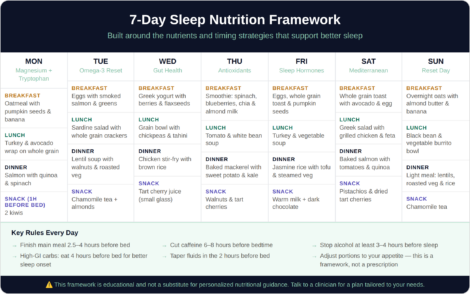
7-Day Sample Meal Plan for Better Sleep
The framework below puts these strategies into a practical week — organized by nutrient focus and designed around the timing principles covered above:
Conclusion
The connection between diet and sleep is real — and it works in both directions. What you eat affects how well you sleep, and how well you sleep affects what you crave and choose to eat the next day.
The most consistent finding across the research isn’t about any single food. It’s about patterns: regular meal timing, adequate micronutrients, a diet that supports gut health and reduces inflammation, and avoiding the things — caffeine late in the day, alcohol before bed, large meals close to bedtime — that reliably disrupt sleep physiology.
As Dr. Lulu Guo, sleep medicine physician, puts it:
“It’s better to focus on overall healthy dietary patterns throughout the day rather than focus on a specific food or drink to improve sleep.”
Small, consistent changes tend to compound over time. If sleep remains persistently disrupted despite dietary adjustments, that’s a signal worth taking seriously — it may point to something worth evaluating with professional support.
FAQs
How does gut health affect sleep and mental well-being?
Your gut health has a big influence on your sleep and mental state. That’s because the gut microbiome plays a key role in regulating hormones like serotonin and melatonin – both of which are essential for maintaining healthy sleep patterns. When your gut is in balance, thanks to a nutrient-packed diet, it can help promote better sleep and support your mental health.
However, when your gut is out of balance – often due to poor eating habits or lack of sleep – these processes can get thrown off. This imbalance can lead to sleep struggles and even mood swings.
To keep your gut in good shape and improve your sleep, try focusing on foods that support gut health, such as:
- Fiber-rich options like whole grains, vegetables, and legumes
- Probiotic-rich foods like yogurt or fermented options (kimchi, sauerkraut)
- Prebiotic foods like garlic, onions, or bananas
By prioritizing these foods, you’re not just helping your gut – you’re giving your sleep and mental well-being a boost too.
Why is it important to avoid sugary or high-glycemic foods before bedtime?
Eating sugary or high-glycemic foods right before bed can mess with your sleep. These foods cause your blood sugar to spike quickly and then drop just as fast, which can leave you feeling restless or make it harder to stay asleep. Over time, this pattern might even lead to insomnia and take a toll on the quality of your sleep.
If you’re looking for a better nighttime snack, go for options with a low glycemic index. Something like a handful of nuts or a small slice of whole-grain toast can help keep your blood sugar steady through the night, setting you up for more restful sleep.
Does magnesium really help with sleep?
The evidence is stronger than for most sleep supplements — though it comes with important nuances.
A meta-analysis of three randomized controlled trials found that magnesium supplementation reduced sleep onset latency by 17.36 minutes compared to placebo. It also improved sleep efficiency and reduced early morning awakening in older adults with insomnia. The mechanism is well established: magnesium supports GABA activity — the primary inhibitory neurotransmitter that calms the nervous system — and plays a role in regulating the hypothalamic-pituitary-adrenal axis, which controls cortisol output.
That said, the evidence is strongest for people who are deficient — and magnesium deficiency is more common than most people realize, particularly in people under chronic stress, which depletes magnesium faster than a normal diet replenishes it. For people with adequate magnesium levels, the sleep benefit may be less pronounced.
Food sources like spinach, pumpkin seeds, almonds, black beans, and avocado are the most reliable way to maintain adequate levels. Supplementation — particularly magnesium glycinate or threonate, which absorb better than oxide — may be worth discussing with a clinician if dietary intake is consistently low.
What should I not eat before bed?
A few categories consistently show up in the research as sleep disruptors:
Caffeine is the most well-documented. With a half-life of 5–6 hours, a cup of coffee at 3pm still has half its stimulant effect at 8pm. Even people who feel like they’ve “developed a tolerance” often see improved sleep quality when they cut off caffeine earlier.
Alcohol is worth naming separately. While it feels sedating, alcohol suppresses REM sleep in the second half of the night — leading to fragmented sleep, earlier waking, and less restorative rest overall. The effect is dose-dependent but measurable even with moderate amounts.
Large, high-fat meals close to bedtime increase digestive activity and core body temperature at a time when both need to be dropping for sleep onset. Finishing your main meal at least 2.5 to 4 hours before bed gives your system time to settle.
High-sugar snacks in the evening can cause blood sugar spikes followed by crashes that may wake you in the early hours. If you need an evening snack, combining protein with a small amount of complex carbohydrate tends to be more sleep-supportive than sugar alone.
How does gut health affect sleep?
The gut and brain communicate constantly through the vagus nerve, the immune system, and shared neurochemical pathways — and that communication directly affects sleep.
The gut produces roughly 95% of the body’s serotonin. While gut-produced serotonin doesn’t cross the blood-brain barrier directly, it influences mood, gut motility, and the enteric nervous system in ways that feed back into the central nervous system. Serotonin is also the precursor to melatonin — meaning gut health affects not just mood but the body’s ability to regulate its own sleep-wake cycle.
Gut microbiome diversity is also relevant. Certain bacterial strains — particularly Lactobacillus and Bifidobacterium species — are associated with better sleep quality and lower anxiety. Disruptions to the microbiome, whether from poor diet, stress, antibiotics, or poor sleep itself, can reduce that diversity and create a feedback loop that worsens both gut function and sleep.
Practically, this means that dietary habits that support gut health — adequate fiber, fermented foods, reduced ultra-processed food intake — tend to also support sleep quality over time. It’s not a single intervention but a sustained pattern that matters most.