


Your mental health is connected to what you eat. Integrative psychiatry combines traditional mental health treatments with nutrition to address root causes like gut health, inflammation, and nutrient deficiencies. This framework engineers mental wellness by optimizing how diet impacts neurotransmitters like serotonin and dopamine, which regulate mood, sleep, and appetite.
Key points:
- Gut-brain link: 90% of serotonin is made in the gut. Imbalances in gut bacteria can lead to anxiety and depression.
- Nutrients matter: Omega-3s, B vitamins, magnesium, and zinc are critical for mental health.
- Diet patterns: A Mediterranean diet supports mental health, while ultra-processed foods increase depression risk by 1.81x.
- Telehealth access: Virtual care connects psychiatry, nutritionists, and therapy for tailored plans, including lab testing for deficiencies.
Integrative psychiatry shifts the focus from just managing symptoms to addressing underlying biological factors, offering a new way to approach mental health care.
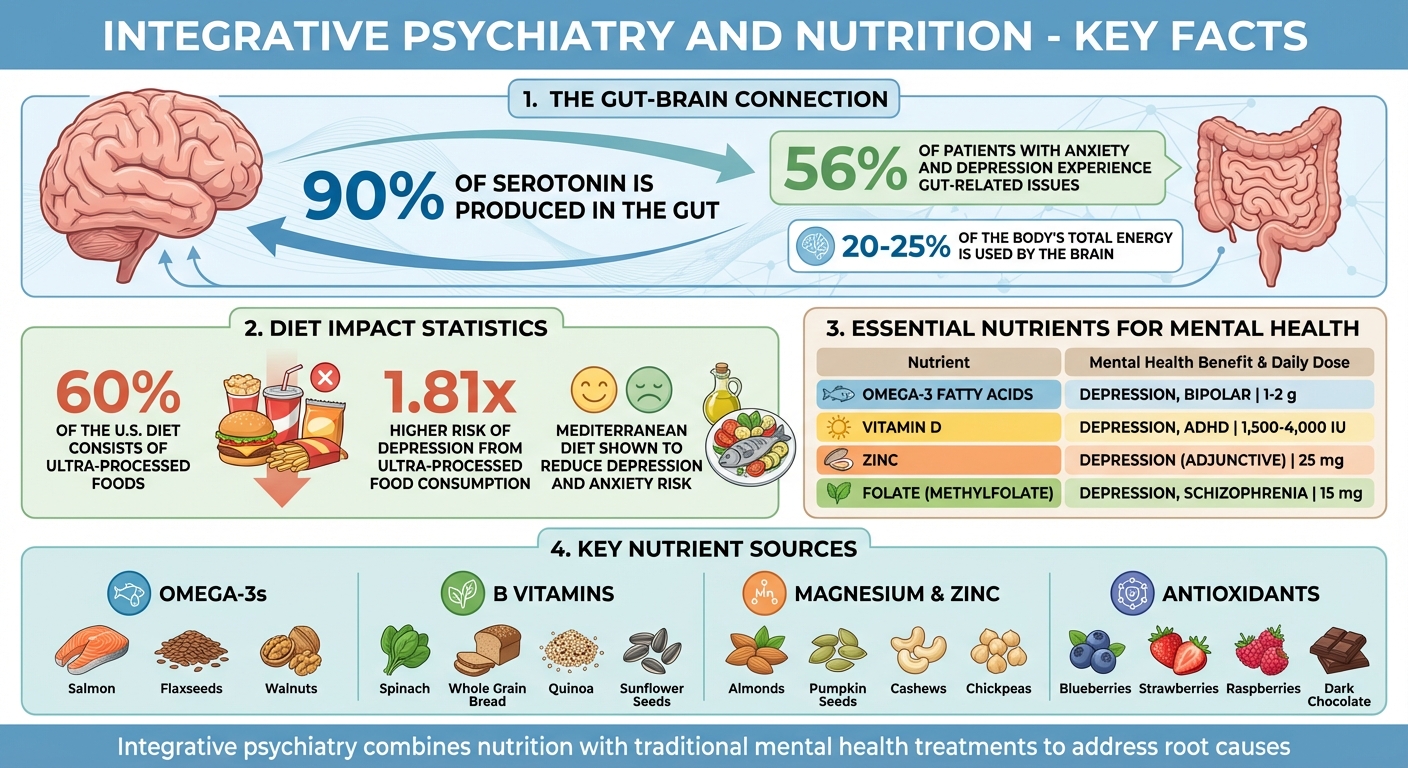
How Nutrition Impacts Mental Health: Key Statistics and Nutrient Guide
Diet & Nutrition for Mental Health | Dr. Chris Palmer
sbb-itb-23f89d4
How Nutrition Affects Mental Health
What you eat has a direct impact on how your brain works. The brain uses about 20–25% of your body’s total energy, which means it relies heavily on proper nutrition. Diets that lack essential nutrients or are filled with processed foods can interfere with brain function in multiple ways.
The Gut-Brain Connection
Your gut and brain are in constant communication through what’s known as the gut-brain axis. This connection works through neural signals (like those via the vagus nerve), hormonal pathways (like the HPA axis), and immune system messengers such as cytokines. The bacteria in your gut – known as the gut microbiome – are key players in this system.
“Approximately 90% of the body’s serotonin – a neurotransmitter essential for regulating mood, cognition, and emotional behavior – is synthesized in the gastrointestinal tract.”
– Frontiers in Microbiomes
When the balance of gut bacteria is thrown off (a condition called dysbiosis), the intestinal barrier can weaken. This can lead to systemic inflammation, which affects brain function and has been linked to anxiety and depression. In fact, research shows that 56% of patients with anxiety and depression experience gut-related issues due to these imbalances.
By understanding this axis, we can see how specific nutrients play a role in improving brain function.
Nutrients That Support Brain Function
Certain nutrients are critical for maintaining brain health and emotional well-being. For instance:
- Omega-3 fatty acids (found in fatty fish, flaxseeds, and walnuts) help reduce inflammation and improve brain plasticity.
- B vitamins and tryptophan (found in leafy greens, whole grains, and seeds) are essential for producing neurotransmitters.
- Magnesium and zinc (found in nuts and seeds) aid in emotional regulation, while antioxidants in berries protect brain cells from oxidative damage.
Without enough of these nutrients, the brain struggles to create the chemical messengers needed for stable moods and clear thinking.
| Nutrient | Mental Health Indication | Suggested Daily Dose |
|---|---|---|
| Omega-3 Fatty Acids | Major Depressive Disorder, Bipolar | 1–2 g |
| Vitamin D | Depression, ADHD | 1,500–4,000 IU |
| Zinc | Major Depressive Disorder (Adjunctive) | 25 mg |
| Folate (Methylfolate) | Depression, Schizophrenia | 15 mg |
These nutrients highlight how diet influences mental health and connect to broader eating patterns that affect emotional well-being.
Diet Patterns and Mental Health
Your overall diet plays a big role in mental health. The Mediterranean diet, which emphasizes vegetables, fruits, olive oil, fish, and legumes, has been shown to reduce the risk of depression and anxiety through its anti-inflammatory and antioxidant properties.
“Traditional diets that are rich in vegetables, fruits, lean proteins, and whole grains and limited in highly processed foods provide nutrients that promote resilience against psychiatric disorders.”
– Marta Mudd, M.D., Ph.D., Northwestern University
In contrast, about 60% of the U.S. diet consists of ultra-processed foods, which are linked to gut and brain inflammation. These foods – packed with sugar, unhealthy fats, and refined carbs – significantly increase the risk of depression. Research shows that individuals who primarily consume ultra-processed foods have a 1.81 times higher risk of developing depression.
Blood sugar swings also influence mood. High-glycemic foods like white bread and sugary snacks cause rapid glucose spikes and crashes, leading to irritability and fatigue. On the other hand, low-glycemic foods such as whole grains, legumes, and sweet potatoes provide steady energy, which supports emotional stability throughout the day.
These insights emphasize the importance of personalized nutritional strategies in mental health care.
What Is Integrative Psychiatry?
Integrative psychiatry takes a whole-person approach to mental health, focusing on the root causes of challenges rather than just managing symptoms. While it incorporates conventional treatments like medication and psychotherapy, it also includes complementary practices such as nutritional counseling, exercise recommendations, mindfulness techniques, and targeted supplementation.
“Integrative psychiatry is a holistic approach to mental health care that considers the connection between mind, body, and lifestyle.”
– Integrative Psychiatry of America
This approach prioritizes identifying and addressing the underlying factors contributing to mental health conditions. Unlike traditional psychiatry, which often emphasizes symptom management, integrative psychiatry digs deeper to uncover issues like nutrient deficiencies, hormonal imbalances, or chronic inflammation. Advanced lab testing plays a central role in identifying these imbalances.
Using Lab Testing to Find Root Causes
Functional lab testing is a cornerstone of integrative psychiatry, providing detailed insights into health markers that might otherwise go unnoticed. These tests assess neurotransmitter levels, inflammation markers, hormone imbalances, and gut health. For instance, testing might reveal a vitamin D deficiency in someone struggling with depression or elevated inflammation markers in a person experiencing anxiety.
“Don’t guess, just test! Use our lab tests to assess core imbalances that can lead to many conditions.”
– Integrative Psychiatry
By identifying these imbalances, practitioners can create more precise treatment plans, targeting issues like thyroid dysfunction, genetic factors that influence medication response, or nutrient deficiencies that impact brain function.
Creating Personalized Care Plans
After pinpointing the underlying causes, practitioners develop personalized care plans tailored to each individual’s needs. These plans often combine medications with lifestyle changes and dietary interventions. For example, someone with depression might follow a Mediterranean diet, supplement with omega-3s (1–2 g daily), engage in regular physical activity, and participate in psychotherapy.
Evaluations in integrative psychiatry are thorough, often lasting up to 90 minutes. They explore a patient’s medical history, diet, stress levels, and personal preferences. Treatment is typically coordinated by a team of professionals, including psychiatrists, nurse practitioners, nutritionists, and therapists, ensuring a well-rounded approach.
Combining Telehealth with Nutrition Coaching
Telehealth is bridging the gap between integrative psychiatry and nutrition coaching, making care more accessible while leveraging the strengths of both fields. By eliminating the need for travel, telehealth connects patients with mental health challenges to psychiatrists, therapists, and nutritionists. This creates a collaborative approach that combines medication, dietary strategies, and lifestyle changes.
Accessing Nutrition Support from Home
Virtual nutrition coaching offers tailored meal plans and dietary assessments, all from the comfort of home. Initial evaluations focus on identifying eating habits, blood sugar fluctuations, and nutrient deficiencies. Follow-up sessions then provide ongoing guidance and adjustments.
Patients can use apps like MyPlate or MyFitnessPal to log their meals, offering real-time insights into their eating patterns. This allows nutritionists to make quick adjustments to improve mood and energy levels. For individuals dealing with irregular eating habits or struggling to maintain consistent meals, structured virtual meal planning can provide the stability needed to balance both mood and energy. This personalized approach lays the groundwork for a collaborative telehealth care model.
Team-Based Care Through Telehealth
Telehealth not only personalizes nutrition support but also fosters a unified care approach across providers. One of its key strengths is enabling seamless collaboration among psychiatrists, nutritionists, and therapists. Using shared platforms, these professionals can align their strategies, ensuring that dietary recommendations complement medication and therapy goals .
“Integrating nutritional assessments within an interdisciplinary team significantly improves patient adherence and outcomes.”
– Marta Mudd, M.D., Ph.D., Chief Resident in Psychiatry, McGaw Medical Center of Northwestern University
Another benefit of telehealth is its ability to incorporate functional lab testing. Providers can review nutrient panels, hormone levels, and gut microbiome data during virtual consultations. By using this detailed information, the care team can create targeted treatment plans that address biological factors, such as inflammation or vitamin deficiencies, which may contribute to conditions like anxiety and depression. This precision-driven approach helps tackle root causes rather than relying on guesswork.
Modyfi Health: Virtual Integrative Care
Modyfi Health offers a fully virtual clinic designed to provide comprehensive care for children, adolescents, adults, and older adults across MD, DC, VA, and DE. This platform brings together a team of psychiatric nurse practitioners, licensed therapists, functional nutritionists, and exercise specialists. By addressing mental health from multiple perspectives, Modyfi Health emphasizes the connection between physical and mental well-being, aligning with the article’s focus on how nutrition plays a critical role in mental health.
What Modyfi Health Offers
Modyfi Health takes a thorough approach to psychiatric care, starting with 60-minute initial evaluations that dive into biological and lifestyle factors. Follow-up appointments, lasting 30–60 minutes, ensure ongoing, personalized care. The clinic also incorporates functional lab testing to uncover imbalances and uses pharmacogenomic testing through trusted partners like GeneSight® and Genomind® to match medications to each patient’s unique biochemistry.
Their nutrition therapy transforms lab results into actionable meal plans. Licensed nutritionists, trained in functional medicine, create customized strategies to stabilize blood sugar, reduce inflammation, and improve gut health. Instead of rigid diets or calorie counting, the focus is on building sustainable habits and addressing individual needs. For those struggling with inconsistent eating patterns or nutrient gaps, this guidance fosters both structure and confidence.
In addition to nutrition and psychiatry, Modyfi Health provides individual and couples therapy based on evidence-based practices, as well as exercise therapy aimed at regulating the nervous system and balancing hormones. The entirely virtual format ensures smooth coordination between psychiatry, nutrition, and lifestyle therapies. Payment options include most major insurance plans (except Medicare and Medicaid), along with HSA/FSA and CareCredit.
Benefits of Modyfi Health’s Approach on Integrative Psychiatry and Nutrition
Modyfi Health’s integrative approach is designed for long-term mental health progress. Patients frequently report better digestion, higher energy levels, and improved stress management. One patient, K.B., shared:
“They focus on the foundation of health, sleep, exercise, lifestyle, not just meds. They treat me like a whole human”.
With extended appointment times and a collaborative care model, patients benefit from the seamless integration of medication management, personalized nutrition plans, and lifestyle adjustments. By addressing biological factors like inflammation and nutrient deficiencies, Modyfi Health creates a strong foundation that enhances the effectiveness of other treatments.
Conclusion
Bringing psychiatry and nutrition together creates a more comprehensive approach to mental health care, offering benefits that go beyond what either can achieve on its own. By focusing on the gut-brain connection, reducing inflammation, and supporting neurotransmitter production with targeted nutrition, patients often see improvements that medication or therapy alone might not provide. This approach shifts the focus from just managing symptoms to addressing the underlying biological factors contributing to mental health challenges.
This integrated model also makes care more accessible. Telehealth platforms now allow patients to receive unified care without juggling multiple appointments with psychiatrists, therapists, and nutritionists. Instead, interdisciplinary teams work together within a single system, using tools like functional lab testing and extended consultations to create tailored treatment plans.
“Interdisciplinary collaboration with dietitians often yields the best outcomes. Studies show that integrating nutritional assessments within an interdisciplinary team significantly improves patient adherence and outcomes”.
Virtual integrative psychiatry offers a practical solution for whole-person care. Through in-depth evaluations, it uncovers the biological, lifestyle, and environmental factors behind mental health issues. With major insurance plans accepted and flexible payment options available, platforms like Modyfi Health are breaking down barriers to connect nutrition and psychiatric treatment in a seamless way. This coordinated care model strengthens the link between nutrition and mental health, making it easier for patients to access the help they need.
Nutrition is no longer just an added bonus in psychiatric care – it’s essential. With medical education often lacking in-depth training on this connection, specialized integrative clinics are stepping in to fill the gap. By combining medication management, functional testing, and personalized nutritional strategies, these virtual clinics help patients build long-term mental health resilience.
Stop managing symptoms and start addressing biology. Schedule your initial evaluation with Modyfi Health to uncover the nutritional root causes of your mental health.
FAQs
How can I tell if my diet is affecting my mood or anxiety?
Your diet plays a key role in how you feel emotionally. Eating a lot of processed foods, refined carbs, and sugary snacks can sometimes make mood swings and anxiety worse. On the other hand, incorporating nutrient-packed options like fruits, vegetables, and healthy fats can promote a more stable and positive mental state. If you find that certain foods seem to impact your mood, it might be helpful to track those patterns. For tailored advice, working with professionals who focus on both nutrition and mental health can provide support for addressing dietary habits and emotional well-being together.
What lab tests are most useful in integrative psychiatry for nutrition issues?
In integrative psychiatry, several lab tests are used to tackle nutrition-related issues that might impact mental health. These include:
- Hormone Testing: Helps detect imbalances that could influence mood, energy levels, and overall mental health.
- Thyroid Testing: Evaluates thyroid function, as thyroid issues are often linked to symptoms like depression or anxiety.
- Allergy Testing: Identifies food sensitivities or allergies that might contribute to inflammation or mood disturbances.
- Adrenal Testing: Assesses adrenal function and stress hormone levels, which can affect energy and emotional resilience.
- Neurotransmitter Testing: Measures key brain chemicals to uncover imbalances that might play a role in mood disorders or cognitive issues.
These tests provide valuable insights into chemical imbalances that could be affecting both mental health and overall well-being.
How does telehealth coordinate psychiatry, therapy, and nutrition in one plan?
Telehealth brings together psychiatry, therapy, and nutrition into one cohesive care plan, focusing on both mental and physical well-being. Through virtual collaboration, providers develop personalized strategies that might include medication management, psychotherapy, and nutritional guidance. By addressing interconnected factors like diet, sleep, and past trauma, this approach supports long-term recovery. Plus, it’s all delivered online, making it both convenient and accessible.