


Recognizing the signs of separation anxiety in a relationship goes beyond simply missing your partner. It involves intense fear, emotional distress, and behaviors that can disrupt both personal well-being and the relationship itself. Here are the key signs to watch for:
- Fear When Apart: Overwhelming worry or panic when your partner leaves.
- Constant Worry About Harm: Imagining worst-case scenarios when they’re away.
- Excessive Reassurance-Seeking: Repeatedly checking in or needing validation.
- Physical Symptoms: Headaches, nausea, or even panic attacks during separation.
- Difficulty Being Alone: Struggling to enjoy solo activities or time without your partner.
- Avoiding Separation: Making excuses to stay together, even unnecessarily.
- Relief Followed by Tension: Feeling calm after reuniting, but anxiety persists.
These behaviors often stem from deeper insecurities or attachment issues. Addressing them early through mindfulness, communication boundaries, or professional help can help improve emotional balance and relationship dynamics.
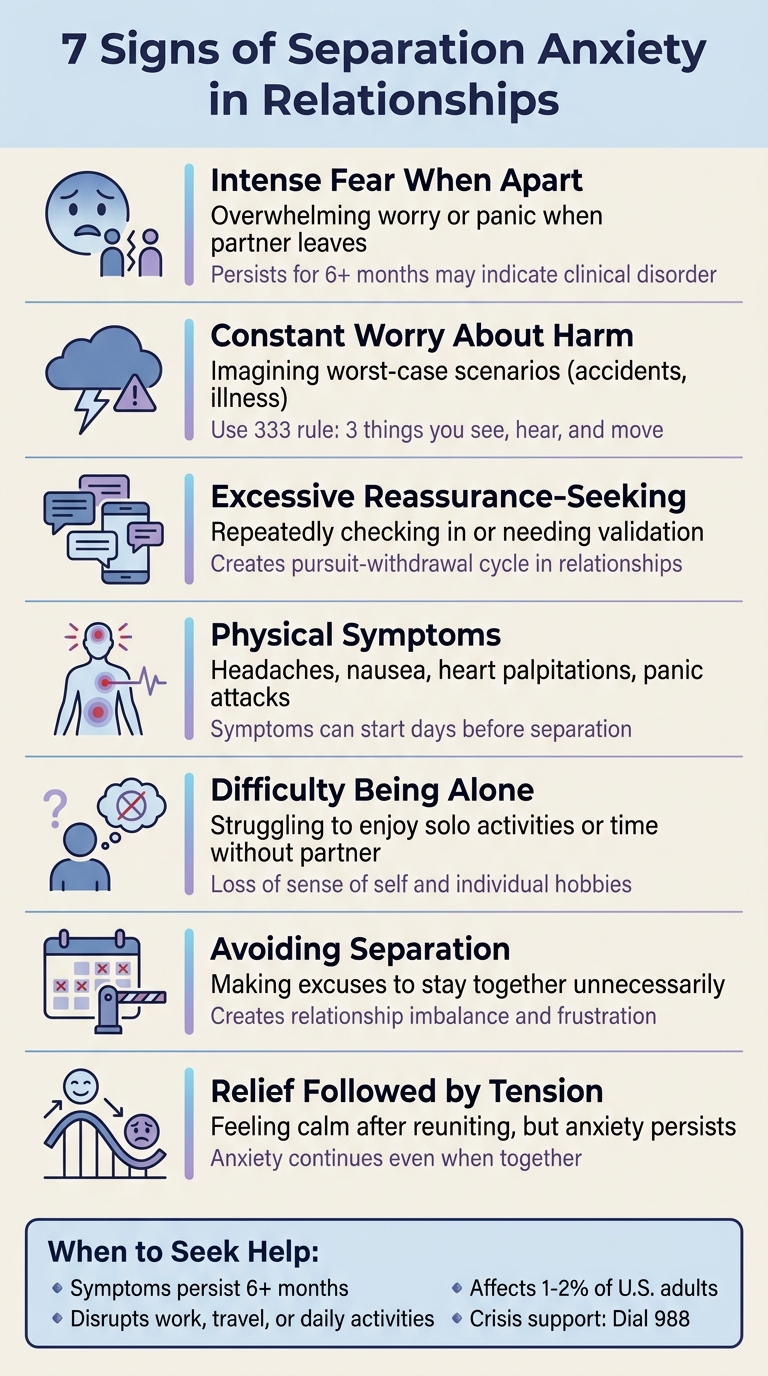
7 Signs of Separation Anxiety in Relationships
Signs of Separation Anxiety in a Relationship
sbb-itb-23f89d4
1. Intense Fear When Your Partner Leaves
This goes beyond simple missing or longing. When your partner steps out for work, a trip, or even a casual night with friends, you might experience an overwhelming fear that takes over your thoughts. Some describe it as being “terrified” of what could happen in their absence, even when there’s no logical reason to worry. This intense pre-separation anxiety often points to deeper issues within the relationship.
This anxiety can start days before the actual separation, making it hard to sleep or focus on everyday tasks. It’s mentally exhausting and can even escalate to full-blown panic attacks.
What sets this apart is the struggle to function independently. You may feel like you lose your sense of self when your partner isn’t around, making even simple activities seem impossible. While a healthy attachment might involve some loneliness, it doesn’t prevent you from managing your day-to-day life.
If these feelings persist for 6 months or more, they could meet the criteria for clinical separation anxiety disorder. The key is in the intensity and duration – occasional worry is normal, but constant emotional distress that disrupts your life is a sign of something more serious.
There are ways to manage this fear. Start with small steps, like spending short periods apart, and gradually increase the time. When anxious thoughts appear, try to acknowledge them without engaging – imagine them floating by rather than spiraling into worst-case scenarios. Setting clear communication boundaries, like only texting during specific times, can also help. This not only prevents overwhelming your partner but also allows you to focus on your own tasks. These strategies, when practiced consistently, can help bring a sense of balance back to your relationship.
2. Constant Worry About Harm or Danger
Do you find yourself imagining the worst when your partner leaves? Maybe your mind jumps to thoughts of car accidents, sudden illnesses, or other disasters, even when there’s no real reason to worry. These intrusive thoughts can take over your day, making it hard to focus on work or even simple tasks.
This kind of catastrophic thinking often ties back to earlier fears of separation. It can become more intense after experiencing a major loss or trauma. For example, losing someone close might make you more aware of life’s fragility, amplifying your fear of losing your partner. Similarly, if your partner has been through something dangerous – like a serious accident or a natural disaster – you might worry that history will repeat itself every time they’re away. These thoughts can range from obsessing over mortality to fearing permanent abandonment.
To manage these overwhelming feelings, there are some practical strategies you can try. One helpful tool is the “333 rule“: identify three things you can see, three sounds you can hear, and move three parts of your body. This grounding exercise can help you stay in the present moment. Another approach is setting specific, limited times to check in with your partner, which can help you stay focused and avoid constant worry. When those anxious thoughts creep in, try to acknowledge them without diving deeper – let them pass instead of letting them spiral.
If these fears become too much and start interfering with your daily life, reaching out to a professional can provide the support you need to work through the underlying anxiety.
3. Frequent Checking and Seeking Reassurance
Do you find yourself repeatedly texting your partner to confirm their care or affection, even after they’ve already reassured you? This persistent questioning and need for validation are common signs of separation anxiety.
This behavior often goes beyond occasional check-ins. It might involve monitoring their social media activity, tracking their location, or overanalyzing their messages for hidden meanings. If they don’t respond quickly, it can trigger physical symptoms like chest tightness or racing thoughts. Even small decisions may feel overwhelming, requiring multiple confirmations.
“Excessive reassurance seeking often originates from deep-seated insecurities and an overarching need for validation, reflecting concerns around self-worth and belonging.” – Elvis Rosales, Clinical Director at Align Recovery Centers
This constant need for reassurance can lead to what experts call a pursuit-withdrawal cycle. Essentially, you seek closeness to ease your anxiety, but your partner might pull away to reclaim personal space. Unfortunately, this withdrawal often amplifies your original fears. As Elvis Rosales explains, “It places the partner in a position where they are constantly required to affirm their feelings or the stability of the relationship, which can be emotionally draining and may lead to resentment”.
Not only does this cycle strain your emotional energy, but it can also disrupt the natural balance of your relationship. Breaking this pattern starts with mindfulness. Before reaching out, take a moment to recognize and label your feelings. For example, say to yourself, “I’m feeling anxious because they haven’t responded yet.” This small step can help calm your mind and reduce the urge to act impulsively.
Another helpful approach is creating a predictable communication routine with your partner. For instance, agree to check in once after work. This kind of structure can provide reassurance without feeding the cycle of constant dependency.
4. Physical Symptoms When Apart
Separation anxiety doesn’t just affect emotions – it can take a toll on the body, too. Physical symptoms often reveal the depth of anxiety, disrupting daily life. Common issues include stomach pain, headaches, and nausea, especially when you’re away from your partner.
For both adults and teens, physical responses can also include heart palpitations or dizziness when separated from a loved one. These reactions highlight how anxiety can overpower physical well-being. In more severe cases, these symptoms may escalate into panic attacks.
“With separation anxiety disorder, the volume is turned all the way up and the control button doesn’t work. Your anxiety about your loved one drowns out everything else.” – Cleveland Clinic
Interestingly, these symptoms can start days before the actual separation, making it challenging to focus on daily responsibilities. Addressing these physical signs is crucial for maintaining balance, and seeking professional help can be an important step for those struggling to cope.
To ease these symptoms, prioritize basic self-care: stick to regular meals, get enough sleep, and stay active. Simple practices like deep breathing or mindfulness can also help calm your nervous system when anxiety spikes. However, if these symptoms persist after reuniting with your partner or if they lead to panic attacks, reaching out to a mental health professional is a smart move.
5. Trouble Being Alone or Enjoying Solo Time
Struggling to enjoy your own company can be another sign of separation anxiety. If you find it hard to engage in activities without your partner or feel uneasy at the thought of being alone, this might indicate difficulty in functioning or finding satisfaction when by yourself.
This often ties back to losing a sense of individuality. Maybe you’ve stopped doing hobbies you once loved or can’t even recall the last time you did something purely for yourself.
Worries about your partner’s safety or the state of your relationship can dominate your thoughts, leaving little room for focusing on solo activities. This can even lead to anxiety in the days leading up to planned time apart. But the good news? You can work on regaining confidence and independence.
Start with small steps, like practicing graduated exposure. This means spending short periods apart and gradually increasing the time as you feel more secure. Set clear communication boundaries – such as only texting during specific times like lunch breaks – to help you conserve mental energy for your own responsibilities. Plan solo self-care activities, like going for a walk, journaling, or meditating, to help reconnect with yourself.
If these feelings of discomfort with being alone persist for six months or more, it might be worth reaching out to a mental health professional. They can guide you in developing healthier ways to manage separation anxiety.
6. Making Excuses to Prevent Separation
Making excuses to avoid time apart from your partner often points to deeper anxiety. This could mean pretending to be sick when your partner has plans, creating unnecessary emergencies, or asking for help with tasks you can handle yourself.
These actions are often driven by worst-case-scenario thinking – fears of accidents, serious illness, or even permanent separation. While these excuses might bring temporary comfort, they tend to feed anxiety over time. Some people might even report physical symptoms – similar to those experienced when apart – as a way to delay separation.
But here’s the thing: over time, these behaviors can upset the balance in your relationship. Instead of fostering closeness, they may create frustration and tension, especially if your partner starts feeling like their independence is being stifled. If you catch yourself regularly making excuses to avoid separation, and this pattern has been ongoing for six months or more, it could be a sign to seek guidance from a mental health professional. They can help you unpack these feelings and develop healthier ways to cope.
These avoidance habits don’t just heighten anxiety – they also set up a cycle where relief upon reuniting is quickly replaced by renewed tension, which we’ll explore further in the next section.
7. Extreme Relief When Reunited and Relationship Tension
Feeling an overwhelming sense of relief when reunited with your partner might seem like a good sign, but it often points to unresolved anxiety beneath the surface. This emotional rollercoaster – worry during separation, followed by intense relief – can create more tension than it resolves.
The trouble often starts with what happens during the time apart. Constant texts or calls, even if intended to show love, can overwhelm your partner. Over time, relying on them as your emotional anchor may feel suffocating to both of you.
An important warning sign is when the anxiety sticks around, even after you’re back together. As therapist Matt Botnick explains:
“anxiety persists even after your reunion”
If you’re still uneasy with your partner by your side, it’s a signal that something deeper might be at play.
This cycle – worry while apart, relief when reunited, and ongoing tension – can wear down even the strongest relationships. To break free, try setting clear boundaries for communication while you’re apart, like limiting check-ins to one call during lunch. Gradually extending time apart can also help build trust and confidence. However, if the anxiety remains, seeking guidance from a mental health professional can be a valuable step toward addressing the root of the issue. Tackling these patterns early can help create a healthier balance and a sense of independence for both partners.
When to Seek Professional Help
If separation anxiety persists for six months or more – disrupting your ability to work, travel, or manage daily activities – it may indicate a clinical issue. The Cleveland Clinic explains it this way:
“With separation anxiety disorder, the volume is turned all the way up and the control button doesn’t work. Your anxiety about your loved one drowns out everything else.”
Physical symptoms such as heart palpitations, dizziness, nausea, or even vomiting are strong indicators that professional evaluation is necessary.
For a more holistic approach, integrative psychiatric care can be highly effective. Virtual options, like those provided by Modyfi Health, make it easier to access psychiatric evaluations and couples therapy from home – especially helpful for those whose anxiety makes in-person visits challenging. These treatments often extend beyond traditional talk therapy, incorporating nutrition counseling, lifestyle adjustments, and functional lab testing to address the underlying causes of anxiety. Cognitive behavioral therapy (CBT) is also a key component of treatment.
Couples therapy can be particularly valuable if your partner feels overwhelmed by constant check-ins or if your anxiety persists even when you’re together. This type of therapy helps both partners understand how attachment styles and past experiences influence current behaviors. Marriage and Family Therapist Vicki Botnick explains:
“When people lose their sense of who they are, separate from their loved one, they’re more likely to have a hard time functioning alone.”
In addition to therapy, immediate crisis intervention is crucial in emergencies. If separation anxiety leads to thoughts of self-harm, reach out to the Suicide and Crisis Lifeline by dialing 988 for immediate help.
Separation anxiety disorder affects about 1% to 2% of adults in the United States, but with professional treatment, it’s possible to regain independence and improve relationship dynamics.
Conclusion
Understanding the signs of separation anxiety is the first step toward building a stronger, healthier connection. Behaviors like intense fear during departures, constant need for reassurance, or even physical symptoms when apart can signal deeper issues. Recognizing these patterns allows you to address the underlying causes instead of letting anxiety strain your relationship.
Fortunately, there are effective ways to restore balance. Cognitive Behavioral Therapy can help reframe anxious thoughts, while gradual exposure to time apart fosters confidence that your partner will return. Establishing healthy boundaries – such as setting specific times for check-ins – can prevent emotional exhaustion and help both partners maintain their daily routines. These strategies not only ease anxiety but also encourage personal growth and a stronger bond.
Spending time apart can actually benefit relationships. As Healthline explains:
“A brief separation could help the two of you grow even closer. After all, you might treasure your bond all the more when you reconnect”.
Incorporating shared routines, like eating meals together or taking evening walks, can reinforce your connection while still promoting independence.
If anxiety becomes overwhelming, professional help is a valuable resource. Virtual care platforms like Modyfi Health offer psychiatric evaluations, couples therapy, and support that considers lifestyle and nutrition – making help accessible even when leaving home feels daunting.
With the right support, you can regain your sense of self, create a secure attachment, and nurture a relationship that thrives whether you’re together or apart.
FAQs
How do I tell separation anxiety from normal missing my partner?
The main distinction comes down to how intense and disruptive the feelings are. Missing your partner in a typical way usually means occasional moments of longing that don’t interfere with your day-to-day activities. On the other hand, separation anxiety goes deeper – it’s marked by constant worry about losing them, a strong need for reassurance, trouble being alone, and relying heavily on frequent communication. When these emotions are overwhelming, persistent, and start to disrupt your routine, it’s more likely separation anxiety than just missing someone.
Can separation anxiety make me feel anxious even when we’re together?
Separation anxiety isn’t just about the moments you’re apart – it can also create feelings of anxiety even when you’re together. This happens because the underlying issue is an overwhelming fear of being separated, tied to a deep emotional attachment. That fear can linger, making it hard to fully enjoy or feel secure in shared time, as the worry of potential separation overshadows the present moment.
What should I do if my anxiety and frequent check-ins start to overwhelm my loved ones (like partners, children, or family)?
Separation anxiety doesn’t just impact romantic dynamics; it can deeply affect your relationships with your children, parents, or close family members. When your need for reassurance leads to constant monitoring, it can unintentionally create tension and overwhelm the people you care about most.
To break this cycle without triggering your panic, try these steps:
-
Recognize the trigger: Acknowledge that the intense urge to check in is a nervous system response, not an immediate external danger. Pause and use a grounding tool (like the 333 rule) before reaching out.
-
Establish healthy boundaries: Talk to your family member or partner when you are both calm. Set predictable, structured times for check-ins—such as a text at lunch or a quick call after school/work—instead of constant, impulsive messages.
-
Encourage mutual independence: Remind yourself that allowing your children or partner space to navigate their day independently is vital for their growth and your own emotional healing.
If anxiety becomes overwhelming, professional help is a valuable resource. Virtual care platforms like Modyfi Health offer psychiatric evaluations, couples therapy, and holistic support that considers lifestyle and nutrition.
At Modyfi Health, we honor your autonomy to choose the path that feels right for you:
🔵Take control of your care: Explore our providers to book an appointment online today.
🔵Want a low-friction start? Book a FREE 15-minute Discovery Call to talk with our team and see how we can support you.