


Separation anxiety disorder (SAD) affects both children and adults, disrupting daily life with intense fear of separation from loved ones. While therapy is the primary treatment, nutrition can play a supportive role by improving brain function, stabilizing blood sugar, and reducing inflammation. Key nutrients like omega-3 fatty acids, magnesium, B vitamins, and vitamin C help manage stress and improve mood. Balanced meals with protein, complex carbs, and reduced sugar or caffeine can further stabilize emotions and enhance therapy outcomes. Integrating nutrition into care plans, as seen in programs like Modyfi Health, provides tailored solutions addressing biological factors behind anxiety.
EAT to BEAT Anxiety: Fix Brain Fog, Boost Energy & Heal Your Brain Through Food w/ Dr. Drew Ramsey
Nutrients That Help Manage Separation Anxiety
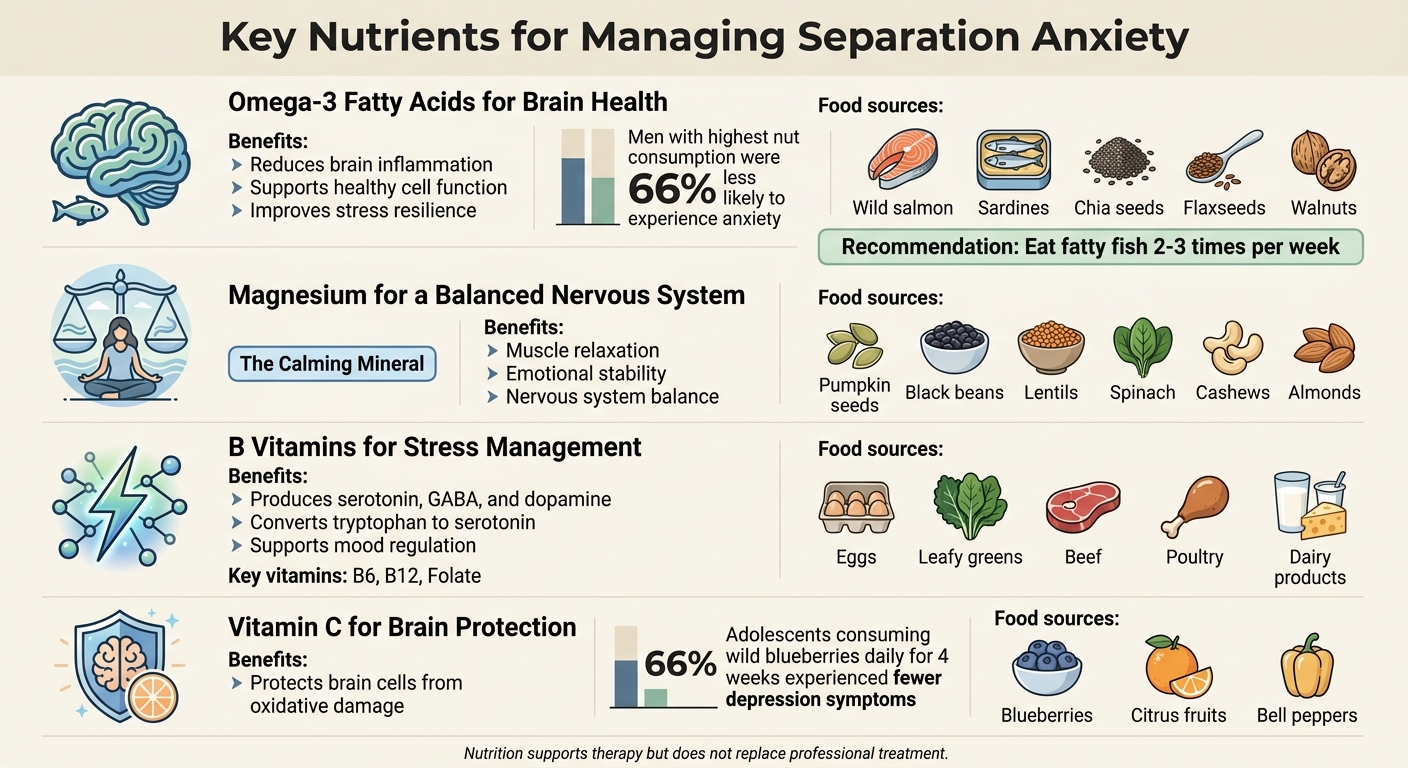
Key Nutrients for Managing Separation Anxiety: Sources and Benefits
Certain nutrients – like omega-3 fatty acids, magnesium, B vitamins, and vitamin C – play a role in managing stress and improving mood. Understanding where to find these nutrients can help create a diet that supports therapy for separation anxiety. Let’s break down how each nutrient works and where to get them.
Omega-3 Fatty Acids for Brain Health
Omega-3 fatty acids, especially EPA and DHA, are known to reduce brain inflammation and support healthy cell function, which can help manage anxiety. These fatty acids improve stress resilience and stabilize brain activity, making them a valuable addition to therapy.
For example, a 2020 study involving 3,172 adults found that men with the highest nut consumption were 66% less likely to experience anxiety compared to those with the lowest intake.
Some of the best sources of omega-3s include wild salmon, sardines, chia seeds, flaxseeds, and walnuts. Aim to eat fatty fish 2–3 times a week to meet your omega-3 needs. If fish isn’t part of your diet, plant-based options like ground flaxseeds and walnuts provide ALA (alpha-linolenic acid), which the body can partially convert to EPA and DHA.
Magnesium for a Balanced Nervous System
Magnesium is essential for muscle relaxation and emotional stability. Jess Sherman, a Functional Diagnostic Nutrition Practitioner, describes its importance:
Magnesium is often called the ‘calming mineral’ because of how it helps the nervous system stay balanced.
Unfortunately, diets high in processed foods can deplete magnesium levels, potentially increasing anxiety.
To maintain balance, include magnesium-rich foods like pumpkin seeds, black beans, lentils, spinach, cashews, and almonds in your meals. Adding these foods throughout the day can help keep your nervous system steady.
B Vitamins and Vitamin C for Stress Management
B vitamins (such as B6, B12, and folate) are crucial for producing neurotransmitters like serotonin, GABA, and dopamine. Vitamin B6 helps convert tryptophan into serotonin, while folate supports mood regulation. You can find these vitamins in eggs, leafy greens, beef, poultry, and dairy products.
Vitamin C, a powerful antioxidant, protects brain cells from oxidative damage. Foods like blueberries, citrus fruits, and bell peppers are rich in vitamin C. A 2020 study by J. Fisk and colleagues showed that adolescents who consumed wild blueberries daily for four weeks experienced fewer depression symptoms and improved mood.
Stabilizing Blood Sugar to Reduce Anxiety
Keeping blood sugar levels steady plays a key role in supporting emotional well-being. When blood sugar fluctuates – either dropping too low or spiking too high – the body releases stress hormones like cortisol and adrenaline. These hormones can intensify feelings of anxiety, potentially worsening conditions like separation anxiety. By maintaining stable blood sugar throughout the day, you can help foster emotional balance and complement therapeutic efforts. Let’s dive into some dietary strategies, from choosing the right carbs to cutting back on caffeine, that can help regulate blood sugar and ease anxiety.
Choosing Complex Carbohydrates
Complex carbs are digested slowly, which means they provide a steady source of energy without causing sudden blood sugar spikes or crashes. For example, oats are not only a great source of energy but also contain tryptophan, an amino acid that helps produce serotonin – a neurotransmitter associated with relaxation and reduced anxiety. Other excellent options include:
- Whole grain bread
- Brown rice
- Quinoa
- Sweet potatoes
- Legumes like lentils and chickpeas
These fiber-packed foods slow digestion and promote consistent blood sugar levels, which can support emotional stability and improve the effectiveness of therapy.
Including Protein at Each Meal
Adding protein to every meal helps slow the absorption of carbohydrates, which keeps blood sugar levels more consistent. Protein also supplies amino acids essential for producing neurotransmitters like dopamine and serotonin – both critical for mood regulation. Great sources of protein include:
- Eggs
- Turkey
- Salmon
- Lean meats
- Dairy products
For plant-based options, consider beans, tofu, tempeh, or Greek yogurt. These foods not only help regulate blood sugar but also contribute to a well-rounded nutrient intake.
Reducing Sugar and Caffeine Intake
Excess sugar can lead to dramatic blood sugar swings that often trigger anxiety. Similarly, caffeine can overstimulate the nervous system, leaving you feeling jittery and on edge. Instead of sugary snacks or multiple cups of coffee, try green tea. It contains L-theanine, an amino acid that promotes calmness by supporting the production of GABA, a neurotransmitter that helps reduce nervous energy.
If you’re craving something sweet, dark chocolate is a great alternative – just stick to moderation. A serving of 1 to 1.5 ounces provides antioxidants without overloading on sugar. Making these small adjustments to your diet can help keep your blood sugar stable and your anxiety in check.
sbb-itb-23f89d4
Combining Nutrition with Separation Anxiety Therapy
CBT focuses on reshaping thought patterns, while nutrition therapy tackles biological factors like inflammation, gut health, and hormonal imbalances. Together, they create a well-rounded treatment plan that addresses both mental and physical contributors to anxiety, leading to better outcomes.
Physical symptoms such as stomachaches and nausea often improve through targeted nutritional strategies. By managing these physical stress signals, patients can focus more effectively on their therapeutic work. This approach emphasizes the connection between mental and physical health, reinforcing the idea that mental health is deeply intertwined with physical well-being. Building on earlier findings about the role of nutrients and blood sugar regulation, we’ll now explore how Modyfi Health exemplifies this integrative care model.
Clinical Nutrition Therapy at Modyfi Health
In March 2026, Modyfi Health expanded its comprehensive care model by integrating psychiatric, therapy, and nutrition services through telehealth in Maryland, DC, Virginia, and Delaware. Their care combines traditional diagnostics with advanced functional lab testing, such as gut microbiome analysis and toxin exposure screenings, to provide personalized treatment for conditions like anxiety and PTSD.
“Modyfi’s approach to psychiatry goes beyond medication management. We blend conventional diagnostics and medications with a root-cause lens to address nutrition, sleep, hormones, trauma, and lifestyle as part of your care.” – Modyfi Health
Patients begin with a 60-minute evaluation that examines their mind, body, lifestyle, and environment. Using specialized assessments – including nutrient panels, hormone level checks, gut microbiome analysis, and inflammation markers – providers uncover biological imbalances that standard tests might miss. This deeper insight allows the care team to design highly personalized treatment plans, addressing underlying factors that may worsen separation anxiety symptoms.
Personalized Meal Planning
Once diagnostics pinpoint nutritional gaps or imbalances, the next step is personalized meal planning. Clinical nutritionists at Modyfi Health create structured meal plans tailored to each patient’s preferences and health needs. These plans target issues like blood sugar instability, which has been directly linked to mood swings and increased anxiety. By promoting steady blood sugar levels, these plans not only support mental health but also encourage patients to develop a sense of consistency and confidence in their eating habits.
The collaboration between psychiatric providers, licensed nutritionists, and therapists ensures that all aspects of care are aligned. During 30- to 60-minute follow-up sessions, the team reviews diagnostic results and tracks progress, adjusting both nutritional strategies and therapy as needed. This coordinated approach eliminates the confusion of conflicting advice and ensures that every element of care works toward the shared goal of lasting mental wellness.
Meal Planning Tips for Families
Turning nutrition science into everyday habits can make a world of difference for families, especially when addressing challenges like separation anxiety. Simple, nutritious meals don’t have to involve elaborate recipes or hard-to-find ingredients. By focusing on consistent meal timings and balanced nutrients, you can support both physical well-being and emotional stability. Meals that stabilize blood sugar and provide key nutrients can play a role in regulating emotions, complementing the goals of psychotherapy. For example, including a fist-sized portion of protein at every meal (measured using your child’s fist) ensures they get the amino acids needed to produce mood-regulating neurotransmitters like serotonin and dopamine. Pair that protein with vegetables, whole grains, or healthy fats to create a well-rounded plate that benefits both body and mind.
When it comes to meal planning, when you eat is just as important as what you eat. Sticking to regular meal times helps avoid blood sugar crashes that can lead to irritability and emotional outbursts. This sense of routine also provides children with a feeling of stability, which is especially helpful for those working through separation anxiety.
Sample Daily Meal Plan
Here’s an example of how a day of balanced meals could look:
- Breakfast: Scrambled eggs or Greek yogurt topped with blueberries and chia seeds. This combination delivers protein, probiotics, antioxidants, and omega-3s in one meal.
- Lunch: A turkey wrap with leafy greens. This meal provides tryptophan and B vitamins, which are essential for neurotransmitter production.
- Dinner: Baked salmon with quinoa and steamed broccoli. These ingredients supply omega-3 fatty acids, vitamin D, and magnesium – nutrients that support brain health and help reduce anxiety.
Snacks are another chance to boost nutrition. Options like pumpkin seeds, almonds, or a small piece of dark chocolate (1–1.5 ounces) can provide magnesium, zinc, and flavonols while keeping blood sugar steady. Functional Diagnostic Nutrition Practitioner Jess Sherman highlights the importance of proper nourishment:
When kids are well nourished, their bodies and brains can do the work of calming down – and that makes daily life and parenting a lot more manageable.
This approach demonstrates how balanced meals can contribute to both physical health and emotional resilience.
Using Functional Testing to Track Progress
Even the best meal plan may need adjustments, and functional testing can help ensure your child is absorbing and utilizing nutrients effectively. Tests like RBC or plasma blood panels for zinc and magnesium, omega balance assessments, and genetic screenings can identify whether additional supplementation is needed. Standard blood tests often fall short in showing how the body processes water-soluble vitamins like B6 or B12, so symptom questionnaires and genetic testing can offer more accurate insights. By monitoring these markers over time, you can fine-tune your child’s diet to work seamlessly with therapeutic interventions.
Conclusion: How Nutrition Supports Separation Anxiety Therapy
Nutrition plays a vital, supportive role in managing separation anxiety by stabilizing blood sugar, reducing inflammation, and supplying the brain with the essential nutrients it needs to regulate mood and handle stress. While diet changes are not a replacement for traditional therapy or medication, integrating clinical nutrition into a comprehensive care plan provides families with a powerful biological foundation for lasting emotional resilience.
Clinical Nutrition Therapy at Modyfi Health
Modyfi Health incorporates targeted nutrition into its personalized approach to anxiety treatment through its Root-Cause Psychiatry framework. This model uses functional diagnostic testing—such as nutrient panels, hormone checks, and gut microbiome analysis—to provide deeply personalized care that addresses the biological factors behind separation anxiety.
Modyfi Health has expanded its comprehensive care model by integrating psychiatric, therapy, and nutrition services through telehealth in Maryland, DC, Virginia, and Delaware. Their expert clinical team blends conventional diagnostics and medications with a root-cause lens to address nutrition, sleep, hormones, trauma, and lifestyle as a core part of your care.
👉 Schedule a comprehensive evaluation with Modyfi Health today to discover the biological root causes behind anxiety and build a tailored nutrition and therapy plan that works for your family.
FAQs
Which foods should I avoid if separation anxiety gets worse after meals?
Avoid eating processed foods loaded with sugar and refined carbohydrates. These can cause spikes and crashes in blood sugar levels, which might impact your mood and even increase feelings of anxiety. In some cases, this could make separation anxiety feel more intense after meals.
Do I need supplements, or can food alone provide enough omega-3s and magnesium?
A well-rounded diet packed with nutrient-dense foods can supply sufficient omega-3s and magnesium. Fatty fish like salmon are excellent sources of omega-3s, while nuts and leafy greens are great for magnesium. If your diet isn’t meeting these needs, supplements might be worth considering. It’s always a good idea to consult a healthcare provider to figure out what works best for you.
How soon can diet changes start helping alongside therapy for separation anxiety?
Dietary adjustments can start making a difference in managing separation anxiety within a few months. The timeline for improvement largely depends on how severe the condition is, with milder cases often responding more quickly. Sticking to these nutritional changes consistently is crucial for seeing the best outcomes.