


Exercise transforms your brain. It improves memory, sharpens focus, boosts mood, and helps manage stress. This happens through a process called neuroplasticity, where the brain reorganizes itself in response to activity. Regular movement increases blood flow, supports neuron growth, and strengthens connections between brain regions.
Key takeaways:
- Aerobic exercise (e.g., cycling, walking) increases oxygen flow and grows the hippocampus, improving memory.
- Strength training boosts chemicals like IGF-1, aiding white matter and executive function.
- Skill-based activities (e.g., dance, martial arts) enhance neural networks through complex movements.
- Yoga and tai chi reduce stress by calming cortisol and promoting relaxation.
Just 30 minutes of moderate activity can increase brain blood flow by 20%. Over time, consistent exercise can reduce depression, improve cognitive performance, and even slow brain aging. Simple steps – like walking or combining aerobic and skill-based workouts – can make a lasting impact.
The Brain-Changing Benefits of Exercise | Wendy Suzuki | TED
sbb-itb-23f89d4
How Physical Activity Changes the Brain
The brain makes up just 2% of your body weight but uses a whopping 20% of your energy. To keep it functioning at its best, it needs a steady supply of oxygen and nutrients. Exercise plays a direct role in ensuring this happens. From boosting blood flow to sparking molecular changes, physical activity showcases the brain’s ability to adapt and grow.
Increased Blood Flow and Oxygen Delivery
When you engage in activities like brisk walking, cycling, or swimming, your heart pumps faster, sending more blood to your brain. This increased circulation brings essential oxygen and nutrients, fueling vital processes like memory formation and problem-solving.
Over time, regular aerobic exercise strengthens the blood vessels that nourish your brain. It even helps maintain the myelin sheath – a protective layer around nerve fibers that speeds up communication between neurons. Studies reveal that consistent aerobic exercise can increase the size of the hippocampus, a brain region crucial for learning and memory, by 1–2% in older adults. Better blood flow is also linked to 5–10% improvements in executive functions, such as attention and multitasking.
How BDNF Supports Brain Health
Exercise doesn’t just energize your brain; it triggers important molecular changes. One standout player is Brain-Derived Neurotrophic Factor (BDNF), often called “fertilizer for your neurons.”
“Your muscles are literally sending a chemical message to your brain that says: grow.” – AJ Keller, CEO, Neurosity
BDNF helps neurons survive and thrive, promoting the growth of dendrites – branch-like structures that allow neurons to communicate. After just one moderate workout, BDNF levels can spike by 200–300% for 1–4 hours. Over 12 weeks of consistent exercise, baseline BDNF levels can rise by 20–30%, giving your brain a lasting boost even on rest days.
Low BDNF levels are often linked to depression. People with depression frequently show reduced levels of this protein, and chronic depression has been tied to a 10–15% reduction in hippocampal volume. Exercise-induced BDNF can help counteract this shrinkage, supporting brain health and emotional well-being.
Synaptic Plasticity and New Neuron Growth
Physical activity doesn’t just strengthen existing neural connections – it helps your brain create new ones. Exercise promotes neurogenesis (the birth of new neurons) and synaptogenesis (the formation of new connections) through BDNF and two other key molecules: Vascular Endothelial Growth Factor (VEGF) and lactate. VEGF encourages blood vessel growth, while lactate signals new neurons to mature and integrate into neural networks.
In a 2007 study at the University of Münster, young men who performed two 3-minute sprints before studying vocabulary learned words 20% faster compared to those who rested or jogged lightly. For some participants, this cognitive edge lasted for eight months.
These processes work together to enhance the brain’s adaptability and resilience.
Lower Inflammation and Reduced Stress Effects
Chronic stress floods your brain with cortisol, a hormone that can damage neurons and shrink the hippocampus over time. Exercise counteracts this by lowering inflammation and calming the brain’s stress response. This reduces the long-term damage caused by prolonged stress.
The combined effects of reduced inflammation, improved blood flow, and higher BDNF levels create an environment where the brain can repair itself, adapt, and thrive – not just get by.
Types of Exercise That Support Brain Health
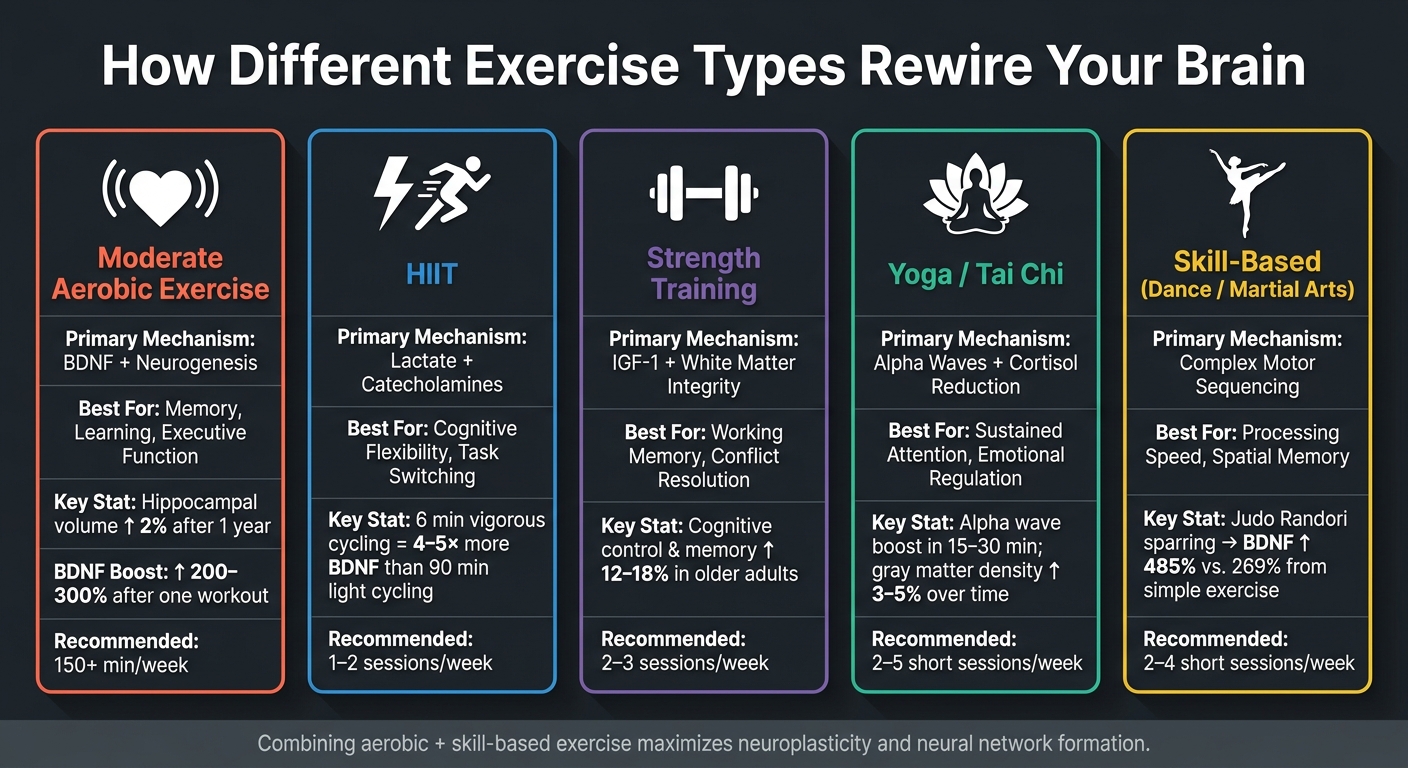
How Different Exercise Types Rewire Your Brain
Different types of exercise activate specific biological pathways that contribute to brain health. Here’s a closer look at how each form of exercise plays its part.
Aerobic Exercise
Aerobic activities like brisk walking, running, cycling, and swimming are well-known for enhancing brain function. These exercises significantly boost levels of brain-derived neurotrophic factor (BDNF), which promotes hippocampal growth – a key region for memory and learning. The intensity of the activity matters: just six minutes of vigorous cycling can increase BDNF levels four to five times more than 90 minutes of light cycling.
A pivotal study published in PNAS (2011) followed 120 older adults (average age 66) over a year. Participants engaging in 40-minute aerobic sessions at 60–70% of their maximum heart rate experienced a 2% increase in hippocampal volume, while those in the stretching-only control group saw a 1.4% reduction. Higher BDNF levels also coincided with improved spatial memory.
“Your brain is a very greedy organ, requiring a lot of blood to function. The better the cardiovascular system can supply the brain with blood, the more likely it is that your brain will stay healthy.” – Dr. Dylan Wint, Neuropsychiatrist, Cleveland Clinic
For an extra brain boost, try 20–30 minutes of moderate aerobic exercise about 30–90 minutes before tackling tasks that require focus, such as studying or problem-solving. This timing aligns elevated BDNF and dopamine levels with peak cognitive performance.
Strength Training
Strength training, or resistance training, stimulates a different set of molecular signals compared to aerobic exercise. It increases levels of insulin-like growth factor 1 (IGF-1) and testosterone, both of which help maintain the brain’s white matter – the pathways that connect different brain regions. This type of exercise has been shown to improve cognitive control and memory by 12–18% in older adults.
Skill-Based and Coordination Activities
Exercises that combine physical and mental effort, like dance, martial arts, tennis, or fencing, engage multiple neural networks simultaneously. For instance, a study on elite judo athletes found that complex sparring (Randori) increased plasma BDNF levels by 485%, compared to a 269% increase from a simpler, equally intense physical test. The cognitive complexity of these activities enhances neuroplasticity, helping the brain adapt and grow.
Mind-Body Exercises
Yoga and tai chi take a gentler approach to brain health. Instead of relying on high-intensity activity to spike BDNF, these practices focus on reducing cortisol levels and increasing alpha brainwave activity. This creates a state of calm yet alert focus. In fact, yoga can boost alpha wave activity within just 15–30 minutes of practice. Over time, regular practice has been linked to a 3–5% increase in gray matter density in areas related to memory.
| Exercise Type | Primary Brain Mechanism | Best Cognitive Benefit |
|---|---|---|
| Moderate Aerobic | BDNF + Neurogenesis | Memory, learning, executive function |
| HIIT | Lactate + Catecholamines | Cognitive flexibility, task switching |
| Strength Training | IGF-1 + White matter integrity | Working memory, conflict resolution |
| Yoga / Tai Chi | Alpha waves + Cortisol reduction | Sustained attention, emotional regulation |
| Skill-Based (Dance/Martial Arts) | Complex motor sequencing | Processing speed, spatial memory |
Each of these exercise types prepares the brain in unique ways for better mental health, laying the groundwork for the benefits covered in the next section.
Mental Health Benefits of Regular Exercise
Exercise doesn’t just change your body – it reshapes your mind. The biological shifts it triggers, like increased BDNF (Brain-Derived Neurotrophic Factor), reduced inflammation, and stronger neural connections, directly translate into mental health improvements. These changes pave the way for better emotional balance and sharper cognitive abilities, as outlined below.
Reducing Anxiety and Depression
Physical activity is a natural mood booster. It increases serotonin levels by making more tryptophan available to the brain and enhances dopamine receptor activity, which can restore motivation and the ability to feel pleasure. Exercise also releases anandamide, a chemical that crosses the blood-brain barrier and contributes to the feel-good sensation often called the “runner’s high”.
The biological shifts triggered by movement directly translate into mental health improvements by helping regulate essential neurotransmitters like serotonin and dopamine.
Science heavily backs up the impact of exercise as a powerful ally in clinical care. A well-known study from Duke University, known as the SMILE trial, involved 156 adults with major depressive disorder split into three groups: medication only, exercise only (30 minutes of brisk walking or jogging three times a week), or a combination of both.
After 16 weeks, all groups showed significant and comparable progress in reducing depressive symptoms. However, long-term follow-ups revealed that patients who maintained their physical activity routines achieved much more sustainable emotional stability over time. This clinical data proves that physical activity and brain rewiring strategies serve as indispensable therapeutic tools for ongoing mental health support, working beautifully alongside traditional psychiatric care.
For managing depression, aim for 30–45 minutes of moderate aerobic exercise – like brisk walking, cycling, or swimming – three to five times a week. If anxiety is the issue, rhythmic activities such as jogging or swimming at 70–80% of your maximum heart rate are particularly effective, as they maximize the release of endocannabinoids.
Exercise also helps the body recalibrate its response to stress.
Better Stress Management
Regular workouts help reset the brain’s stress response by normalizing the HPA (hypothalamic-pituitary-adrenal) axis. This reduces how strongly you react to stress and speeds up recovery afterward. After exercising, your brain experiences increased alpha wave activity, which promotes a state of calm alertness, and decreased high-beta activity, which is linked to overthinking and anxiety.
Sharper Cognitive Performance
Exercise doesn’t just make you feel better – it makes you think better, too. A single workout triggers a two-hour window of heightened brain plasticity, during which your brain becomes more adaptable. Over time, regular aerobic exercise increases gray matter in the prefrontal cortex (responsible for decision-making and focus) and the hippocampus (key for memory). Moderate-intensity activities enhance executive functions like attention and flexibility, while high-intensity intervals improve how quickly you process information.
“Exercise is probably one of the most effective factors that can reduce your risk [of cognitive decline].” – Dr. Dylan Wint, Neuropsychiatrist, Cleveland Clinic
Even small amounts of activity can make a difference. Just 35 minutes of exercise a week has been linked to a 41% lower risk of developing dementia.
Improved Sleep Quality
Struggling to get a good night’s sleep? Exercise can help. Physical activity raises your core body temperature during a workout, and about 30–90 minutes later, that temperature drops significantly – signaling to your body that it’s time to rest. Exercise also boosts melatonin production, the hormone that regulates your sleep-wake cycle, while reducing the anxiety and mental chatter that often disrupt sleep.
“Exercise appears to have a direct impact on increasing hormones that are important for nerve cell health and releasing neurotransmitters that are important for wellbeing, cognition, sleep and other functions.” – Dr. Dylan Wint, Neuropsychiatrist, Cleveland Clinic
Building an Exercise Routine for Brain Health
Creating a structured exercise routine can enhance the brain’s ability to adapt and grow. Below are some practical ways to incorporate brain-boosting activities into your weekly schedule.
Set Weekly Activity Goals
Once you understand how exercise benefits the brain, setting weekly goals ensures you make the most of those advantages. Studies show that engaging in 150 minutes of moderate-intensity exercise per week can lower the risk of developing depression by 18%. That breaks down to just 30 minutes a day, five days a week. If 150 minutes feels overwhelming, even smaller amounts of activity can still contribute to long-term brain health.
Consistency matters. Spreading out moderate sessions across the week is better for cognitive benefits than cramming all your activity into one or two days. The brain’s chemical responses, like the release of BDNF and endocannabinoids, are temporary. Regular exercise ensures these chemicals are consistently available, helping the brain stay in a growth-friendly state.
A balanced routine that combines goal-setting with a variety of exercise types will maximize the brain’s ability to adapt and thrive.
Mix Different Types of Exercise
No single type of exercise addresses all aspects of brain health. A well-rounded routine includes different forms of activity, each offering unique benefits:
| Exercise Type | Primary Brain Benefit | Recommended Frequency |
|---|---|---|
| Aerobic (Cardio) | Improves memory, attention, and BDNF production | 150+ minutes per week |
| Strength Training | Enhances executive function and dopamine signaling | 2–3 sessions per week |
| Skill-Based (Dance/Sports) | Stimulates neural networks and motor planning | 2–4 short sessions per week |
| Mind-Body (Yoga) | Reduces anxiety and regulates stress | 2–5 short sessions per week |
As mentioned earlier in the article, combining complex movements with aerobic activity strengthens the brain’s ability to adapt. These activities encourage new neurons to integrate into existing networks, reinforcing the brain’s capacity to adjust and grow.
Start Small and Build Gradually
It’s important not to overdo it right away. Start with small, manageable steps – what experts call the “minimum effective dose.” For example, a simple 10-minute walk can boost BDNF levels and improve your mood.
“Don’t worry about whether you’re doing the perfect amount of exercise or the perfect type of exercise. Just get started – because you can’t get going if you don’t get started in the first place.” – Dylan Wint, MD, Neuropsychiatrist, Cleveland Clinic
Gradual increases in activity are the key to maintaining the brain’s neurochemical balance and encouraging long-term changes. A practical approach might look like this: start with four 20-minute brisk walks per week for the first two weeks. Then, add one strength-training session and one coordination-focused activity in weeks three and four. By weeks five and six, you can introduce a short high-intensity interval session. Following a 12-week plan gives your brain enough time to show measurable improvements in both structure and function.
Modyfi Health‘s Approach to Mental Health and Exercise

Addressing mental health through exercise requires careful planning and clinical expertise.
Personalized Care Plans
Root-Cause Psychiatry: Exercise Therapy at Modyfi Health
True mental wellness requires translating the science of physical activity and brain rewiring into a personalized, real-world routine. At Modyfi Health, clinical nutritionists and board-certified psychiatrists treat specialized movement not just as fitness, but as a powerful therapeutic tool to support emotional balance, cognitive function, and nervous system regulation.
Instead of leaving you to figure out an exercise plan on your own while dealing with fatigue or anxiety, Modyfi Health builds comprehensive, customized care plans. Every journey begins with an in-depth evaluation covering sleep, nutrition, environment, and lifestyle factors. By utilizing functional lab testing to look at hormone levels, nutrient deficiencies, and inflammation markers, their expert care team identifies the exact biological roadblocks hindering your progress.
Specialized exercise therapists then design gentle, steady fitness and mobility plans tailored specifically to mental health conditions like depression, ADHD, anxiety, or trauma—allowing you to rebuild resilience completely free of performance pressure.
Modyfi Health operates entirely online via telehealth across Maryland, DC, Virginia, and Delaware, and accepts most major insurance plans.
👉 Schedule your comprehensive evaluation with Modyfi Health today to co-create an integrated plan that heals the whole person.
Full-Spectrum Support Services
At Modyfi Health, exercise therapy is just one piece of a larger, coordinated care model. This model combines psychiatric medicine, evidence-based psychotherapy, nutrition therapy, and functional lab testing.
| Service | Role in Brain Health |
|---|---|
| Psychiatric Medicine | Tackles root causes like hormonal imbalances, trauma, and sleep issues; includes medication when necessary |
| Exercise Therapy | Boosts BDNF (a brain protein), regulates the nervous system, and fosters long-term resilience |
| Nutrition Therapy | Supports the gut-brain connection and helps stabilize blood sugar for consistent energy levels |
| Functional Lab Testing | Pinpoints nutrient deficiencies and hormonal issues that could affect mood and cognition |
| Individual Therapy | Addresses psychological barriers that may hinder consistency in movement and routines |
This integrated approach ensures that underlying issues – like chronic inflammation or nutrient deficiencies – are addressed alongside exercise and therapy. A patient shared their experience:
“They focus on the foundation of health, sleep, exercise, lifestyle, not just meds. They treat me like a whole human.” – K.B., Patient, Modyfi Health
Modyfi Health operates entirely online, serving residents in Maryland, DC, Virginia, and Delaware. The clinic accepts most major insurance plans, though Medicare and Medicaid are not covered.
Conclusion: What Exercise Can Do for Your Brain
The research leaves no room for doubt: physical activity dramatically transforms the brain. Just one moderate workout can boost BDNF levels by 200%–300%, and sticking to a year of regular aerobic exercise can reverse as much as two years of brain shrinkage. These changes enhance cognitive function, improve mood, and build resilience against stress.
Exercise stands out for its lasting impact on mental health. Take the SMILE trial at Duke University, for example. Participants who exercised 30 minutes, three times a week, had a depression relapse rate of just 8%, compared to 38% for those who relied solely on medication. This highlights that depression isn’t just about chemical imbalances – it’s also linked to deficits in growth factors.
Both the type of exercise and its consistency play a big role. Three 20-minute sessions a week provide steadier neurochemical benefits than one long workout, as the brain’s response to exercise is short-lived and requires regular reinforcement. Pairing aerobic activities with complex, skill-based movements – like dancing or martial arts – offers the brain both the raw materials and the stimulation it needs to form new, lasting neural connections. These insights emphasize the practical advantages of sticking to a varied and consistent exercise routine.
FAQs
How soon will I notice brain benefits from exercise?
Exercise can boost your brainpower surprisingly fast – sometimes within just a few hours or by the next day. After a workout, you might notice sharper memory, better brain connections, and increased neuroplasticity (your brain’s ability to adapt and reorganize). Over time, staying active regularly helps maintain these benefits, improving your brain’s overall health and supporting your mental well-being.
Which type of exercise is best for memory and focus?
Aerobic exercises – like brisk walking, cycling, swimming, or jogging – are fantastic for sharpening memory and improving focus. These activities not only enhance neuroplasticity but also help increase the size of the hippocampus, a part of the brain critical for learning and memory. Regular aerobic workouts improve blood flow to the brain, encouraging the development of new neural connections and supporting overall cognitive health and mental clarity.
How can I start exercising for mental health if I feel overwhelmed?
Starting with small, simple steps can make a big difference. For example, a 10-minute walk can lift your mood and benefit your brain. The focus should be on consistency rather than intensity – sticking to regular activity is what truly supports mental health. As you get more comfortable, you can gradually increase the duration or intensity of your exercise. Choose activities you enjoy, like yoga or stretching, to stay motivated. By making your routine enjoyable and manageable, exercise becomes less daunting and easier to maintain over time.