


Aerobic exercise isn’t just good for your body – it can significantly improve your mental health. Research shows that activities like walking, jogging, and swimming can rival or even exceed the effectiveness of antidepressants in reducing symptoms of anxiety and depression. Here’s why:
- Reduces Stress Hormones: Exercise helps regulate cortisol levels and calms the body’s stress response.
- Boosts Brain Chemicals: It increases dopamine, serotonin, and anandamide, improving mood and motivation.
- Supports Brain Health: Aerobic activities promote the growth of brain cells and reduce inflammation, reversing damage linked to mental health conditions.
- Improves Resilience: Regular exercise strengthens the brain’s ability to manage stress and negative emotions.
Even 10 minutes a day can make a difference. Start small, choose activities you enjoy, and focus on consistency to see long-term benefits. Pairing exercise with therapy and proper nutrition can further enhance its impact.
Exercise may ease anxiety, depression
sbb-itb-23f89d4
What Anxiety and Depression Do to the Body and Mind
Anxiety and depression cause noticeable changes in both brain activity and physical health. By understanding these effects, it becomes clearer why approaches like aerobic exercise can be so impactful.
How Anxiety Affects the Brain and Body
Anxiety puts the brain’s amygdala into overdrive, keeping it on high alert. This heightened state weakens the brain’s natural ability to calm itself, leaving the hypothalamic-pituitary-adrenal (HPA) axis stuck in overdrive. As a result, the body is flooded with cortisol, a stress hormone that keeps the stress response running longer than it should.
This constant state of overactivation shows up physically as tight muscles, poor sleep, and an overworked nervous system. On a chemical level, imbalances in GABA (a calming neurotransmitter) and glutamate (which excites the brain) make it hard to relax, even in non-threatening situations.
How Depression Affects Mood and Motivation
Depression disrupts the brain’s reward system, particularly in the nucleus accumbens, the part of the brain tied to pleasure. Reduced dopamine activity here leads to anhedonia, or the inability to enjoy things that once brought happiness.
In addition to this, lower levels of BDNF (brain-derived neurotrophic factor) hinder the brain’s ability to adapt and recover emotionally. This lack of neuroplasticity makes it harder to bounce back from negative experiences. Another factor is endocannabinoid deficiency, which affects mood regulation. Compounds like anandamide (AEA), which help manage stress and mood, are often found at reduced levels in individuals with depression.
“A depressive state is strongly linked to a state of endocannabinoid deficiency, manifested by decreased levels of major endocannabinoids (such as AEA and 2-AG) in the brain and decreased signaling function of cannabinoid receptors.” – Frontiers in Psychiatry
Depression also triggers chronic low-grade neuroinflammation. Studies show that people with depression often have higher levels of inflammatory markers like IL-6 and TNF-α – sometimes 20–60% higher than those without depression. This inflammation can lead to symptoms like fatigue, mental fog, and difficulty concentrating.
These biological factors highlight why traditional treatments often struggle to fully address the condition.
Why Common Coping Strategies Often Fall Short
Because anxiety and depression involve such complex biological changes, typical coping techniques often miss the mark. Many people lean on strategies like avoiding stress, relying on willpower, or trying occasional exercise. While these efforts may help temporarily, they rarely lead to lasting improvement.
For instance, avoiding stress doesn’t address the overactive HPA axis – it just delays dealing with the problem. Similarly, while exercise is a great idea, inconsistent or unsupervised workouts often lack the structure needed to create meaningful changes in brain chemistry. Research suggests that structured, group-based exercise programs are more effective for managing depression, thanks to the added benefits of routine and social support.
“A considerable number of patients have poor response, delayed onset, or difficulty tolerating the side effects of monoamine antidepressants, prompting us to investigate the more complex neurobiological underlying depression.” – Guanmin Zhang, Department of Physical Education, Gangneung-Wonju National University
While antidepressants focus on balancing neurotransmitters like serotonin, norepinephrine, and dopamine, depression involves much more. Issues like endocannabinoid dysfunction, inflammation, and gut-brain axis disruptions often remain unaddressed. This gap in treatment highlights the need for approaches like aerobic exercise that target these deeper biological processes.
How Aerobic Exercise Supports Mental Health
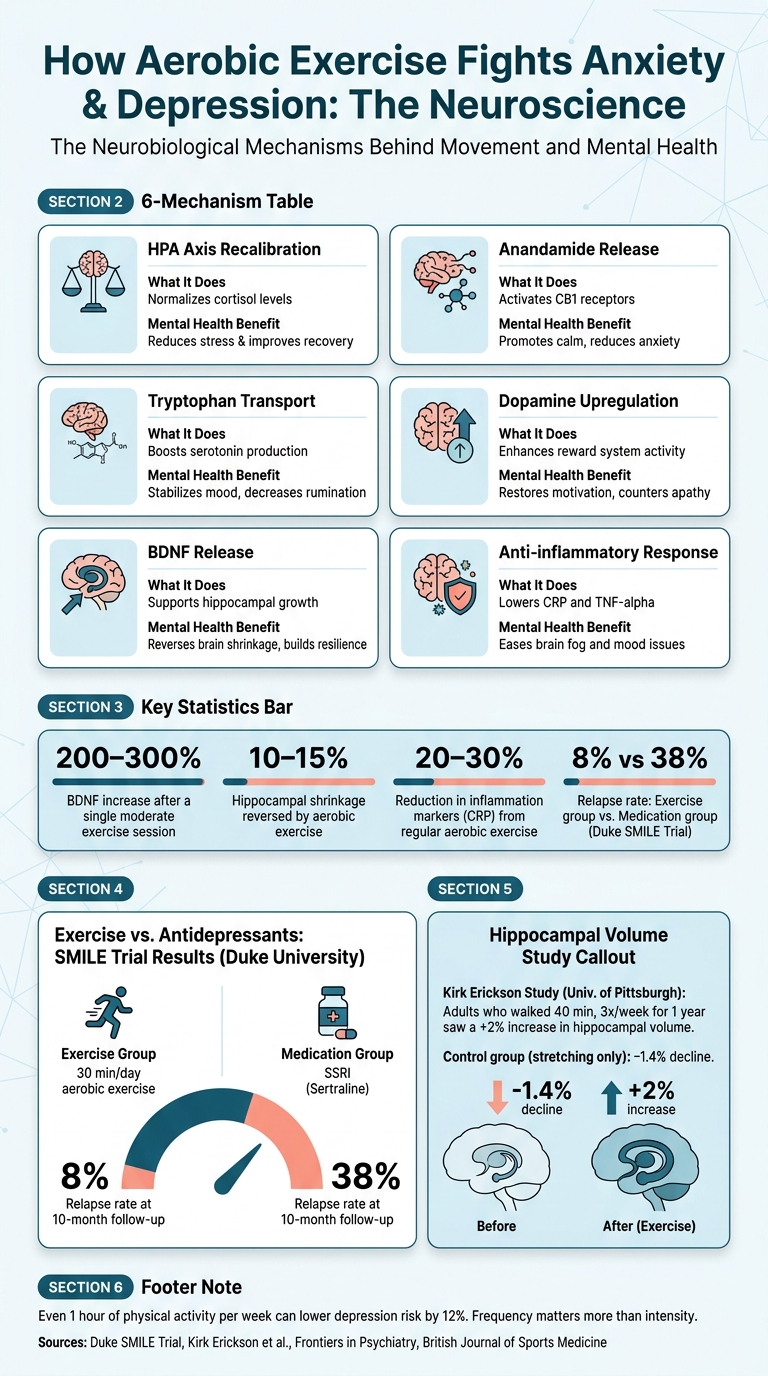
Aerobic Exercise vs. Antidepressants: Brain Benefits & Mental Health Outcomes
Let’s dive into how aerobic exercise helps counteract the biological imbalances caused by anxiety and depression. These imbalances include excess stress hormones, disrupted reward pathways, chronic inflammation, and reduced brain adaptability. Aerobic exercise directly addresses these challenges, offering both immediate and long-term mental health benefits.
How Exercise Regulates Stress and Calms the Body
Aerobic exercise helps reset the body’s stress response system, known as the HPA axis, by normalizing cortisol levels and improving recovery after stress. Activities like swimming or steady cycling, which involve rhythmic motion and controlled breathing, stimulate the vagus nerve. This shifts the body from the high-alert “fight-or-flight” state to a calmer “rest-and-digest” mode.
On top of that, regular aerobic exercise lowers inflammation markers like C-reactive protein (CRP) by as much as 20–30%. Reduced inflammation can alleviate symptoms like brain fog, fatigue, and low mood, making it easier to manage daily stressors.
How Exercise Lifts Mood and Activates Reward Pathways
Depression often dampens the brain’s reward system, making it harder to feel motivated or enjoy pleasurable activities. Aerobic exercise works against this by increasing activity in the brain’s reward circuits and boosting dopamine production. Moderate exercise also releases anandamide, a molecule that binds to CB1 receptors in the brain, creating a calming “runner’s high.”
This process even supports serotonin production. When muscles are active, they consume branched-chain amino acids, allowing tryptophan – a serotonin precursor – to enter the brain more easily. This mechanism is different from how SSRIs work, offering a natural way to stabilize mood.
“You are, in a very real neurochemical sense, getting high on your own supply when you exercise. Your body produces a molecule that activates the exact same receptor system as cannabis.” – AJ Keller, CEO, Neurosity
The evidence backs this up. In Duke University‘s SMILE trial, participants with major depressive disorder saw similar improvements in symptoms whether they exercised for 30 minutes a day or took the SSRI sertraline. However, the exercise group had a much lower relapse rate – just 8% compared to 38% for the medication group – 10 months after the study.
How Exercise Builds Neuroplasticity and Mental Resilience
Depression can shrink the hippocampus, a brain region critical for memory and emotional regulation, by 10–15%. Aerobic exercise reverses this damage by increasing levels of brain-derived neurotrophic factor (BDNF), which supports neural growth and repair.
A study led by Kirk Erickson at the University of Pittsburgh showed that older adults who walked aerobically for 40 minutes three times a week experienced a 2% increase in hippocampal volume over a year. By contrast, a control group focused on stretching saw a 1.4% decline. Even a single session of moderate exercise can boost BDNF levels by 200–300%. Over time, these changes enhance cognitive flexibility, helping people break free from negative thought patterns.
| Mechanism | What It Does | Mental Health Benefit |
|---|---|---|
| HPA Axis Recalibration | Normalizes cortisol levels | Reduces stress and improves recovery |
| Anandamide Release | Activates CB1 receptors | Promotes calm and reduces anxiety |
| Tryptophan Transport | Boosts serotonin production | Stabilizes mood and decreases rumination |
| Dopamine Upregulation | Enhances reward system activity | Restores motivation and counters apathy |
| BDNF Release | Supports hippocampal growth | Reverses brain shrinkage and improves resilience |
| Anti-inflammatory Response | Lowers CRP and TNF-alpha | Eases brain fog and mood issues linked to inflammation |
How to Start and Stick to an Aerobic Exercise Routine
Knowing how exercise benefits your brain is one thing; actually starting when you’re feeling anxious or depressed is a whole different challenge. The good news? You don’t need a fancy gym membership, a strict schedule, or an intense workout plan to start seeing improvements in your mental health.
Start Small to Overcome Low Motivation
Setting the bar too high can backfire. When depression saps your energy or anxiety makes everything feel overwhelming, even the thought of an hour-long workout can feel impossible. But here’s the thing: just 10 minutes of walking is enough to kickstart positive changes in your brain.
That’s your minimum effective dose. It’s not about burning calories – it’s about sparking those neurochemical shifts that make the next session feel just a little easier.
“The goal isn’t intensity, it’s regularity. When you choose movement that feels doable, accessible, and even enjoyable, it makes it far more likely that exercise will become a sustainable part of your recovery.” – Debra Kissen, PhD, CEO at Light On Anxiety Treatment Centers
Once a short walk becomes part of your routine, you can gradually add more time. Tackling exercise in small, manageable steps helps you avoid burnout and builds a foundation for long-term consistency.
Choose Activities That Fit Your Life and Interests
After establishing a routine, focus on finding activities that are easy to do and enjoyable. The best exercise is the one you’ll actually stick with. This often means something close to home, affordable, and not overly intimidating. Think brisk walks, outdoor cycling, swimming at a local pool, or even following a free cardio video at home.
Your choice of activity can also depend on how you’re feeling. If anxiety is a bigger issue, rhythmic and steady movements – like swimming laps or cycling at a consistent pace – can help. These activities match your breathing to your movement, calming your nervous system without overstimulating it. On the other hand, if depression is more prominent, group-based activities like a walking club or fitness class can provide social connection and accountability that solo workouts might not offer.
“Exercise should be framed as a tool for mental health, not another metric for self-criticism.” – Joshua Lichtman, DO, Psychiatrist and Medical Director at Neuro Wellness Spa
Set Realistic Goals and Monitor Your Progress
When it comes to mental health benefits, frequency matters more than intensity. For example, three 20-minute sessions a week are more effective than one intense 90-minute session. Even just one hour of physical activity per week – broken into smaller sessions – can lower the risk of developing depression by 12%.
Short, consistent sessions help you build momentum and reinforce the habit. Instead of focusing on numbers like miles or calories burned, pay attention to how you feel before and after each workout. Tracking things like mood, energy, or sleep can strengthen the connection between exercise and mental relief, making it easier to stay consistent.
If motivation remains a struggle, joining a running club or group class can provide structure and accountability. Having a specific program to follow removes the stress of figuring out where to start, making it easier to take that first step.
Adding Aerobic Exercise to a Full Mental Health Care Plan
Incorporating aerobic exercise into a broader mental health care strategy can amplify its positive effects. While regular movement can be a powerful tool on its own, combining it with other forms of support – like therapy and nutrition – often leads to even better outcomes. Whether you’re managing mild anxiety or more persistent depression, weaving exercise into a comprehensive care plan can have a meaningful impact.
Pairing Exercise with Therapy and Nutrition
For those with mild symptoms, aerobic activity alone may be enough. However, for more moderate or severe conditions, the benefits of exercise can be significantly enhanced when paired with therapy and, if needed, medication. Interestingly, engaging in physical activity before a therapy session may help prepare your nervous system, making you more open to therapeutic insights and interventions.
Nutrition is another key piece of the puzzle. By combining exercise with proper dietary support and therapy, you can address the physical and chemical factors that contribute to anxiety and depression. For instance, exercise stimulates the release of myokines like irisin, which influence gut health and brain function. When paired with a diet that supports gut microbiome health and reduces neuroinflammation, these effects can be magnified. This creates a positive feedback loop where movement, nutrition, and mental health work together, reinforcing one another.
Personalized Exercise Plans for Better Outcomes
Tailoring an exercise plan to your unique needs – whether based on your symptoms, fitness level, or life stage – can lead to better results. Structured group exercise programs, for example, not only provide social accountability but also deliver measurable improvements for depression. For anxiety, gentler activities like walking or swimming at a lower intensity can help you ease into physical activity without overwhelming your system.
At Modyfi Health, we understand exactly how aerobic exercise reduces anxiety and depression, which is why structured movement physiology is seamlessly woven right into our comprehensive care plans.
Our dedicated, virtual care team of board-certified psychiatrists, therapists, and clinical nutritionists goes far beyond superficial solutions. By leveraging advanced functional diagnostic testing, we pinpoint deep-rooted biological blockers—such as chronic neuroinflammation, gut microbiome imbalances, or key nutrient deficiencies—that sabotage your energy and mood.
From there, specialized exercise therapists design gentle, sustainable, and highly personalized movement routines tailored specifically to your nervous system, giving you all the tools to thrive completely free of performance anxiety.
Modyfi Health operates entirely online via telehealth across Maryland, DC, Virginia, and Delaware, and accepts most major insurance plans.
👉 Schedule your FREE discovery call with Modyfi Health today to co-create an integrated plan that heals the whole person.
When to Get Professional Support
If your symptoms are severe or complex, professional guidance becomes essential. This is particularly true for conditions involving psychotic features, co-occurring physical illnesses, or extreme symptoms.
“Exercise is powerful, but it alone may not suffice, and it should never delay access to evidence-based medical or psychotherapeutic care when those are clearly indicated.” – Joshua Lichtman, DO, Psychiatrist and Medical Director at Neuro Wellness Spa
For those struggling with isolation, extreme fatigue, or a complete lack of motivation, a supervised group setting or structured clinical program can offer the accountability and support that solo efforts might lack. The ultimate goal is to ensure that exercise complements your care plan while leaving room for the professional help you might need.
Conclusion: Using Movement to Support Mental Wellness
The evidence is hard to ignore: aerobic exercise has a direct impact on brain chemistry and structure. It influences critical biological pathways tied to mental health, and clinical trials have shown that exercise often leads to lower relapse rates compared to relying on medication alone.
This science-backed connection underscores why regular movement should be a central part of any mental wellness strategy. The British Journal of Sports Medicine emphasizes this point:
“Physical activity should be a mainstay approach in the management of depression, anxiety and psychological distress.”
However, movement is most effective when combined with other key elements. A holistic approach – blending consistent aerobic activity with balanced nutrition, evidence-based therapy, and professional guidance – creates a powerful system where each component amplifies the benefits of the others.
At Modyfi Health, this integrated care model is taken a step further. Their team of board-certified psychiatrists, therapists, and clinical nutritionists uses tools like functional diagnostic testing and psychiatric evaluations to craft personalized care plans. These plans seamlessly weave exercise physiology into therapy and nutrition, aiming not just for symptom relief but for lasting mental wellness tailored to each individual’s biology.
The takeaway? Regular aerobic exercise can lead to enduring changes in the brain. Start small, stay consistent, and let movement become a cornerstone of your mental health journey.
FAQs
How soon will aerobic exercise help my anxiety or depression?
Some individuals experience a boost in their mood as soon as 10 minutes after engaging in aerobic exercise, and this positive effect can stick around for several hours. Over time, maintaining a regular exercise routine – spanning weeks or even months – can lead to lasting improvements in managing anxiety and depression.
What’s the best cardio “dose” for mental health if I’m starting from zero?
Starting with 10 minutes of moderate aerobic exercise, such as brisk walking or light jogging, a couple of times per week is a great way to ease into a routine. Over time, aim for a total of 150 minutes weekly, breaking it into manageable sessions of 10 to 30 minutes each.
The key here is consistency over intensity. Take it slow at first, prioritize sticking with it, and gradually increase your activity level. Joining group activities can make it easier to stay committed, while shorter, gentler sessions are especially helpful for managing anxiety without feeling overwhelmed.
Can I combine exercise with therapy or medication safely?
Yes, combining exercise with therapy or medication is generally safe and can enhance treatment results. That said, it’s always a good idea to consult a healthcare professional to make sure the plan aligns with your specific needs, especially if you’re dealing with severe symptoms or have particular medical conditions.