
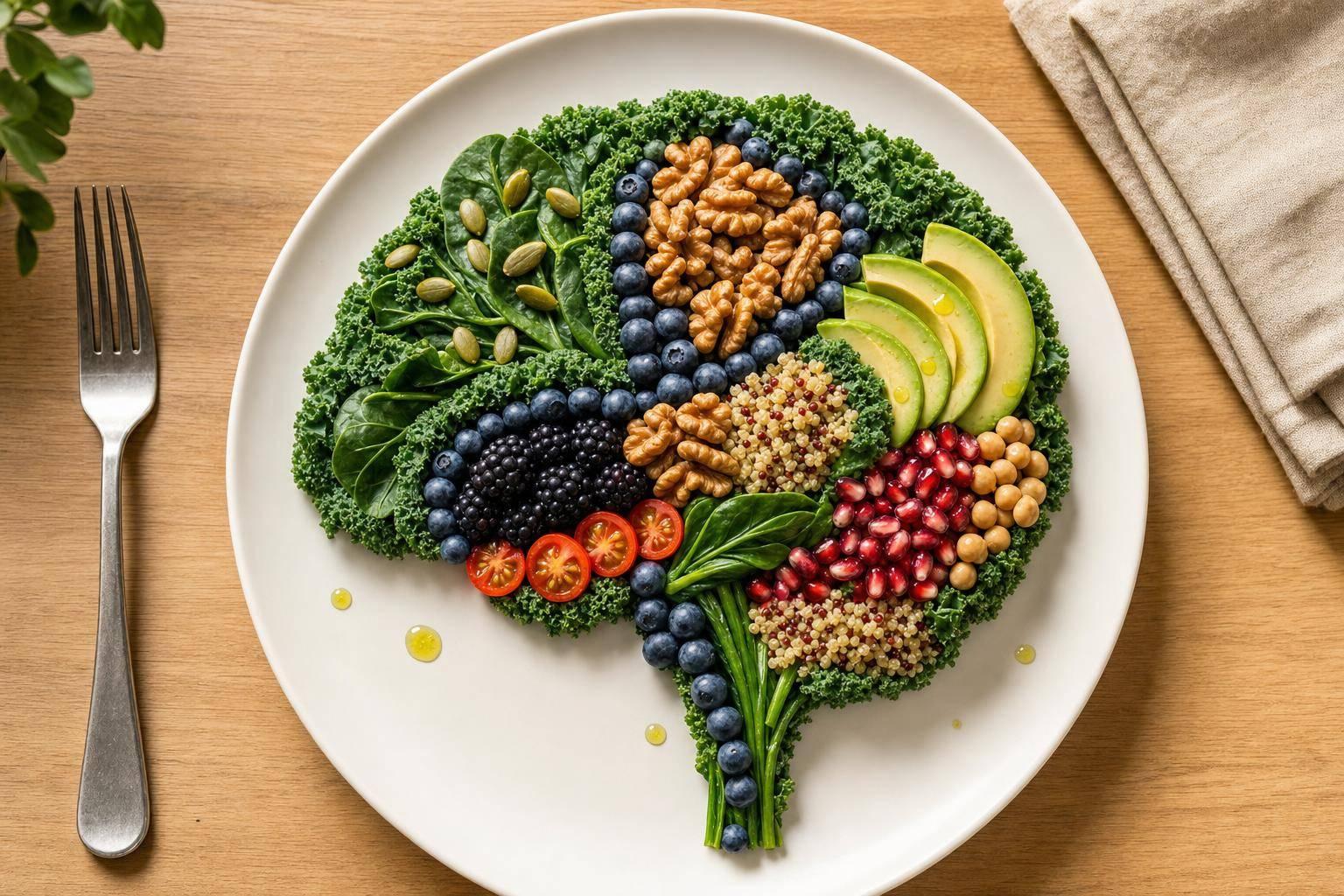

A plant-forward diet can help protect brain function as you age. In one well-known pattern, people with close follow-through had a 53% lower risk of Alzheimer’s, and even moderate follow-through was linked to a 35% lower risk.
If I wanted the short version, here it is:
- Food quality matters most. Whole plant foods beat ultra-processed “plant-based” foods.
- The best-supported pattern here is MIND. It focuses on leafy greens, berries, beans, whole grains, nuts, and olive oil, with small amounts of fish or poultry.
- Key nutrients need planning. I’d watch B12, omega-3s, folate, choline, vitamin E, and polyphenols.
- Blood flow, inflammation, and blood sugar all affect the brain. Diet can shape each one.
- Simple meal structure works. Think vegetables, beans or tofu, whole grains, and healthy fats.
- Some issues are common. Bloating, fatigue, brain fog, or weight changes often point to fiber changes, low calories, or missed nutrients.
A few food targets stand out: 3 servings of whole grains a day, 6 servings of leafy greens a week, 4 servings of beans a week, and 2 servings of berries a week. If I were eating little fiber now, I would add it slowly – about 5 grams per week – and drink more water.
Dr. Neal Barnard: How to Eat to Prevent Alzheimer’s
and Boost Brain Power
sbb-itb-23f89d4
Quick Comparison
| Pattern | Main Idea | Animal Foods | Best Fit |
|---|---|---|---|
| Vegan | No animal foods | None | People who want a fully plant-only plan |
| Vegetarian | No meat, may include eggs/dairy | Some | People who want more flexibility |
| Whole-Food Plant-Based | Focus on less-processed plant foods | Usually none | People who want to cut refined foods hard |
| Plant-Forward / MIND | Plant foods first, some animal foods allowed | Limited | People focused on brain aging and easier day-to-day follow-through |
Bottom line: if I were picking one eating style for brain aging, I’d start with a plant-forward MIND-style plan, keep ultra-processed foods low, and make sure nutrient gaps – especially B12 and omega-3s – are covered.
How Plant-Based Diets Support the Aging Brain
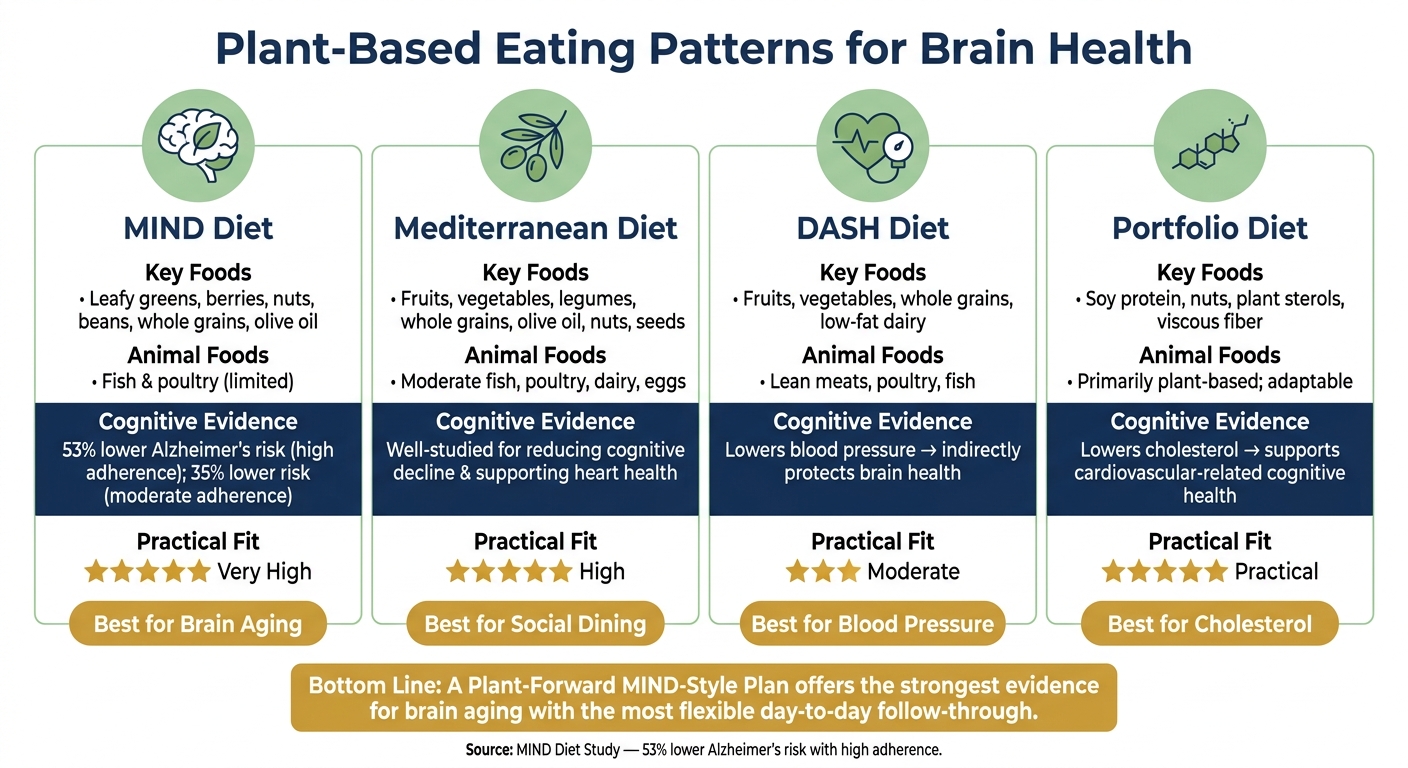
Plant-Based Eating Patterns for Brain Health: MIND vs. Mediterranean vs. DASH vs. Portfolio
Plant-based diets can help protect the aging brain in a few key ways: they support blood flow, lower inflammation, and help keep blood sugar on a more even track. When people swap saturated fats from red meat and butter for fiber-rich foods like legumes and unsaturated fats like olive oil, they often improve cholesterol, artery health, and circulation. And for the brain, blood flow matters a lot. These gains tend to be strongest when the diet is built around whole foods, not just plant-labeled products.
There’s another piece to this. Oxidative stress and brain inflammation play a big role in age-related cognitive decline. Plant foods, especially berries, leafy greens, and citrus, supply flavonoids and carotenoids that help deal with free radicals. Those compounds may help reduce brain inflammation and support brain cell health.
Blood sugar also plays a bigger role than many people think. Refined carbs and sugary foods can cause sharp spikes in blood sugar, which is linked to insulin resistance and a higher risk of dementia. Whole grains, beans, and vegetables break down more slowly, which helps keep blood sugar steadier over time. So it’s not just about whether a food is plant-based. How processed it is matters too.
Healthy Plant Foods vs. Ultra-Processed Plant Foods
Not all plant foods help the brain in the same way. The main gains come from whole, minimally processed foods, not packaged items that happen to carry a plant-based label.
Foods like vegetables, fruits, legumes, whole grains, nuts, seeds, and extra-virgin olive oil supply fiber, antioxidants, folate, and vitamin E, all of which support brain health. On the flip side, ultra-processed plant foods like white bread, sugary drinks, sweets, and deep-fried foods can work against those goals by driving blood sugar spikes and inflammation. Put simply, food quality matters more than food category.
Plant-Forward Eating Patterns for Brain Health Compared
Several well-studied eating patterns lean heavily on plant foods, but they’re not all the same. Some are more flexible, some focus more on heart health, and some speak more directly to brain health. For people in the U.S., here’s how the main options compare:
| Pattern | Key Foods | Animal Foods Allowed | Cognitive-Health Evidence | Practical Fit for U.S. Readers |
|---|---|---|---|---|
| MIND Diet | Leafy greens, berries, nuts, beans, whole grains, olive oil | Fish and poultry in limited amounts | 53% lower Alzheimer’s risk with high adherence; 35% with moderate adherence | Very high; flexible guidelines and designed specifically for brain health |
| Mediterranean | Fruits, vegetables, legumes, whole grains, olive oil, nuts, seeds | Moderate fish, poultry, dairy, and eggs | Well-studied for reducing cognitive decline and supporting heart health | High; widely available ingredients and accommodates social dining |
| DASH | Fruits, vegetables, whole grains, low-fat dairy | Lean meats, poultry, fish | Primarily lowers blood pressure, which indirectly protects brain health | Moderate; easy to follow with standard groceries, but requires attention to sodium |
| Portfolio | Soy protein, nuts, plant sterols, viscous fiber | Primarily plant-based; can be adapted | Focuses on lowering cholesterol, a key factor in cardiovascular-related cognitive health | Practical for people focused on heart and brain health through cholesterol management |
The next section shows which nutrients deserve the most attention on a plant-based diet.
Brain-Critical Nutrients to Prioritize on a Plant-Based Diet
Once you’ve cleaned up food quality, the next step is making sure you cover the nutrients that matter most for brain aging.
Omega-3s, B Vitamins, and Choline
Plant-based omega-3s mostly show up as ALA, which you’ll get from flax, chia, hemp, and walnuts. That’s a good start. But if you want a more direct route for brain omega-3s, add an algae-based DHA/EPA source.
Vitamin B12 takes some planning on a vegan or near-vegan diet. It plays a big role in myelin and brain function, and plants on their own don’t give you a steady source. That means fortified foods or a B12 supplement should be part of the plan. Folate, or B9, matters too. It helps with methylation and neurotransmitter synthesis. Lentils, spinach, chickpeas, and asparagus can help fill that gap.
Choline is another one people often miss. On a plant-based diet, it helps to be deliberate here. Soy foods like tofu, tempeh, and edamame are good picks, and quinoa and broccoli help too.
Polyphenols, Vitamin E, and Nitrates
Polyphenols from berries, dark chocolate, coffee, and tea help support antioxidant defenses. Vitamin E, found in almonds, sunflower seeds, spinach, and olive oil, helps protect brain cell membranes. Nitrates from beets and arugula may help support blood flow.
Here’s the short version: these nutrients each do a different job, and small daily habits make them much easier to cover.
| Nutrient | Brain Function Role | Primary Plant Sources | Simple Daily Use |
|---|---|---|---|
| Omega-3 (ALA) | Neuronal membranes & anti-inflammatory support | Walnuts, chia seeds, flaxseeds, hemp seeds | Add 1 tbsp of ground flax or chia to morning oatmeal |
| Vitamin B12 | Myelin production; brain function | Fortified nutritional yeast, fortified plant milks | Use fortified foods daily or take a B12 supplement |
| Folate (B9) | Methylation & neurotransmitter synthesis | Lentils, spinach, chickpeas, asparagus | Include 1 cup of cooked lentils in a salad or soup |
| Choline | Precursor to acetylcholine (memory neurotransmitter) | Tofu, tempeh, edamame, quinoa, broccoli | Add 1/2 cup of edamame to a salad or stir-fry |
| Vitamin E | Antioxidant; protects brain cell membranes | Almonds, sunflower seeds, spinach, olive oil | Snack on a small handful (1 oz) of raw almonds |
| Polyphenols | Reduce oxidative stress; support neuronal integrity | Blueberries, strawberries, dark chocolate, coffee, tea | Eat 1/2 cup of berries at least twice a week |
| Nitrates | Support cerebral blood flow & vascular health | Beets, arugula, rhubarb | Add 1/2 cup of roasted beets or a handful of arugula to meals |
With those pieces in place, the next section shows how to turn them into balanced meals, snacks, and a simple weekly routine.
Building a Brain-Healthy Plant-Based Routine
How to Build Balanced Meals and Snacks
Once you’ve covered the key nutrients, the next step is simple: turn them into meals you can repeat without much thought.
A good rule of thumb is to build each plate with half non-starchy vegetables, one quarter high-fiber carbs, one quarter plant protein, and a small serving of healthy fat. That mix can help keep blood sugar more even, support vascular health, and give the brain a steadier fuel supply.
Refined carbs and ultra-processed foods can push blood sugar up fast, which can work against cognitive health. Aiming for 3 servings of whole grains daily, 6 servings of leafy greens weekly, 4 servings of beans weekly, and 2 servings of berries weekly is a simple target to work toward.
7-Day Meal Framework
Use this as a simple weekly rotation, not a rigid menu.
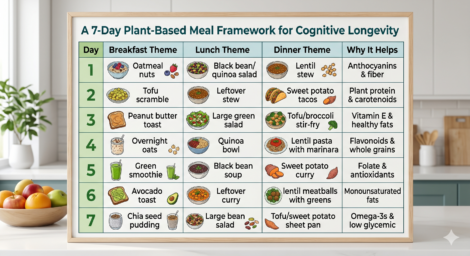
If your current diet is low in fiber, don’t jump from zero to full speed. Increase fiber by about 5 g per week and drink enough water to help cut bloating.
Budget, Life Stage, and Meal Adjustments
For this routine to stick, it has to work in daily life and fit the grocery bill. Dried or canned beans, especially when rinsed to cut sodium, plus frozen berries and frozen vegetables, give you a lot of nutrition for less money. Buying oats, brown rice, and quinoa in bulk can stretch your food budget even more. It also helps to keep sodium under 2,000 mg per day to support blood pressure.
From there, shape the plan around age, appetite, and the foods a person already likes to eat. Midlife adults may want to lean harder on high-fiber choices to help with blood sugar and vascular health. Older adults may need to pay closer attention to protein and hydration.
This pattern can also fit many food styles without feeling forced. Southern-style collard greens and black-eyed peas work well here. So do Tex-Mex black bean tacos with avocado, Asian-inspired tofu and broccoli stir-fries with brown rice, and Latin American lentil soups with sofrito. The point isn’t to eat one “perfect” menu. It’s to build meals that match a person’s age, budget, and food culture while still supporting brain health.
Tracking Progress, Fixing Problems, and Getting Support
Once your meal pattern is set, it helps to track a few signs over time to see if it’s working.
What to Track Over Time
Pay attention to focus, memory, and mental clarity. Also watch for digestive changes like bloating or gassiness. Small day-to-day shifts can tell you a lot.
It’s also smart to notice early memory changes that show up before any formal testing. Higher intakes of plant protein and antioxidant-rich plant foods are linked to fewer early memory complaints.
On the clinical side, a clinician may check blood pressure, insulin sensitivity, and vascular health from time to time. They may also look at homocysteine and nutrient status, including B12, vitamin D, and iron, when symptoms or risk factors are present. If symptoms don’t improve, they can review lab results and personal risk factors to see what may be getting in the way.
If symptoms stick around, the next move is usually to check for a nutrient gap, too few calories, or another medical issue.
Common Problems and Evidence-Informed Fixes
Most problems on a plant-based diet come down to a few common causes. And in many cases, the fix is pretty simple.
| Challenge | Likely Contributing Factors | Evidence-Informed Adjustments | When to Seek Professional Help |
|---|---|---|---|
| Fatigue / Brain fog | Low B12, iron, omega-3s, or calories | Confirm B12 intake, then add legumes, seeds, fortified foods, and protein-rich plant foods | If symptoms persist despite dietary changes, or for homocysteine testing |
| Digestive discomfort | Rapid increase in fiber intake | Track current fiber for 1 to 2 weeks, then raise it by about 5 g per week and drink water | If pain is severe or symptoms persist |
| Unintended weight changes | Shift in caloric density of meals compared with the previous diet | Adjust intake of healthy fats like avocados, nuts, and olive oil, along with whole grains | If weight loss or gain is rapid, unintended, and unexplained |
| High blood pressure | Sodium intake exceeding 2,000 mg/day | Lower sodium and limit packaged plant foods | If blood pressure remains elevated despite diet changes |
One point is worth underlining: avoid iron or copper supplements unless a clinician prescribes them. Too much of these metals may harm brain health and has been linked to higher Alzheimer’s risk.
How Modyfi Health Can Support a Personalized Plan
When cognitive goals overlap with mood, memory gaps, or attention symptoms, general eating guidelines are rarely enough.
At Modyfi Health, our virtual network connects you with board-certified psychiatrists, clinical nutritionists, and specialized therapists under one integrated care model. Through our Root-Cause Psychiatry approach, we analyze critical biomarkers—including B12, vitamin D, homocysteine, and metabolic health indicators—to design a data-informed, highly personalized treatment plan tailored entirely to your biology.
👉 Click here to schedule your comprehensive Evaluation with Modyfi
FAQs
How long does it take to see brain-health benefits from plant-based eating?
It depends on the person and on which mental effects you’re looking at. Research links sticking more closely to a plant-based eating pattern with better memory and executive function, but it doesn’t point to one exact timeline.
Some people may notice sharper focus or less brain fog within a few weeks to a few months. Bigger long-term brain health gains tend to build more slowly, often over several months to years of steady eating habits.
Do I need supplements on a plant-based diet for cognitive health?
Not always. A well-planned plant-based diet can supply many nutrients that help support brain health through whole foods like berries, nuts, seeds, leafy greens, and healthy fats.
That said, some people may do better with supplements for vitamin B12, vitamin D, choline, or omega-3s, especially EPA and DHA. It depends on what you eat, your health status, and your own needs. Modyfi Health can help tailor that plan to you.
Can a plant-forward diet still help if I’m not fully vegan?
Yes. A plant-forward diet can support cognitive health even if you’re not fully vegan.
Eating more fruits, vegetables, whole grains, nuts, and seeds can help your brain stay in better shape over time. The same goes for cutting back on saturated fat and added sugar. This kind of eating pattern has been linked to better cognitive performance and a lower risk of cognitive decline.
You don’t have to go all-in for it to matter. Diets like the MIND diet show that even moderate shifts toward more plant-based foods can support brain health.