
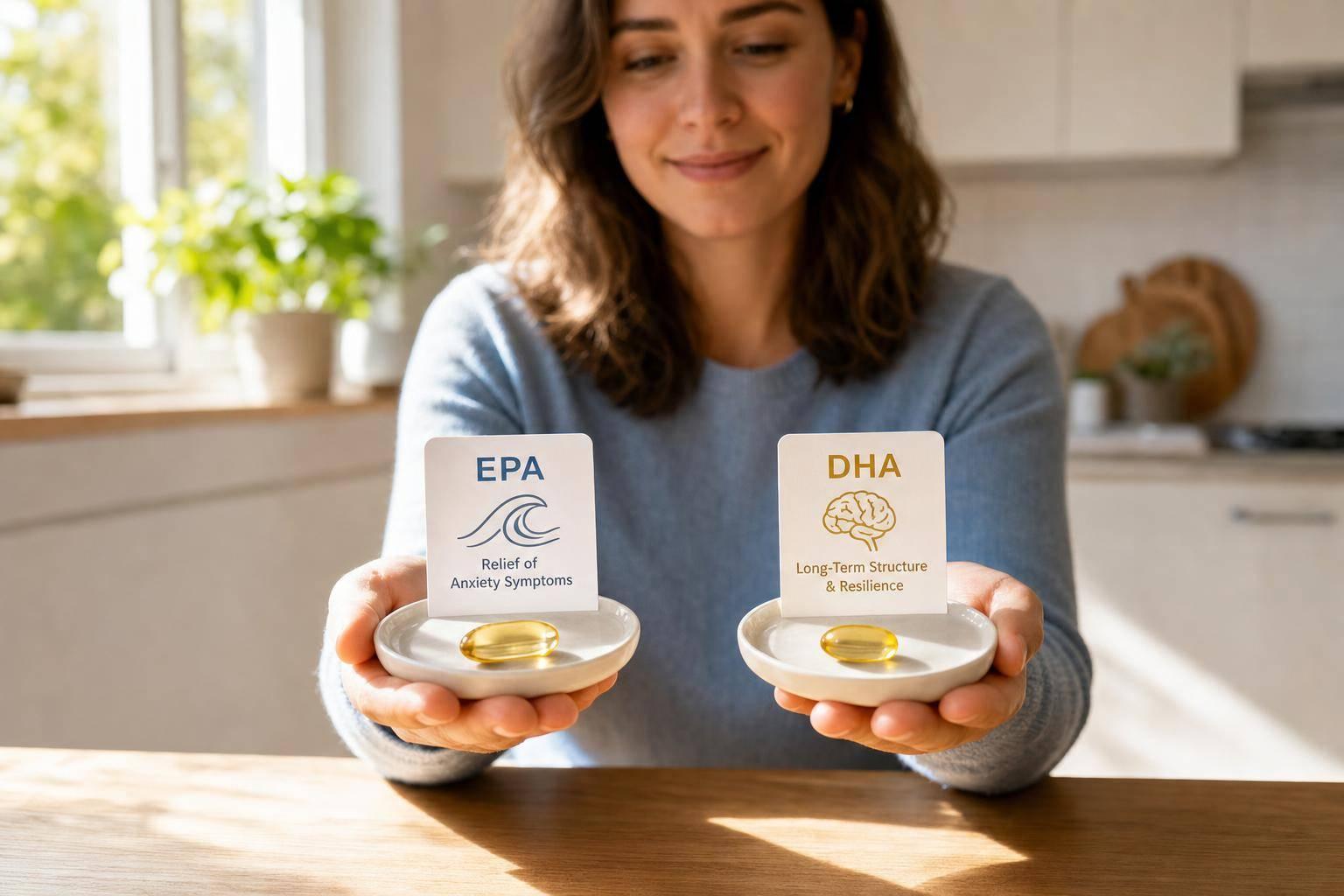

When choosing omega-3s for anxiety, EPA and DHA are not interchangeable — and the difference matters more than most supplement labels suggest.
EPA has stronger research support for anxiety symptom relief. DHA plays a bigger role in brain structure and long-term cognitive support. Both matter, but they work differently — and for anxiety specifically, the formula ratio is often more important than the total dose.
What the evidence actually shows:
- EPA and DHA are not the same thing
- EPA-dominant formulas show up more often in anxiety studies
- The strongest pattern in research is around 2,000 mg/day of combined EPA + DHA
- DHA still matters, but more for brain cell structure, signaling, and stress resilience
- Most people should give omega-3s 8 to 12 weeks before judging results
- If you take blood thinners, are pregnant or breastfeeding, or have a medical condition, talk with a clinician first
For anxiety as the primary goal, EPA-dominant formulas tend to make more sense. For broader brain support — memory, cognition, long-term resilience — a balanced EPA+DHA formula may be a better fit.
Quick Comparison
| Point | EPA | DHA |
|---|---|---|
| Main focus | Anxiety symptom support | Brain structure and signaling |
| Research for anxiety | Stronger | Less direct |
| Common formula style | 60%+ EPA | Often used with EPA, not alone |
| Common use case | Stress and anxiety support | Brain health and resilience |
| Best-known dose pattern | Often part of ~2,000 mg/day total omega-3 use | Usually paired with EPA |
So if you’re comparing fish oil labels, don’t just look at the total omega-3 number. Check the EPA and DHA amounts separately. That’s where the choice starts.
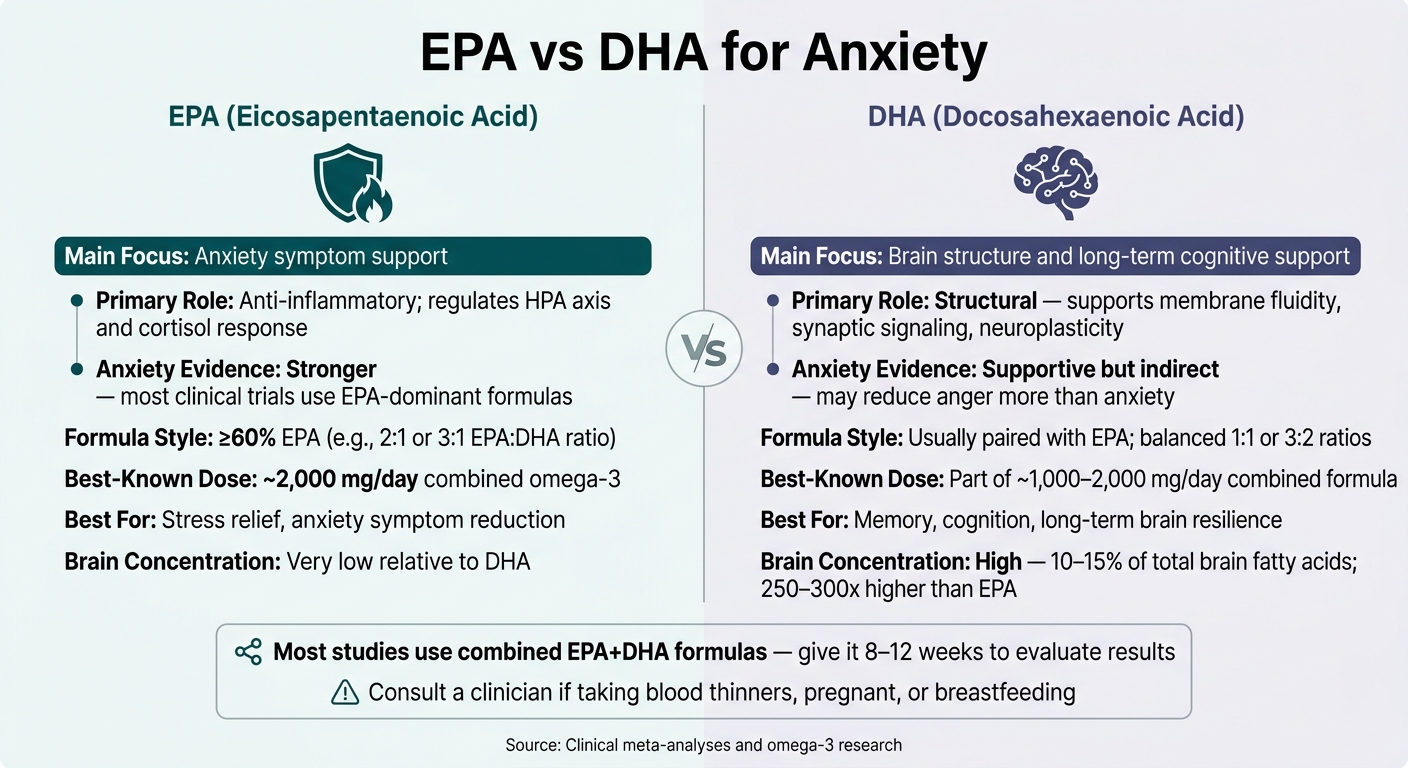
EPA vs DHA for Anxiety: Side-by-Side Comparison
How EPA May Support Anxiety and Stress
EPA’s Role in Mood and Inflammation
EPA may help with anxiety by lowering inflammation and affecting stress signaling. That helps explain why EPA gets more attention in anxiety research.
More specifically, EPA may influence inflammation and the body’s stress-response system, including the HPA axis, which helps control cortisol release during stress. Because of that, EPA-dominant formulas show up more often in anxiety studies.
That mechanism lines up with how researchers tend to use EPA in published trials.
What Anxiety Research Uses for EPA
Studies that report anxiety relief usually use EPA-dominant formulas, often with EPA making up at least 60% of total omega-3 content. A 2024 dose-response meta-analysis of 23 trials found the greatest improvement in anxiety symptoms at 2 g/day — though the certainty of evidence was rated low, and more high-quality trials are needed.
The overall evidence is still mixed. Even so, EPA-heavy formulas remain the most common option in research focused on symptom relief.
EPA Food Sources and Safety Notes
Fatty fish are the main food source of EPA, including:
- Salmon
- Sardines
- Herring
- Anchovies
- Mackerel
- Trout
If you don’t eat fish often, supplements may be the more practical choice.
Side effects are usually mild, such as stomach upset or a fishy aftertaste. People who take blood thinners or antiplatelet drugs should talk with a clinician before using high doses.
DHA works a bit differently, with more focus on brain structure and neural signaling.
sbb-itb-23f89d4
How DHA May Support Anxiety and Brain Function
DHA’s Role in the Brain
If EPA is the omega-3 more closely linked with symptom relief, DHA plays more of a structural role.
DHA is the main omega-3 in the brain, making up 10% to 15% of total fatty acids. Brain DHA levels are roughly 250 to 300 times higher than EPA levels. It’s concentrated in neuronal membranes, where it helps support membrane fluidity, synaptic signaling, and plasticity. In plain English, DHA helps keep brain cells flexible and better able to communicate. That may help with longer-term stress resilience, even if it’s less tied to fast anxiety relief.
DHA also affects the endocannabinoid system. Low DHA may disrupt CB1 signaling in brain regions involved in emotion regulation.
What Studies Show for DHA
That structural role matters. But when you look for DHA-only anxiety trials, the research gets thin.
Most anxiety studies use combined EPA+DHA formulas, so DHA-specific evidence is still limited. Observational data suggest that higher DHA intake may be linked with lower anxiety risk, but that doesn’t prove it works as a treatment. There may also be a split in how these fats work: EPA may do more for anxiety symptoms, while DHA may do more for reducing anger.
DHA Food Sources and Practical Use
The body converts ALA to DHA poorly, so getting DHA straight from food or algae matters.
Fatty fish like salmon, tuna, mackerel, herring, and sardines provide preformed DHA. Shellfish and DHA-enriched eggs can help too. If you’re vegetarian or vegan, algal oil gives you a direct DHA source without relying on that weak conversion step.
DHA seems more relevant for long-term brain support and stress resilience than for fast anxiety relief. That contrast becomes easier to see in the side-by-side comparison below.
EPA vs DHA for Anxiety: Side-by-Side Comparison
Mechanism and Research Differences
EPA and DHA don’t do the same job.
EPA is more focused on symptom relief, while DHA is more tied to brain structure and function. Put simply, EPA is more linked to inflammation and the body’s stress response. DHA plays more of a structural role by helping support membrane fluidity and synaptic function. In mood and anxiety studies, EPA-dominant formulas – where EPA makes up 60% or more of total omega-3 content – have shown more consistent results.
| Aspect | EPA | DHA |
|---|---|---|
| Primary Role | Anti-inflammatory and immunomodulatory | Structural and neuroplasticity-focused |
| Brain Concentration | Very low | High (10% to 15% of total brain fatty acids) |
| Anxiety Evidence | Stronger for symptom relief | Supportive, not primary; may be more helpful for anger symptoms |
| Key Mechanism | Reduces IL-6 and TNF-alpha; helps regulate the HPA axis | Supports membrane fluidity and synaptic function |
That difference helps explain why EPA often gets more attention in anxiety research. DHA matters too, but it tends to play more of a supporting role than the lead one.
Dose Patterns and Formula Choices
When people shop for omega-3s, they often look at the total milligrams and stop there. But for anxiety, the ratio matters just as much as the dose.
EPA-dominant formulas usually contain at least 60% EPA, often in a 2:1 or 3:1 EPA:DHA ratio, and these are the most common formulas used in anxiety trials. Balanced formulas, by contrast, usually use 1:1 or 3:2 ratios and tend to fit better when the goal is broader wellness or cognitive support.
| Feature | EPA-Dominant Formulas | Balanced EPA+DHA Formulas |
|---|---|---|
| Typical Dose Range | 1,000–2,200 mg EPA daily | 1,000–2,000 mg combined daily |
| Ratio Pattern | ≥60% EPA (e.g., 2:1 or 3:1 EPA:DHA) | 1:1 or 3:2 ratios |
| Consistency of Anxiety Benefit | High in clinical trials for anxiety and depression | Moderate; better suited for general wellness and cognition |
| Major Study Limitations | Few direct head-to-head trials | Variable populations and formulas |
There’s one catch: there still aren’t many direct head-to-head trials comparing EPA-heavy products with balanced ones. So the pattern is useful, but it’s not the same thing as a clean winner in every case.
The next question is how to match that choice to safety, medications, and product quality.
When to Lean Toward EPA-Dominant or Balanced Formulas
If anxiety is the main issue, EPA-dominant formulas usually make more sense – especially when high stress or inflammatory burden is part of the picture. That’s where EPA seems to have the clearest edge.
Balanced formulas fit better when anxiety isn’t the only goal and you also want support for memory, long-term brain structure, or cognition. Think of it this way: EPA tends to be the sharper tool for symptom-focused use, while balanced EPA+DHA formulas may be a better fit for broader brain support.
Modyfi Health can individualize EPA:DHA balance using psychiatric evaluation, nutrition review, and lab data. That choice should also account for medication use, diet, and supplement quality.
Before Starting Omega-3s: Safety, Personalization, and Next Steps
How to Choose Dose, Ratio, and Product Quality
Don’t judge an omega-3 supplement by total fish oil alone. What matters is the actual EPA and DHA content in milligrams. For anxiety, the strongest results tend to show up around 2,000 mg per day of combined EPA + DHA.
Product quality matters too. Look for supplements that are third-party tested for heavy metals such as mercury and lead, PCBs, and oxidation. To cut down on nausea and those all-too-common fishy burps, take omega-3s with food or choose enteric-coated capsules. And don’t jump to high doses without guidance from a clinician.
How Omega-3s Fit Into an Integrative Anxiety Plan
Once you know the dose and the quality checks out, the next step is figuring out where omega-3s belong in your anxiety care.
Omega-3s can support anxiety treatment, but they don’t replace therapy, medication, sleep, or exercise. Most people need 8 to 12 weeks before they can fairly judge whether it’s helping. If you take anticoagulants or antiplatelet drugs, talk with a clinician before starting because omega-3s have mild blood-thinning effects. The same goes for anyone who is pregnant, breastfeeding, or living with a chronic medical condition.
Key Takeaways
After looking at EPA, DHA, and dosing, the choice usually comes down to symptom relief, brain support, and safety.
- EPA has stronger evidence for anxiety support, especially in EPA-dominant formulas.
- DHA still matters for brain structure, membrane fluidity, and long-term cognitive support. It works alongside EPA rather than against it.
- Many clinical studies use mixed EPA+DHA formulas, so the best fit depends on your main goal: anxiety symptom relief or broader brain support.
- Give it 8 to 12 weeks before deciding how well it’s working.
- The right formula depends on your symptoms, diet, medications, and a clinician’s review of your full health picture.
Ready to Turn This Research Into a Real Plan?
Understanding the EPA vs DHA difference is the first step. The next is working with someone who can apply it to your specific situation — your anxiety symptoms, your current medications, your diet, and your lab values. At Modyfi, our network of providers brings psychiatry, therapy, nutrition, and exercise together in one place.
👉 Explore Providers to Book an Appointment and Start Your Care Plan
(Note: Modyfi proudly accepts most major commercial insurance plans in MD, DC, VA, and WV; currently, we do not accept Medicare or Medicaid.)
FAQs
Should I choose EPA only or EPA plus DHA for anxiety?
Research points to EPA as the main driver behind mood support. For anxiety, an EPA-dominant formula is usually the better pick, with at least 60% EPA out of the total EPA + DHA content.
Many studies use 1,000–2,000 mg of EPA per day. Formulas that lean heavily on DHA have shown less support for mood symptoms.
How do I read a fish oil label for EPA and DHA?
Ignore the total fish oil amount – like 1,000 mg per capsule. That number can look impressive, but it doesn’t tell you how much omega-3 you’re getting.
Instead, check the Supplement Facts panel for the exact amounts of EPA and DHA.
Then add EPA and DHA together to find the supplement’s actual omega-3 strength. For anxiety support, choose an EPA-dominant formula, with EPA making up at least 60% of the combined EPA and DHA amount.
Who should talk to a clinician before taking omega-3s?
Anyone dealing with major anxiety should talk with a clinician before starting omega-3s, just to make sure they make sense for their health situation.
It’s also smart to check with a healthcare provider if you take anticoagulant or antiplatelet medications like warfarin or aspirin, or if you have bipolar disorder. Omega-3 supplements are not a substitute for professional mental health care or evidence-based treatment.