


About 90% to 95% of serotonin is made in the gut — but that doesn’t mean gut serotonin goes straight to the brain. What it does mean is this: the gut can shape mood, stress, pain, and bowel symptoms through nerve signals, immune activity, and changes in how tryptophan is used.
What the evidence actually shows:
- Gut and brain communicate in both directions
- Inflammation and stress can shift tryptophan away from serotonin production
- Blood serotonin levels don’t reflect brain serotonin
- IBS, anxiety, and low mood often overlap for a reason
- Diet, sleep, exercise, and therapy have the steadiest research support
- Supplements and stool tests have real limits worth understanding
If gut symptoms and mood symptoms are showing up at the same time, the research points away from single-factor solutions — one magic food, one probiotic, or one lab number. The pattern matters more than any individual piece. And meaningful changes in mood or digestion typically take 6 to 12 weeks — not a few days.
For a quick visual overview of how the gut and brain stay connected — before going deeper into the mechanisms below — this two-minute explainer is a useful place to start:
2-Minute Neuroscience: Gut-Brain Axis
sbb-itb-23f89d4
How Serotonin Is Made in the Gut
Most gut serotonin is made by enterochromaffin (EC) cells.
Enterochromaffin Cells, Tryptophan, and Serotonin Synthesis
EC cells turn dietary L-tryptophan into serotonin with the help of TPH1 and AAAD. After it’s released, serotonin helps control several gut functions, including intestinal motility, fluid secretion, visceral sensation, and nausea.
That matters more than it may seem at first glance. When serotonin levels swing too high, they can help drive diarrhea and nausea. When levels are too low – or when receptor response changes – constipation and cramping can show up instead.
Gut microbes can shift how much serotonin these cells make.
How Gut Microbes and Short-Chain Fatty Acids Influence Serotonin
Gut microbes affect serotonin in part by fermenting fiber into short-chain fatty acids. Those fatty acids can increase TPH1 activity in EC cells. Some microbes may also make related compounds. When the gut microbiome is out of balance, digestive symptoms may get worse, and stress sensitivity may increase.
Then inflammation enters the picture and can push this system even further off track.
How Inflammation Alters Tryptophan and Serotonin Pathways
Inflammation and chronic stress can activate IDO1, which diverts tryptophan away from serotonin production and toward kynurenine metabolites tied to mood and cognitive symptoms. In the gut, that shift can worsen motility problems and increase visceral sensitivity.
There’s another layer here too. If the gut barrier is damaged, LPS can pass into the bloodstream and add fuel to inflammation.
So while it sounds simple to eat more tryptophan-rich foods and expect serotonin to go up, the body doesn’t work that neatly. Tryptophan has to compete with other amino acids, and inflammation can send it down a different pathway before it ever becomes serotonin.
These local gut changes also shape the signals sent from the gut to the brain.
How the Gut Sends Signals to the Brain
The Vagus Nerve and the Enteric Nervous System
Once gut chemistry shifts, the gut can still shape brain activity through nerves, immune signals, and hormones.
The gut and brain stay in close contact through several channels at the same time. The most direct route is the vagus nerve, a long nerve that runs from the brainstem down into the abdomen. About 80% to 90% of its fibers carry sensory signals from the gut to the brain rather than the other way around.
Gut serotonin also has limits. It does not cross the blood-brain barrier in meaningful amounts. Instead, when enterochromaffin (EC) cells release serotonin, it switches on 5-HT3 receptors on vagal nerve endings in the intestinal wall. Those signals then travel to the nucleus tractus solitarius (NTS) in the brainstem, which passes the message along to higher brain regions like the amygdala, hypothalamus, and prefrontal cortex.
Working alongside the vagus nerve is the Enteric Nervous System (ENS), a network of 200 to 600 million neurons in the gut wall that helps run digestion on site. You can think of it as the gut’s own control system. The ENS uses serotonin to help manage reflexes like peristalsis and fluid secretion, and it also communicates with the central nervous system in ways that can shape mood and stress.
Immune Cytokines, Cortisol, and Other Chemical Signals
The vagus nerve is only part of the story. The gut also contains many immune cells, and when the gut is inflamed or the microbiome is out of balance, those cells can release cytokines into the bloodstream. Key examples include IL-1β, IL-6, and TNF-α. These signals can reach the brain and add to neuroinflammation, fatigue, and low mood.
Chronic stress adds another hit. When the HPA axis stays switched on, cortisol levels go up and can make the gut more permeable. A leakier gut can allow bacterial toxins like lipopolysaccharide (LPS) to pass into the bloodstream, which can increase systemic inflammation and further disturb brain signaling. It becomes a nasty loop: stress weakens the gut barrier, and inflammation feeds back into stress.
What This Means for Anxiety, Depression, and IBS-Type Symptoms
These pathways help explain why gut symptoms and mood symptoms so often show up together.
In conditions like IBS, sensory neurons in the gut can become more sensitive. So normal digestive activity may be felt as pain, pressure, or urgency. That discomfort sends signals to the brain, which may respond with anxiety. Then anxiety can tighten the gut and make symptoms worse. It’s a bit like a car alarm that starts going off when a leaf lands on the hood.
Mood can get pulled into the same loop. Gut inflammation can divert tryptophan toward the kynurenine pathway instead of serotonin production, which cuts down the raw material available for mood regulation while producing metabolites linked to depression. That helps explain why chronic gut problems can show up alongside long-term low mood.
That is why testing and treatment need to look at both gut and brain pathways.
Testing and Treatment: What May Help and What the Evidence Shows
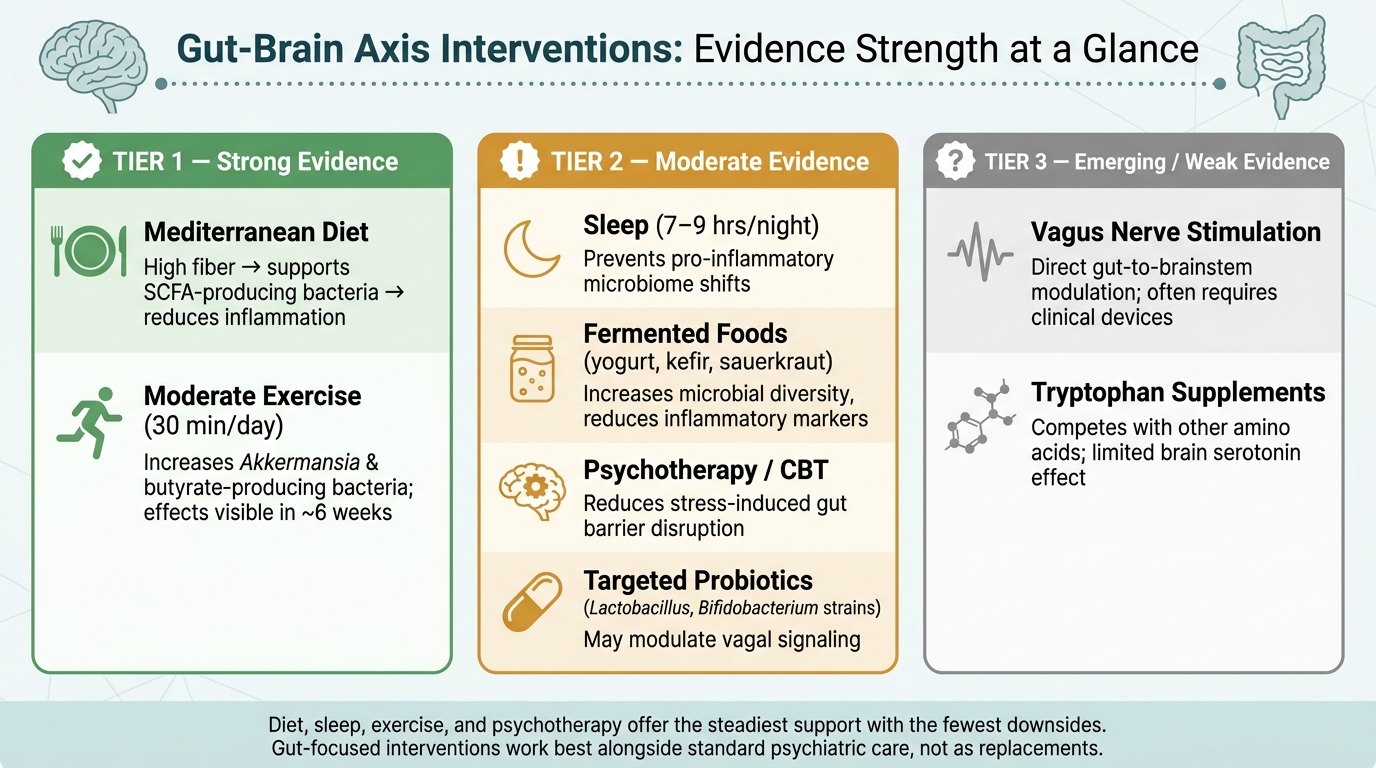
Gut-Brain Interventions: Evidence Strength Comparison
What Testing Can Measure and Its Limits
These tests can point to inflammation, microbiome changes, or vagal dysfunction. But none of them measures serotonin in the brain directly.
Serum serotonin usually isn’t very helpful for mood symptoms because blood levels don’t reflect brain serotonin.
Clinicians may also check the kynurenine-to-tryptophan ratio (KYN/TRP) in the blood. When that ratio is high, it suggests tryptophan is being diverted away from serotonin production and into the kynurenine pathway. During chronic inflammation, that pathway can produce neurotoxic byproducts.
Stool microbiome analysis can show bacterial diversity and whether strains like Bifidobacterium are present. The hard part is turning those findings into clear psychiatric treatment choices, and that part is still being sorted out. Other markers sometimes used include inflammatory indicators such as CRP and fecal calprotectin, intestinal permeability markers like blood LPS levels, and nutrient panels that look at vitamin D, B vitamins, iron, and zinc.
HRV is a noninvasive proxy for vagal tone. Low HRV shows up often in depression and may point to weaker gut-to-brain communication. In practice, these tests work best as part of the full picture: symptoms, history, and other clinical findings.
Use the results as clues, not final answers.
Treatment Approaches That May Affect Gut-Brain-Serotonin Pathways
A high-fiber, Mediterranean-style eating pattern supports SCFA-producing bacteria and helps gut barrier function. Fermented foods such as yogurt, kefir, and sauerkraut may also increase microbial diversity.
Sleep matters more than many people think. Sleep deprivation — even short-term — is consistently associated with changes in microbiome composition and reduced microbial diversity. Aiming for 7–9 hours is a sensible clinical goal. Regular moderate exercise, about 30 minutes on most days, has been linked to increases in species such as Akkermansia and butyrate-producing bacteria. Measurable shifts can show up in as little as 6 weeks.
SSRIs affect serotonin signaling in the brain, but they can also alter gut motility and secretion. Stress-reduction practices, including deep breathing, meditation, yoga, and CBT-based therapy, may improve vagal signaling and help calm the stress-gut loop.
Evidence Summary: What Is Established, Promising, and Uncertain
The table below separates options with stronger support from those that still need more study.
| Intervention | Gut-Brain/Serotonin Mechanism | Evidence Strength | Typical Use Cases | Key Limitations |
|---|---|---|---|---|
| Mediterranean diet | High fiber supports SCFA-producing bacteria and reduces inflammation | Strong | Depression, anxiety, general gut health | Requires long-term adherence |
| Moderate exercise | Increases Akkermansia and butyrate-producing bacteria | Strong | Mood regulation, metabolic health | Effects may reverse if exercise stops |
| Sleep (7–9 hrs/night) | Helps prevent microbiome shifts toward pro-inflammatory profiles | Moderate | Stress reduction, cognitive function | Difficult for those with chronic insomnia |
| Fermented foods | Increases microbial diversity and reduces inflammatory markers | Moderate | Microbiome diversity, inflammation | May cause initial GI upset in some patients |
| Psychotherapy (CBT) | Reduces stress-induced gut barrier disruption | Moderate | Anxiety, IBS-type symptoms, stress | Requires time and financial investment |
| Targeted probiotics | Specific strains (Lactobacillus, Bifidobacterium) may modulate vagal signaling | Moderate | Anxiety, IBS-type symptoms, stress | Strain-specific; results vary by individual |
| Vagus nerve stimulation | Direct modulation of gut-to-brainstem communication | Emerging | Treatment-resistant depression | Often requires clinical devices or intensive practice |
| Tryptophan supplements | Provides raw material for serotonin synthesis | Weak | Sleep, mood | Competes with other amino acids and may have limited brain effects |
The honest takeaway is pretty simple: diet, sleep, exercise, and psychotherapy have the steadiest support and the fewest downsides. Probiotics and vagus nerve stimulation look promising, but the science is still developing. Tryptophan supplements have the weakest case for consistently increasing brain serotonin.
Realistic Expectations, Integrated Care, and Key Takeaways
When Integrated Care May Help
Once testing is done and treatment options are on the table, the next step is setting a clear picture of what progress may look like. If gut symptoms and mood shifts tend to flare at the same time, a coordinated plan can make things less confusing. In an integrated clinic like Modyfi Health, psychiatry, therapy, nutrition, and targeted labs can be aligned around the same symptom pattern. The main point: track progress by how you feel and function, not by chasing one lab number on its own.
How to Set Realistic Goals and Track Progress
Change is usually gradual. Many shifts take 6 to 12 weeks to show up in mood or digestion. That can feel slow, but it’s common.
A simple way to track progress is to follow five markers:
- mood
- bowel habits
- sleep
- energy
- food tolerance
Heart rate variability (HRV) can also give a noninvasive look at vagal tone and stress resilience. And before you change medications or start a more involved supplement plan, check in with a clinician. Gut changes can affect how medications work in the body.
Key Facts Every Patient Should Remember
A few points are worth holding onto:
- About 95% of the body’s serotonin is made in the gut, but it does not cross the blood-brain barrier to directly affect brain serotonin.
- Tryptophan can be diverted away from serotonin by inflammation, which is why diet and stress management matter.
- The most reliable gains come from steady changes in diet, sleep, exercise, and stress management.
- Gut-focused interventions work best as add-ons to standard psychiatric care, not replacements.
Symptoms Are Signals. Let’s Find the Source.
If gut symptoms and mood symptoms keep showing up together — and nothing you’ve tried has fully explained why — that pattern is worth looking at more carefully. At Modyfi, our Root-Cause Psychiatry approach brings psychiatry, therapy, nutrition, and exercise together to find what’s actually driving what you’re feeling, not just manage the symptoms one at a time.
👉 Explore Providers to Book an Appointment and Start Your Care Plan
(Note: Modyfi proudly accepts most major commercial insurance plans in MD, DC, VA, and WV; currently, we do not accept Medicare or Medicaid.)
FAQs
Can gut serotonin affect my mood?
Yes. Gut serotonin can affect mood, but not in the same way as serotonin made in the brain. Even though 90% to 95% of the body’s serotonin is produced in the gut, it can’t cross into the brain.
So what does that mean in practice? Gut serotonin may still shape mood indirectly. It can send signals through the vagus nerve, and it may help regulate inflammation and tryptophan availability. Those factors support the brain’s own serotonin production.
Should I get stool or serotonin testing?
It depends on your symptoms and what you’re trying to fix. Stool testing, especially microbiome analysis, can help show microbial patterns tied to serotonin production and point toward more personalized next steps.
Blood serotonin levels don’t give a direct read on what’s happening in the brain. That’s because serotonin made in the gut doesn’t cross the blood-brain barrier. This area of science is still developing, so testing works best as one part of personalized, root-cause care.
What helps the gut-brain axis most?
Focus on lowering inflammation, supporting the microbiome, and improving vagal tone. When inflammation runs high, the body can divert tryptophan away from serotonin production.
Helpful habits include a plant-forward, fiber-rich diet with prebiotics, polyphenols, and omega-3s. It also helps to build in activities that support vagal tone. Modyfi Health uses functional diagnostic testing and personalized nutrition to help address these root-cause factors.
Can probiotics help with anxiety and depression?
Possibly — but the evidence is more nuanced than most probiotic marketing suggests.
Several studies have found that specific probiotic strains, particularly Lactobacillus and Bifidobacterium species, are associated with modest reductions in anxiety and depressive symptoms. The proposed mechanisms include supporting gut barrier integrity, modulating inflammatory cytokines, and influencing the production of neurotransmitter precursors like tryptophan.
That said, the research has real limitations. Many studies are small, use different strains and doses, and measure outcomes differently — which makes it hard to draw firm conclusions about which probiotics help, for whom, and at what dose. The effects seen so far tend to be modest, and probiotics work best as part of a broader approach rather than as a standalone intervention.
If you’re considering probiotics for mood support, the most useful starting point is a diet that supports microbial diversity — plenty of fiber, fermented foods, and variety — rather than a single supplement. A clinician can help determine whether a targeted probiotic makes sense given your specific symptoms and history.
What foods increase serotonin naturally?
This is one of the most common questions about gut health and mood — and the honest answer is more complicated than most articles suggest.
Foods don’t directly increase serotonin in the brain. Serotonin made in the gut doesn’t cross the blood-brain barrier, so eating tryptophan-rich foods doesn’t straightforwardly translate to more brain serotonin. What diet does affect is the environment in which serotonin is produced and how tryptophan is used — and that matters.
Tryptophan-rich foods include turkey, eggs, dairy, tofu, salmon, nuts, and seeds. But tryptophan competes with other amino acids for transport into the brain, so a high-protein meal with lots of competing amino acids may actually reduce tryptophan’s access. A moderate-carbohydrate meal can help by triggering insulin release, which clears competing amino acids from the bloodstream and gives tryptophan a clearer path.
More reliably, a Mediterranean-style diet — rich in fiber, fermented foods, omega-3s, and polyphenols — supports the gut conditions that help serotonin production work well and reduces the inflammation that can divert tryptophan away from serotonin entirely.
What is the connection between IBS and anxiety?
IBS and anxiety don’t just happen to occur together — they share underlying biological pathways that make each one worse.
The gut in IBS becomes hypersensitive. Sensory neurons in the gut wall respond more intensely to normal digestive activity — gas, movement, fullness — registering it as pain or urgency. Those signals travel to the brain, which can respond with anxiety. Anxiety, in turn, activates the stress response, tightens the gut, and amplifies sensory sensitivity. The cycle feeds itself.
At the neurochemical level, the same pathways are involved in both conditions. Serotonin regulates gut motility and mood. Tryptophan diversion toward the kynurenine pathway — driven by inflammation and stress — can worsen both gut function and mood simultaneously. The vagus nerve carries distress signals in both directions.
This bidirectional relationship is why treating IBS and anxiety separately often produces incomplete results. When both are addressed together — through a combination of stress management, dietary support, and when appropriate, therapy or psychiatric care — outcomes tend to be better than addressing either one alone.