
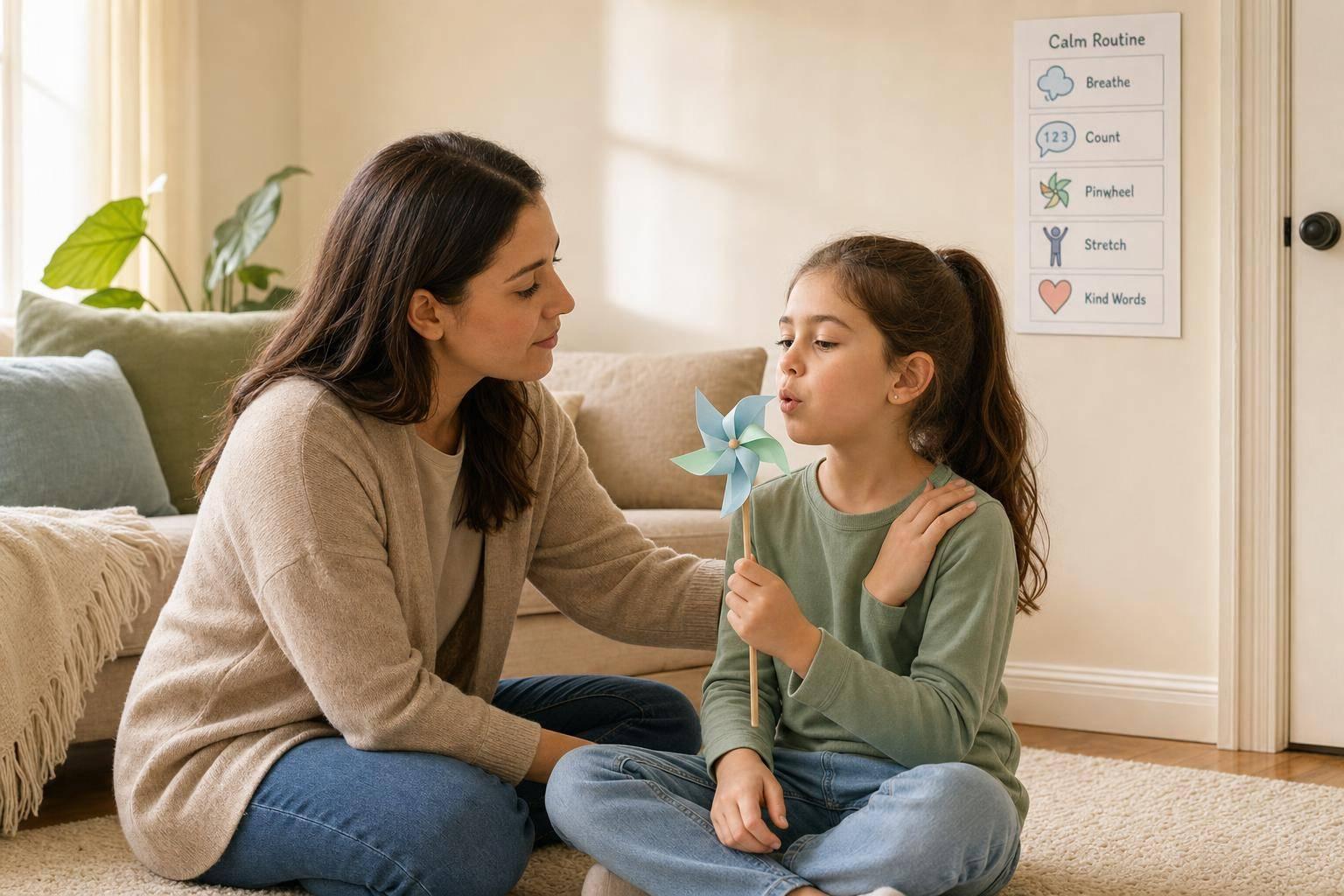

About 1 in 5 children and teens will deal with anxiety before adulthood. For parents trying to help at home, the most effective first steps are straightforward: stay calm, validate the feeling without validating the fear, keep routines steady, and coach one small step forward instead of helping a child avoid the hard thing.
What the evidence actually shows:
- Validate the feeling, not the fear — “I know this feels hard” without confirming the situation is unsafe
- Answer worry questions once, then redirect — repeating the answer feeds the anxiety loop
- Use routines for predictable stress points — mornings, homework, bedtime, and social events
- Break hard moments into the smallest possible step — one shoe, one math problem, one hello
- Practice coping skills during calm moments — 3 to 5 minutes a day makes them easier to use later
- Watch for signs that anxiety is shrinking daily life — that’s when professional support may be needed
The core principle behind all of these strategies: less rescuing, more coaching. Helping a child avoid every hard moment brings short-term relief but tends to make anxiety more persistent over time. A calm, steady response teaches something more lasting — “You can get through this.”
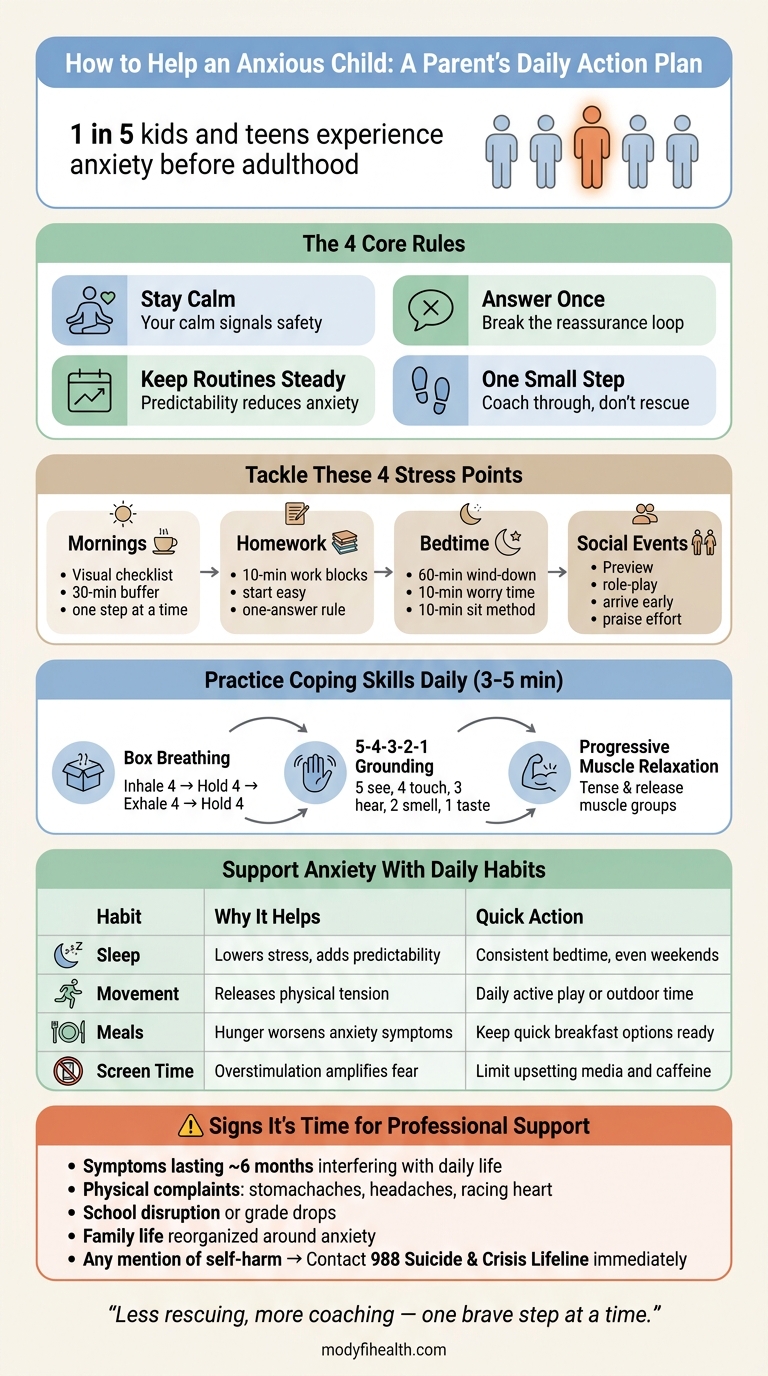
The strategies below walk through each of these situations in detail. Here’s a quick overview to keep as a reference:
10 Tips for Parenting Anxious Kids | Child Mind Institute
sbb-itb-23f89d4
Handle Morning Stress and Homework Without Power Struggles
The two biggest stress points at home are often mornings and homework. The fix isn’t more arguing or more reminders. It’s the same calm, one-step approach: clear limits, brief validation, and small steps.
Make Mornings Predictable for School Transitions
Mornings can be tough for anxious kids because they’re packed with unknowns and too many choices.
Start the night before. Lay out clothes, pack the backpack, and decide on breakfast. That cuts down on decision fatigue before the day even starts. In the morning, keep shoes and the backpack in one set spot so nothing goes missing at the last minute. A simple visual checklist near the door – get dressed, eat, brush teeth – helps kids stay on track without a parent having to repeat the same directions over and over.
“We’re all more effective when we’re very clear with ourselves about what steps we might need to take and realistic about what we actually have time to get done.” – David Anderson, PhD, Clinical Psychologist, Child Mind Institute
Build in a 30-minute buffer so you’re not rushing. If a stomachache or meltdown starts, acknowledge it briefly, offer water or a warm cloth, and stick with the plan. Then coach the smallest next step possible: First, just put on your left shoe.
That same setup can make homework feel less reactive and far more doable.
Use a Simple Homework Routine to Lower Anxiety
Use a set start time, 10-minute work blocks, and short breaks so your child knows exactly when to begin and when to pause. Start with an easier task first. That helps build momentum before moving to something harder.
When a child gets stuck, make the task smaller. Ask them to underline the verb in one sentence or begin with a 2-minute brave step. A one-step start makes it easier to begin without piling on pressure. It also helps to give them a short script for stuck moments: Anxiety is making this feel harder than it is or I can handle this feeling.
Break the work into short, clear steps so the child can get started without feeling swamped.
If reassurance loops start – “Is this right? What if I get it wrong?” – use the one-answer rule: answer once, then redirect. I already answered that; now we use our 3 breaths and one brave step. That keeps the routine moving without feeding the anxiety cycle.
These same routines also carry into bedtime and social situations, where practice matters just as much.
Pressure vs. Structure
Here’s the practical difference:
| Pressure | Structure | |
|---|---|---|
| Parental role | Rescuing, negotiating, or yelling | Coaching, validating, setting limits |
| Anxiety level | High; feeds avoidance loops | Manageable; builds tolerance |
| Motivation | Fear of punishment or pressure | Predictable rewards and brave reps |
Respond to Bedtime Worry and Social Anxiety With Practice Steps
The same calm, firm approach helps when anxiety shows up at night or around other kids. Bedtime and social events can trigger the same loop: avoidance brings short-term relief, but it makes anxiety hit harder later. That’s why the same game plan works in both cases – calm routines, gradual practice, and not rushing in to rescue.
Build a Bedtime Routine That Calms the Nervous System
Night can feel extra hard because there’s less going on. Worries that stayed in the background all day often get louder once the room goes quiet. A steady wind-down routine that starts at least 60 minutes before bedtime gives the nervous system time to slow down.
Keep that last hour simple and predictable. Dim the lights, turn off screens, and make the house feel quieter. Use body-based calming tools like “Smell the flower, blow the candle” breathing – slow inhale through the nose, slow exhale through the mouth – or progressive muscle relaxation, where your child tenses and releases one muscle group at a time. It helps to practice these during the day first, so they’re easier to use at night.
A simple add-on can help a lot: set aside 10 minutes of “worry time” earlier in the evening, before the bedtime routine starts. Let your child write or draw worries in a journal so they don’t all show up at lights-out.
If your child calls out or starts repeating “What if?” questions, keep your response short. Long reassurance talks usually pull you into the worry instead of helping it pass.
| Script Type | What to Say |
|---|---|
| Validation | “I can see you’re feeling worried about tomorrow. That sounds hard.” |
| Confidence | “I’m here, and I believe you can handle this feeling.” |
| Boundary | “I’m not going to lie down with you because I know you can do this on your own.” |
| Task | “Let’s do 3 slow breaths and let the worry pass.” |
Instead of lying in bed with your child, try the 10-minute sit. Sit in a chair next to the bed for a set amount of time, then leave. Stay calm, keep the limit, and go when you said you would. Over time, move the chair closer to the door. It’s a simple fear ladder, and it fits the core idea here: coach your child through discomfort instead of swapping that discomfort for reassurance.
Prepare Children for Playdates, Parties, and Group Activities
Social events can feel hard for anxious kids because so much feels uncertain. That uncertainty drives the dread. The goal isn’t to make nerves disappear. The goal is to make the moment feel doable enough to try.
The same tools that help with mornings and homework help here too: preview, practice, and smaller first steps.
Before the event, go over the basics: who will be there, what the place looks like, and how long you’ll stay. Role-play specific moments at home, like saying hello or asking, “Can I play too?” Saying the words out loud helps them come more easily in the actual moment. If your child worries for hours before events, keep the preview short. Tell them shortly before leaving so they don’t spend the whole day building dread.
If you can, arrive early. Walking into a quiet room is usually much easier than stepping into a loud, crowded one. Start smaller when needed, like a one-on-one playdate before a birthday party.
Afterward, praise the effort – not the result. If a child avoids the event fully, that can teach them the situation was too dangerous to handle. But even a short, awkward, or imperfect try still counts. It’s a brave rep, and those reps add up.
Rescue feels easier in the moment. Gradual practice builds confidence that lasts.
Use these same skills during the week, so they’re in place before anxiety spikes.
Build Coping Routines That Work Across the Week
The same calm steps you use at bedtime and in social situations tend to work better when your child practices them during the week too.
Put simply: these skills work best when kids use them before they need them, not only in the middle of a hard moment.
Practice Coping Skills When the Child Is Already Calm
Practice one skill for 3–5 minutes a day when your child is already calm. Think of it like a practice rep. In the same way brave steps can build confidence at bedtime and in social situations, short daily reps can help these tools feel more familiar.
You can try:
- Box Breathing: inhale for 4 counts, hold for 4, exhale for 4, hold for 4
- 5-4-3-2-1 grounding: name 5 things you see, 4 you can touch, 3 you hear, 2 you smell, 1 you taste
- Progressive muscle relaxation
It also helps to keep a Calm-Down Kit close by. That might include a fidget, paper, crayons, a playlist, or a comforting scent.
Daily routines make these skills easier to remember and use.
Support Anxiety Through Sleep, Movement, and Nutrition
Sleep, movement, and food all shape how well a child handles stress. When these basics are off, anxiety can feel louder. The table below shows where each habit matters most and one simple step to keep it steady at home.
| Habit | Why It Matters for Anxiety | One Practical Step |
|---|---|---|
| Sleep | Regular sleep rhythms help lower stress and make the day more predictable. | Keep sleep times steady, even on weekends. |
| Movement | Physical activity gives a stressed body an outlet for tension. | Add daily active play or outdoor time. |
| Meals | Hunger can mimic or worsen anxiety symptoms. | Keep quick breakfast options ready. |
| Screen time | News and overstimulating content can amplify fear. | Limit upsetting media and caffeine. |
Parents help these habits stick by staying steady themselves.
How Parents Can Model Calm, Clear Responses
Children notice an adult’s state fast. A calm voice, relaxed shoulders, and one slow exhale from you can signal safety before you say a word.
It can also help to say your own coping steps out loud. For example: “I’m feeling a little stressed about this, so I’m going to take three slow breaths before I keep going.” That shows your child that anxiety is normal and something people can handle.
“It’s a delicate balance between providing structure and support, and not fragilizing children.” – Saniya Tabani, PhD, Assistant Professor of Psychiatry, Icahn School of Medicine at Mount Sinai
One habit that can make a big difference is the “one-answer rule.” If your child keeps repeating the same “What if?” question, answer it once in a clear way, then redirect: “I already answered that once. Anxiety wants us to repeat it. Let’s move to our plan.”
Answer once, then shift back to the plan. If anxiety is still driving daily fights or avoidance, that may be a sign your family needs more support.
When Home Strategies Are Not Enough
Sometimes steady work at home just isn’t enough by itself. If anxiety keeps getting in the way of school, sleep, or family life, it may be time to move beyond home-based tools and get professional help.
Signs It Is Time to Seek Professional Support
If symptoms last about 6 months and interfere with daily life, a clinician should evaluate them. A few signs tend to stand out:
- Persistent symptoms plus physical complaints – ongoing anxiety paired with stomachaches, headaches, nausea, or a racing heart with no medical cause
- School disruption – severe school drop-off distress, repeated nurse visits, or a noticeable drop in grades
- Family life is reorganized around anxiety – leaving work early, sharing a bed long-term, or avoiding travel to prevent distress
- Any mention of self-harm or suicidal thoughts requires immediate crisis help – contact the 988 Suicide & Crisis Lifeline or go to the nearest emergency room
“When anxiety has taken hold as a more consistent problem and parents are seeing impairment in a more ongoing way, then the problem does not tend to just go away on its own.” – Eli Lebowitz, PhD, Co-director of the Anxiety and Mood Disorders Program at the Yale Child Study Center
Once anxiety starts shrinking a child’s day-to-day life, a clinical evaluation is the next move. Modyfi Health offers virtual psychiatric evaluations, therapy, and parent coaching.
Ready to Build a Plan That Goes Beyond Home Strategies?
Helping an anxious child at home takes patience, consistency, and the right tools. But sometimes the anxiety is bigger than what daily strategies can address on their own — and that’s okay. At Modyfi, our network of providers brings psychiatry, therapy, nutrition, and exercise together to support both children and the families caring for them.
(Note: Modyfi proudly accepts most major commercial insurance plans in MD, DC, VA, and WV; currently, we do not accept Medicare or Medicaid.)
Conclusion: Small Daily Changes Can Build Confidence
With the right support, children can rebuild confidence through small, steady steps.
“If your child is really anxious, that does not mean that they are doomed to struggle and live a limited life.” – Eli Lebowitz, PhD, Yale Child Study Center
Progress may look small at first. Maybe drop-off involves one less struggle. Maybe bedtime ends with less back-and-forth. Those small wins add up, and over time they can help a child feel more sure of themselves.
FAQs
How can I tell anxiety from normal stress?
It’s normal for kids to feel worried sometimes. A test at school, a sleepover, or meeting new people can make them nervous. Most of the time, those feelings pass and don’t get in the way of daily life.
Anxiety becomes more of a concern when it is too intense, sticks around, or starts to affect school, friendships, or family life. You might notice a child avoiding certain activities, complaining often about stomachaches or headaches, asking for reassurance again and again, or having trouble sleeping.
What should I say when my child keeps asking the same worry question?
When your child asks the same worry question over and over, they usually aren’t looking for new facts. They’re trying to calm the anxious feeling for a moment.
So start by answering once, in a calm and simple way.
If they ask again, name what’s happening without giving the full answer again. You might say, “I already answered that; I notice your worry wants to ask again,” or “I see you’re worried, and I know this is hard, but we’ve already talked about this.”
Then gently shift them to a coping tool, like:
- deep breathing
- grounding
- a planned “brave step”
When should I get professional help for my child’s anxiety?
Seek professional help if your child’s anxiety lasts for several months or starts to get in the way of daily life. That includes school, friendships, social situations, and family routines.
If your child needs more support, talk with your pediatrician or primary care provider about an evaluation and available services. Modyfi Health also offers integrative psychiatric and wellness care for children with anxiety.
What is the difference between normal childhood worry and an anxiety disorder?
Worry is a normal part of childhood. Tests, friendships, new situations, and big life changes all produce anxiety — and most of the time, those feelings pass on their own without getting in the way of daily life.
The difference with an anxiety disorder is intensity, duration, and impairment. Clinical anxiety is too intense relative to the actual situation, persists beyond what’s reasonable, and starts to shrink a child’s world. You might notice consistent avoidance of activities they used to enjoy, repeated physical complaints like stomachaches or headaches with no medical explanation, escalating reassurance-seeking, or significant distress around normal daily events like school drop-off or bedtime.
The DSM-5 threshold for most anxiety disorders is symptoms lasting at least six months that cause meaningful impairment in daily functioning — at school, in friendships, or at home. If that description fits what you’re seeing, a clinical evaluation is the right next step.
Should I tell my child’s school about their anxiety?
In most cases, yes — and sooner is better than later. School staff can’t support what they don’t know about, and early communication tends to produce better outcomes than waiting until things escalate.
You don’t need a formal diagnosis to start that conversation. A simple note or meeting with your child’s teacher or school counselor explaining what you’re observing at home — avoidance, sleep problems, physical complaints, worry about school — gives the school useful context and opens the door to accommodations if needed.
If your child has a diagnosed anxiety disorder, they may be eligible for formal support through a 504 Plan or an IEP, which can include accommodations like extended time on tests, a quiet space during transitions, or a check-in with a counselor. You can request an evaluation from the school district at any time — in writing.
The key is framing the conversation around what helps your child succeed, not around labeling the problem. Most teachers and counselors appreciate the heads-up and are more equipped to help than parents often expect.
What is the SPACE program for child anxiety?
SPACE stands for Supportive Parenting for Anxious Childhood Emotions. It’s an evidence-based treatment developed by Eli Lebowitz, PhD at the Yale Child Study Center — one of the researchers quoted in this post.
What makes SPACE different from traditional child anxiety treatment is that it focuses primarily on the parents, not the child. The core insight behind it is that when parents consistently accommodate a child’s anxiety — reassuring repeatedly, avoiding triggers together, reorganizing family life around the anxiety — they unintentionally reinforce the message that the anxiety is valid and the situation is dangerous. SPACE teaches parents to respond differently: with warmth and confidence rather than reassurance and rescue.
Multiple clinical trials have found SPACE to be as effective as CBT delivered directly to the child — which is significant, because it means parents can drive meaningful change even when a child is resistant to treatment or too young for traditional therapy. If you’re looking for a therapist familiar with SPACE, asking specifically about this approach during an initial consultation is a good starting point.