


If stress feels normal and joy feels like something to get to later, burnout may already be quietly at work.
Burnout drains joy in ways that don’t always look dramatic. On paper, life may still function. But inside, things start to feel flat, heavy, and oddly empty — and the usual strategies stop working.
The concept of joyspan — introduced by geriatric specialist Dr. Kerry Burnight — describes how long and how often someone genuinely feels satisfied, connected, and okay in their daily life. Not euphoric. Not constantly happy. Just actually okay, with enough room to recover, connect, and do things that feel meaningful.
Burnout shrinks that window. Stress takes up more space. Recovery takes longer. And the moments that used to feel good start to slip by unnoticed.
What the research and clinical experience show:
- Burnout keeps the body and mind in stress mode — making everything feel harder than it should
- Common signs include fatigue, irritability, poor sleep, emotional numbness, cynicism, and feeling ineffective
- Joy doesn’t require big life changes to return — small daily resets can make a real difference
- The most reliable levers are consistent: sleep, movement, meals, breathing, values-based action, and firmer boundaries
- When stress shifts into persistent anxiety, insomnia, or low mood, professional support may be the right next step
The core shift: joyspan isn’t about feeling happy all day. It’s about building enough recovery, connection, and meaning that stress stops running the whole show.
Healthspan Isn’t Enough: How to Expand Your Joyspan | Dr. Kerry Burnight
sbb-itb-23f89d4
What low joyspan looks like in burnout and chronic dissatisfaction
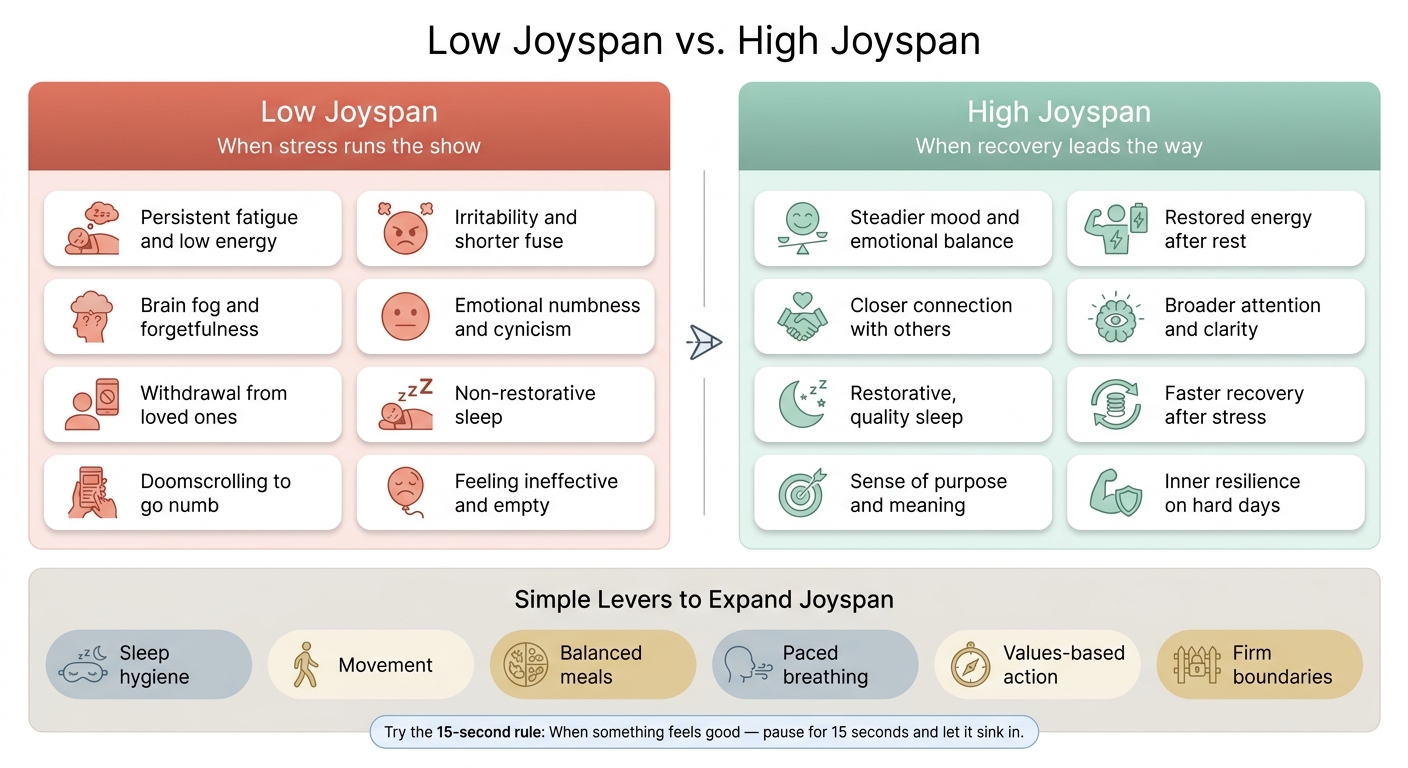
Low Joyspan vs. High Joyspan: Signs, Habits & Recovery Tools
Burnout is often quiet. On paper, life may still look fine. You’re getting things done, showing up, and keeping the machine running. But inside, everything can feel flat, heavy, and strangely empty.
When joyspan drops, the first signs usually show up in your mood, energy, and sense of connection.
Signs that stress has crossed into burnout
Burnout is typically described through three core components, first identified by researcher Christina Maslach: emotional exhaustion, emotional distance or cynicism, and a sense of reduced effectiveness.
Chronic stress keeps the brain stuck in threat mode. That can look like irritability, brain fog, forgetfulness, and a shorter fuse. The tasks themselves may take the same amount of time, but they leave you more drained than before.
You may also start pulling back from people you care about. Sleep stops feeling restorative. And instead of doing things that help you reset, you find yourself doomscrolling just to go numb for a while. That’s usually the moment when “try harder” stops working. Recovery has to begin with what you’re feeding your days, not with more force.
Why positive emotion, connection, and meaning protect mental health
Positive emotions don’t just make you feel better for a moment. They help the body and mind recover. They calm stress physiology, broaden attention, and help build inner resources like connection and problem-solving.
Purpose and close relationships matter too. They help keep people engaged, supported, and less alone, which protects recovery over time.
Low joyspan often looks like irritability, fatigue, withdrawal, and feeling ineffective. A stronger joyspan tends to look like a steadier mood, more restored energy, closer connection, and faster recovery after stress.
The pattern is consistent across the research: low joyspan is common, and it can shift when daily life starts giving the nervous system more room to recover. From there, the next step is rebuilding routines that help the body and mind come back online.
Daily habits that expand joyspan and improve stress recovery
The fastest way to expand joyspan is to build small recovery cues into your day. Joyspan grows from brief, steady moments of recovery, not just the occasional treat.
Restorative routines that rebuild energy instead of draining it
Start with routines that tell your nervous system it’s safe to settle. A steady wake-up time helps your body keep a more stable daily rhythm. And a short morning ritual – quiet time, journaling, or stretching – can make that reset feel easier to stick with.
Short joy breaks matter too. Even 30 seconds can help. Step outside. Feel the sun on your skin. Notice the warmth of your coffee or tea. Put on a song you know by heart. Small moments like these can shift the body out of vigilance and toward calm. They also help keep your system from running hot all day.
The space between work and home matters more than most people think. A short walk, a few minutes of music, or a bit of intentional downtime can mark the shift from one part of the day to the next. That simple pause gives the mind a better shot at actual rest.
Sleep, movement, and nutrition as core supports for emotional regulation
Once your day has a steadier rhythm, back it up with sleep, movement, and food. Sleep hygiene helps here. Limiting caffeine late in the day and cutting screen time before bed can support a steadier mood and better recovery.
Movement doesn’t have to be intense to work. Walking, yoga, or dancing – especially outside – can calm the mind and ease rumination. Food plays a part too. Balanced meals and screen-free eating can help you feel more present. When you eat without your phone, it’s easier to savor your food and notice small moments of pleasure.
How an integrative care plan can address the root causes of low joyspan
Sometimes low joyspan is tied to insomnia, anxiety, depression, or nutrition issues. In those cases, an integrative care plan can bring together psychiatry, therapy, and nutrition support to address the root causes, not just the symptoms.
If stress still feels stuck in the body, mindfulness and somatic tools can help interrupt that loop.
Mindfulness, somatic tools, and values-based actions that create more joy
When stress gets lodged in your body, short practices can help you reset without blowing up your whole day. And when life stays busy, those brief pauses give your body a little space to come back down.
Paced breathing, body scans, and grounding can shift your attention out of threat mode and into the present. You might try 4-7-8 breathing: inhale for 4 seconds, hold for 7, then exhale for 8. Or press your feet into the floor. Or slowly scan from head to toe.
These tools can stretch your joyspan by making good moments easier to notice and hold onto. One simple idea is the 15-second rule: when something feels good – a warm drink, sunlight on your face, a kind word – pause for 15 seconds and let it sink in.
Values-based joy: small actions that feel meaningful
Once your nervous system settles a bit, connect that calmer state to something that matters to you.
Joy tends to feel deeper when it links to what you care about most: connection, growth, and giving. That could mean reaching out to someone, asking a better question, or doing one small act of giving, like sending a thank-you note.
A simple pattern is CORE: connect, open up, reach out, and enrich. Each step takes minutes, not hours. And over time, those small moves can build the kind of emotional reserve that helps on hard days.
These actions tend to work best when you repeat them, protect them with boundaries, and get support from the people around you.
Reduce joy-draining habits and build support that lasts
Patterns that quietly erode joyspan
Once you’ve built recovery habits, the next move is simple: stop feeding the routines that wear them down. The tricky part is that some of the biggest joyspan drains don’t look dramatic. They hide inside normal daily life.
Perfectionism is one of them. It chips away at joyspan when you keep pushing rest off until everything feels finished or flawless. Overcommitting does the same thing. You say yes out of guilt, habit, or plain momentum, and before long your social battery is flat.
Then there’s doomscrolling before bed or checking work messages after hours. Those habits eat up attention, hurt sleep, and make it harder for your mind and body to recover.
Multitasking and constant availability can be especially draining. If your attention is always split, your brain has less space to enjoy small moments. A meal becomes background noise. A break turns into half-working. Rest never quite feels like rest.
Boundaries, stronger relationships, and when to seek professional help
Protecting your joyspan means being more direct about what gets your time and what doesn’t. That can look like:
- limiting work messages to set hours
- turning down social plans that leave you drained instead of restored
- blocking time on your calendar to do absolutely nothing, and treating it like a medical appointment
Support also needs upkeep. Regular check-ins and small acts of connection help keep it active, instead of waiting until things fall apart.
If fatigue starts turning into persistent anxiety, restless sleep, or hypervigilance, it may be time to get outside help. Integrative care can address sleep, anxiety, depression, and nutrition together instead of looking at each symptom on its own.
Protect joyspan by limiting after-hours messages, stopping bedtime scrolling, saying no to draining commitments, and single-tasking during meals and rest.
Recovery Feels Different When You Have the Right Plan
If the strategies here feel familiar but haven’t been enough, that’s worth paying attention to. At Modyfi, our Root-Cause Psychiatry approach brings psychiatry, therapy, nutrition, and exercise together — because burnout rarely has just one cause, and it rarely responds to just one solution.
👉 Explore Providers to Book an Appointment and Start Your Care Plan
(Note: Modyfi proudly accepts most major commercial insurance plans in MD, DC, VA, and WV; currently, we do not accept Medicare or Medicaid.)
FAQs
How do I know if I have low joyspan?
Low joyspan can show up in the small moments of daily life.
Common signs include feeling more than just tired, leaning pessimistic, or feeling less effective than usual.
You might also keep putting off things you’d normally enjoy. Socializing can start to feel like work. Your emotions may seem flat, and ordinary conversations might irritate you more than they used to. Some people get stuck replaying frustrations or tell themselves they can’t rest or enjoy anything until everything is done.
Can joyspan improve without major life changes?
Yes. You don’t need to turn your life upside down to improve your joyspan. In most cases, it grows through small, steady habits that slide into your day without much fuss.
That can look like savoring a good cup of coffee, putting on a favorite song, or stepping outside for a few quiet minutes. These moments may seem small, but they add up.
When you notice them on purpose instead of rushing past them, you give joy a little more room to stick. Over time, that can help build more resilience too.
When should I get professional help for burnout?
You should seek professional help when burnout starts to feel like too much, or when it begins to interfere with your mental and physical health in a serious way.
Therapy can help you build intentional coping strategies and work through painful circumstances or life transitions. Practices like mindfulness, social connection, and restorative routines can support joyspan. But sometimes those tools aren’t enough, and that’s when professional support can make a big difference.
What are the physical symptoms of burnout?
Burnout isn’t just a mental experience — it shows up in the body too, often before it’s recognized as burnout at all.
Common physical signs include persistent fatigue that sleep doesn’t fully resolve, frequent headaches or muscle tension, digestive issues, getting sick more often than usual, and a general sense of physical heaviness. Some people notice heart palpitations or a feeling of being wired but tired at the same time — alert enough to keep going but too depleted to actually recover.
These physical symptoms happen because chronic stress keeps the nervous system in a low-grade threat state. Cortisol and adrenaline stay elevated longer than they should, disrupting sleep, immune function, digestion, and energy regulation. Over time, that physiological load adds up — which is why burnout recovery often needs to address the body as much as the mind.
Is burnout the same as depression?
They overlap, but they’re not the same — and the distinction matters for how you approach recovery.
Burnout is primarily context-driven. It develops from prolonged exposure to stress, usually in a specific area of life like work, caregiving, or chronic overcommitment. The exhaustion, cynicism, and sense of ineffectiveness tend to be tied to that context. When the source of stress is removed or reduced, symptoms often improve.
Depression is more pervasive. It affects mood, motivation, and functioning across all areas of life, not just the stressful one. It also tends to involve a more persistent sense of hopelessness or worthlessness that doesn’t lift when circumstances improve.
That said, burnout and depression frequently co-occur — burnout can trigger depression, and depression can make burnout harder to recover from. If symptoms feel severe, persistent, or are affecting multiple areas of your life, a clinical evaluation is the most useful next step rather than trying to determine which one it is on your own.
How long does burnout recovery take?
There’s no single timeline — it depends on how severe the burnout is, how long it went unaddressed, what’s driving it, and what kind of support is available.
Mild burnout with identifiable causes and good social support can begin to shift within weeks of making consistent changes to sleep, boundaries, and daily routines. More entrenched burnout — particularly when it’s been building for months or years — typically takes longer, and often requires professional support to address the underlying patterns driving it.
What most people find is that recovery isn’t linear. There are better weeks and harder ones. Progress often shows up first in small ways — sleeping a little more soundly, feeling slightly less reactive, noticing a moment of genuine enjoyment. Those small signs tend to come before the bigger shifts.
The most important thing is not to use the length of recovery as evidence that something is wrong with you. Burnout builds slowly. Recovery follows the same pattern.