


Social anxiety is more than shyness — and biology may help explain why some people struggle more than others, even when they’re doing everything right in therapy.
Functional medicine doesn’t replace standard psychiatric care for social anxiety. It adds a layer: using biomarkers like cortisol patterns, inflammatory markers, nutrient levels, and gut findings to understand why stress feels stuck and which lifestyle changes are most likely to help for a specific person.
What the evidence actually shows:
- Social anxiety is common — lifetime estimates range from 6.6% to 12.1%
- Only about 1 in 5 people with social anxiety seek care
- Standard care doesn’t reach full recovery for everyone — response rates for CBT sit between 50% and 65%
- Cortisol recovery may matter more than the initial spike — stress hormones can stay elevated longer after social stress
- Inflammatory markers like CRP, IL-6, and TNF-alpha are linked with anxiety severity
- Low omega-3 and vitamin D levels appear frequently in anxiety research
- Gut-brain research is promising but early — microbiome shifts may affect social fear and stress signaling
- The goal is not to diagnose social anxiety with labs — it’s to use lab patterns to support a more personalized care plan
CBT and psychiatric care still lead treatment. Biomarker data adds context — helping explain why some people plateau even when they’re actively engaged in therapy.
The infographic below summarizes the key biomarker domains and clinical findings covered in this article — a quick reference before going deeper into each area.
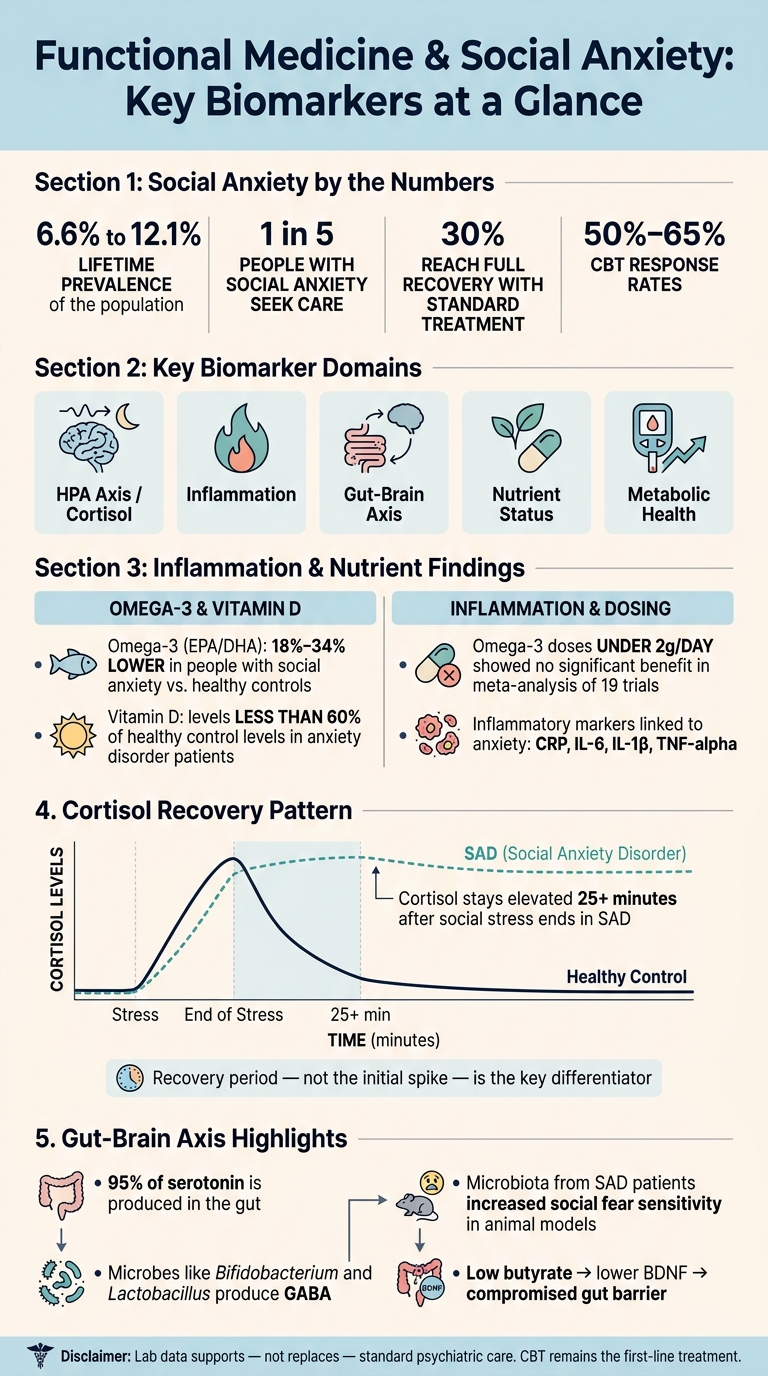
Functional Medicine & Social Anxiety: Key Biomarkers at a Glance
For a broader overview of how functional and nutritional medicine approaches anxiety — including some of the lifestyle principles covered in this article — the video below offers a useful introduction:
Functional & Nutritional Medicine for Occasional Anxiety
sbb-itb-23f89d4
Cortisol and HPA Axis Findings in Social Anxiety Research
In social anxiety, the HPA axis can react too strongly to social threat and then take too long to settle down. That’s why cortisol recovery stands out as a useful marker when you want to tailor care.
What Studies Show About Cortisol Patterns
The research doesn’t point in one clean direction. But one pattern shows up more often than the rest: recovery seems to be where the difference is clearest. More than 25 minutes after stress ends, cortisol can stay high longer than expected.
Why might that happen? One idea is habituation. If someone faces social stress again and again, the stress-response system may wear down over time, leading to a weaker initial response. Another piece is post-event processing. That’s the mental replay after a social interaction – the “Why did I say that?” loop. That replay can keep the stress response switched on and slow cortisol recovery.
“Individuals with social anxiety disorder (SAD) show heightened cortisol responses to psychological stressors, and this effect is most prominent during recovery periods.” – Maeda et al.
Cortisol reactivity may also help predict treatment response. Higher pre-treatment cortisol reactivity predicted greater improvement after psychotherapy, with the clearest effect seen in avoidance. That opens the door to a bigger question: what other markers help explain who has the strongest stress response?
How Cortisol Is Measured in Practice
There isn’t one test that tells the whole story. Timing matters too. In research settings, cortisol testing is often done between 2:00 PM and 7:00 PM to help account for circadian variation.
| Testing Modality | What It Captures | Practical Relevance |
|---|---|---|
| Salivary cortisol | Free, biologically active cortisol | Tracks stress reactivity and recovery over time |
| Serum (blood) cortisol | Total cortisol, including bound hormone | Assesses the full hormonal cascade |
| ACTH (blood) | Pituitary drive to cortisol production | Adds context to cortisol results |
| Urine cortisol | 24-hour cortisol production | Better for chronic stress load than acute triggers |
In practice, many functional clinicians use more than one sample. A common setup includes a baseline sample, then follow-ups at +10, +30, and +60 minutes after a stressor. That way, you can see both the spike and the comedown.
Lifestyle Changes Linked to Stress Regulation
When cortisol recovery is slow, the first targets are often sleep, exercise, and stress-reduction work that helps bring arousal down. And if post-event processing keeps the body stuck in stress mode, therapy that deals with rumination head-on may help recovery too.
Cortisol is only one part of the picture.
Inflammation, Nutrient Status, and Anxiety Severity
Inflammation and nutrient status add another layer to the picture. No single lab can explain social anxiety on its own. But these factors can make the body more reactive to stress and can make symptoms hit harder.
Inflammatory Markers Studied in Anxiety
Research has linked social anxiety and other anxiety disorders with higher levels of CRP, IL-1β, IL-6, and TNF-alpha. These pro-inflammatory cytokines may get in the way of serotonin, dopamine, and GABA production. They may also make the amygdala more reactive to perceived threats.
In social anxiety disorder, inflammation may also shift tryptophan away from serotonin production through the immune-kynurenine pathway.
Omega-3 and Vitamin D: What the Research Shows
Two nutrients show up again and again in the anxiety research: omega-3 fatty acids and vitamin D.
People with social anxiety disorder show an 18% to 34% drop in erythrocyte EPA and DHA levels compared with healthy people. On top of that, a meta-analysis of 19 clinical trials found that omega-3 treatment helped reduce anxiety, though doses under 2 grams per day did not tend to help.
Vitamin D points the same way. In people with anxiety disorders, vitamin D levels have been measured at less than 60% of the levels seen in healthy controls. Vitamin D also helps regulate serotonin, dopamine, and brain-derived neurotrophic factor (BDNF).
Translating Abnormal Labs Into Anti-Inflammatory Strategies
When labs come back off, diet is often the first place to look. A simple starting point is cutting back on refined sugar and highly processed oils, since both can add to pro-inflammatory visceral fat and neuroinflammation.
Then there’s the food you add in. Fatty fish like salmon, mackerel, and sardines provide EPA and DHA straight from food. Curcumin from turmeric may also have a place in an anti-inflammatory plan. Pairing it with piperine from black pepper can improve absorption by a large margin.
| Inflammatory Marker | What It May Signal | Linked Intervention |
|---|---|---|
| hs-CRP | Systemic low-grade inflammation | Reduce refined sugars and processed oils; curcumin with piperine |
| IL-6 / TNF-alpha | Pro-inflammatory signaling; increased amygdala reactivity | Omega-3 fatty acids (EPA/DHA), high-fiber diet |
| Vitamin D (25-OH) | Low levels linked with impaired serotonin and BDNF synthesis | Vitamin D3 supplementation when clinically indicated, safe sun exposure |
| Omega-3 Index | Low EPA/DHA levels | Fatty fish (salmon, sardines), krill oil |
Inflammation often overlaps with digestion, which is why gut findings matter next.
Gut-Brain Axis Research and Functional Testing
Inflammation and digestion often go hand in hand, so gut data can add another piece to the puzzle. The gut-brain axis may shape anxiety through immune signals, nerve pathways, and the microbiome.
What Microbiome Studies Suggest About Social Anxiety
A January 2024 PNAS study gave mice microbiota from people with social anxiety. The result was striking: the mice became more sensitive to social fear, but they did not show a broad increase in anxiety-like behavior. Researchers also found lower oxytocin signaling in a brain region tied to threat response, along with altered IL-17 signaling, compared with mice that received healthy microbiota.
A 2025 study in 40 drug-naive adolescents with SAD found a similar signal. Their microbiota changed social novelty preference and altered medial prefrontal cortex metabolism in neonatal rats.
There’s also a plain biological reason people pay attention to the gut here. About 95% of serotonin is made in the gut, and microbes such as Bifidobacterium and Lactobacillus can produce GABA. So when the microbiome shifts, mood and stress reactivity may shift too.
That said, gut testing only matters when you read it in context. A stool result on its own doesn’t explain the whole picture.
Functional Gut Assessments and Their Limits
Functional gut workups may include:
- 16S rRNA sequencing to look at microbiome composition
- SCFA analysis to check butyrate and other metabolites linked to gut barrier support and BDNF
- The TRP-KYN ratio to assess tryptophan shunting toward neuroinflammatory pathways
These tools can be useful, but they come with limits. Most human studies on the gut-brain axis and SAD are small, cross-sectional, and still haven’t been repeated at scale. In plain English: this is promising, but not settled. Use these tests only if the results are likely to change treatment.
Diet and Psychobiotic Strategies Tied to Gut Findings
Food and daily habits can shape gut signaling in ways that matter. Fiber, fermented foods, movement, and stress management may support gut barrier function and SCFA production. Fermented foods may support Lactobacillus and Bifidobacterium when tolerated, and regular movement may help lower the increased inflammatory signaling linked to a weakened gut barrier.
Some psychobiotic strains have also shown promise in research settings. Bifidobacterium longum NCC3001 and Lactobacillus plantarum DR7 have shown anxiolytic or cortisol-modulating effects. But strain choice isn’t one-size-fits-all. It should match the person in front of you.
| Microbiome Finding | Mental Health Implication | Nutrition/Lifestyle Response |
|---|---|---|
| Low Bifidobacterium / Lactobacillus | Reduced GABA and serotonin synthesis; higher stress sensitivity | Fermented foods; targeted psychobiotic supplementation |
| High KYN/TRP Ratio | Increased neurotoxic QUIN; neuroinflammation | Anti-inflammatory diet with omega-3s; tryptophan-rich foods |
| Reduced SCFAs (Butyrate) | Lower BDNF levels; compromised gut barrier | High-fiber diet; resistant starches; regular movement |
| Elevated IL-17 Markers | Increased social avoidance; neurovascular pathology | Stress management; vitamin D optimization |
| Altered Oxytocin Signaling | Reduced social reward; increased social fear | Social engagement; vagus nerve stimulation (deep breathing) |
The next step is to line up gut findings with cortisol, inflammation, and symptom patterns so the plan is targeted instead of guesswork.
Building a Personalized Social Anxiety Plan From the Research
A Framework for Pairing Biomarkers With Treatment
Now that the research on cortisol, inflammation, and the gut is on the table, the next step is simple in theory and harder in practice: match those patterns to care that fits the person.
No single lab result can explain social anxiety by itself. The point is to look at the pattern across a few areas at once, then use that bigger picture to guide care. That may include cortisol rhythm, inflammatory markers, gut findings, and nutrient status.
| Biological Domain | Relevant Lab Tests |
|---|---|
| HPA Axis | Diurnal salivary cortisol, DHEA-S |
| Inflammation | hs-CRP, IL-6, TNF-α |
| Gut-Brain Axis | Stool analysis and organic acid testing |
| Nutrient Status | B12, Folate, Vitamin D, Ferritin, RBC Magnesium |
| Metabolic Health | Fasting insulin, HbA1c, postprandial glucose |
These tests can help spot subclinical gaps. They do not diagnose social anxiety.
Psychotherapy, especially CBT, still sits at the front of treatment, with response rates between 50% and 65%. Biomarkers can add context. They may help show why some people hit a wall, even when they’re doing the work in therapy. In some cases, the issue may involve biology too, like inflammation or a disrupted cortisol curve.
How a Virtual Integrative Model Can Support Follow-Through
The hard part isn’t only getting data. It’s turning that data into actions you can stick with week after week.
That’s where a virtual integrative model can help. It can translate lab findings into clear next steps, make the plan feel less abstract, and support follow-through over time. Instead of handing someone a stack of numbers and hoping for the best, the model ties those numbers to day-to-day habits and treatment decisions.
Key Takeaways From the Research
The strongest evidence in social anxiety biology centers on cortisol dysregulation and inflammatory markers — particularly the pattern of prolonged cortisol recovery after social stress, and the links between pro-inflammatory cytokines and symptom severity.
Gut-brain axis findings and nutrient deficiencies are promising but not yet settled at scale. The human studies are mostly small and cross-sectional — worth paying attention to, not yet ready to drive treatment decisions on their own.
What the research does support: standard psychiatric care — particularly CBT — remains the primary intervention, with biomarker-guided lifestyle support as a meaningful complement for patients who plateau or who want a more personalized approach.
Ready to Build a Plan Based on Your Biology?
Understanding the biomarker patterns behind social anxiety is the first step. The next is working with providers who can apply that data to your specific situation — your cortisol patterns, your nutrient levels, your symptoms. At Modyfi, our Root-Cause Psychiatry approach brings psychiatry, therapy, nutrition, and exercise together in one integrated plan.
👉 Explore Providers to Book an Appointment and Start Your Care Plan
(Note: Modyfi proudly accepts most major commercial insurance plans in MD, DC, VA, and WV; currently, we do not accept Medicare or Medicaid.)
FAQs
Can labs diagnose social anxiety?
No. Labs can’t definitively diagnose social anxiety disorder.
Researchers have looked at possible biological markers, including cortisol levels, gut microbiome patterns, and neurotransmitter imbalances. But the results are inconsistent, and these tests aren’t used for a formal diagnosis.
That said, functional medicine testing may still help flag underlying biological factors that could affect how severe someone’s symptoms feel. At Modyfi Health, those findings can help shape personalized care alongside psychiatric treatment.
Which biomarkers matter most for social anxiety?
Research suggests there may be several biomarkers linked to social anxiety, but the picture is still a bit messy. A lot of the findings are early, and some studies don’t line up neatly with others.
The biomarkers studied most often are cortisol and ACTH, which are stress-response markers tied to HPA axis function.
Researchers are also looking at a few other areas, including:
- gut microbiome changes
- altered GABA and glutamate levels in certain brain regions
- inflammatory markers like CRP
- salivary alpha-amylase
- some genetic or epigenetic factors
In plain English, there are plenty of leads, but no single lab marker has become the go-to sign of social anxiety.
How do therapy and functional medicine work together?
Therapy and functional medicine can work side by side to address both the mental and physical roots of social anxiety.
Therapy helps you work through emotional patterns and relationship wounds. Functional medicine looks at issues like gut health, nutrient gaps, hormone imbalance, and inflammation. Put together, they blend emotional support with lab testing and personalized lifestyle changes for longer-lasting relief.
What is the connection between gut health and social anxiety?
The gut-brain axis — the bidirectional communication network between the digestive system and the brain — plays a meaningful role in how the body processes stress and social threat. Several mechanisms are relevant here.
About 95% of the body’s serotonin is produced in the gut, and gut bacteria like Bifidobacterium and Lactobacillus can produce GABA — the primary inhibitory neurotransmitter involved in anxiety regulation. When the microbiome shifts, mood and stress reactivity can shift too.
The most compelling direct evidence comes from a 2024 PNAS study showing that mice receiving gut microbiota transplants from people with social anxiety disorder developed a specific heightened sensitivity to social fear — without showing broader anxiety-like behavior. Researchers also found changes in oxytocin signaling and immune function, suggesting the gut may influence the specific neurological pathways involved in social threat processing.
That said, gut-brain research in social anxiety is still early. Most human studies are small and cross-sectional. Gut findings are worth considering as part of a broader functional assessment — not as a standalone diagnostic tool or treatment target.
Can vitamin D deficiency cause anxiety?
Vitamin D deficiency doesn’t directly cause anxiety, but low levels appear consistently across anxiety disorder research in ways that suggest a meaningful relationship.
In people with anxiety disorders, vitamin D levels have been measured at less than 60% of levels seen in healthy controls. Vitamin D receptors are found throughout the brain, including in areas involved in mood and stress regulation, and vitamin D plays a role in regulating serotonin, dopamine, and brain-derived neurotrophic factor (BDNF) — all of which are relevant to anxiety.
Whether low vitamin D contributes to anxiety, or whether anxiety-related behaviors like reduced outdoor activity and disrupted sleep patterns contribute to lower vitamin D, is still an open question. The relationship is likely bidirectional.
What this means practically: vitamin D status is worth checking as part of a functional evaluation for anxiety, particularly if symptoms are persistent or treatment response is incomplete. Correction of deficiency is low-risk and may support overall mood regulation, even if it’s unlikely to resolve anxiety on its own.
How does cortisol affect social anxiety?
Cortisol is the body’s primary stress hormone, released by the HPA axis in response to perceived threat. In social anxiety disorder, the cortisol response to social stress tends to work differently than in people without the disorder — and the difference is most visible not in the initial spike, but in the recovery period.
Research shows that in people with SAD, cortisol can remain elevated for 25 minutes or more after a social stressor ends, long after it has returned to baseline in people without social anxiety. One factor that may drive this prolonged recovery is post-event processing — the mental replay of social interactions (“Why did I say that?”) that keeps the stress response activated after the situation itself is over.
This matters clinically because slow cortisol recovery is associated with social avoidance, which prevents habituation to social situations and keeps the fear response persistent over time. Therapeutic approaches that target rumination directly — like CBT components focused on post-event processing — may support cortisol recovery alongside symptom improvement.