
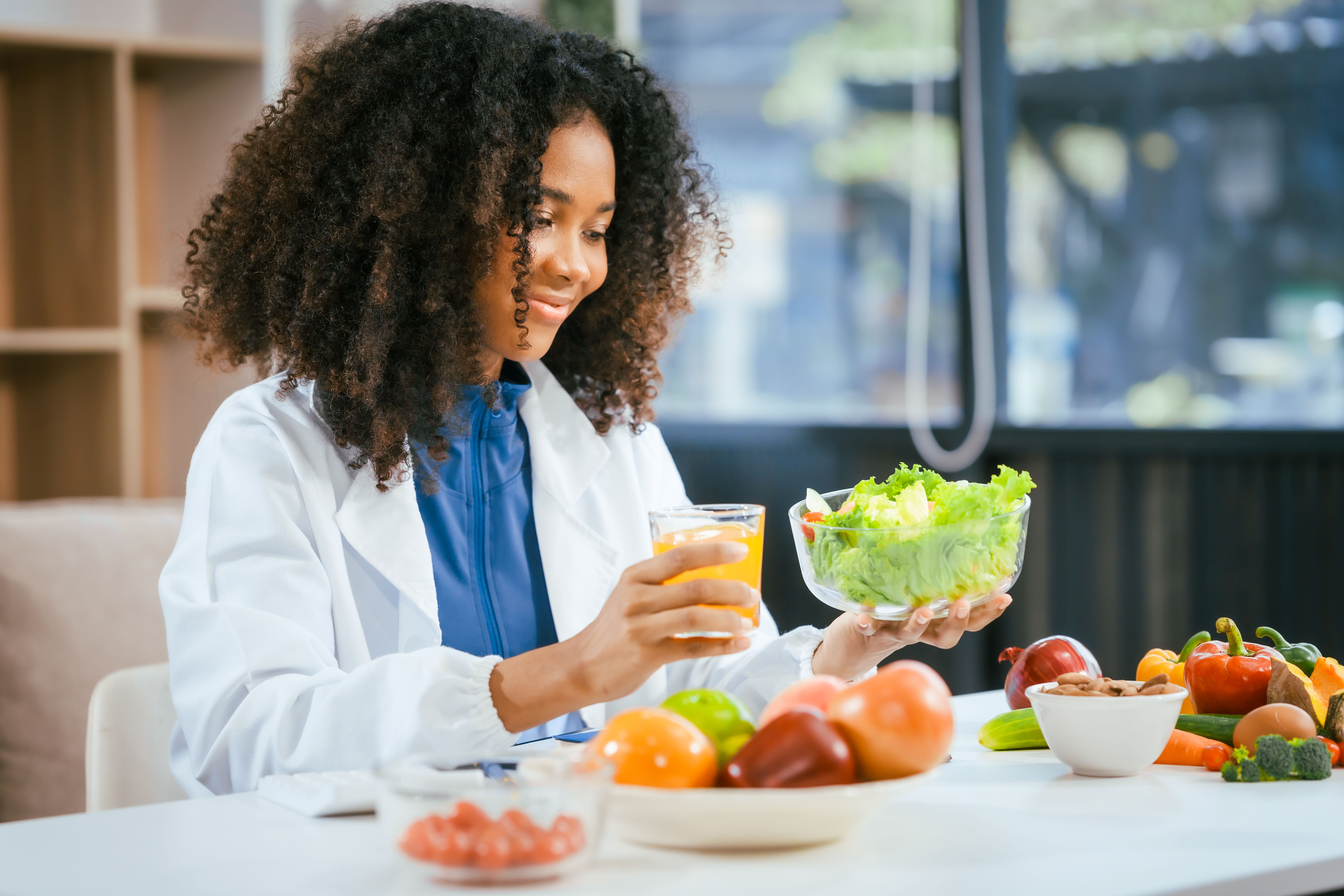

Your gut, hormones, and mood are deeply connected. This relationship is influenced by what you eat, especially plant-based diets. Research shows that gut bacteria communicate with the brain through the microbiota–gut–brain (MGB) axis, affecting stress hormones, serotonin levels, and emotional health. About 90% of serotonin, the “feel-good” neurotransmitter, is produced in the gut, making gut health essential for mental well-being.
Plant-based diets, when focused on whole foods like fruits, vegetables, legumes, and whole grains, can improve gut health, reduce inflammation, and promote hormonal balance. This, in turn, supports mood stability and reduces risks of anxiety and depression. However, not all plant-based diets are equal – processed plant-based foods may harm mental health.
Key takeaways:
- Gut health impacts mood: The gut produces serotonin and regulates stress hormones.
- Diet quality matters: Whole, fiber-rich, and polyphenol-rich foods support gut and hormonal health.
- Plant-based benefits: Diets like the Mediterranean or MIND diet boost gut health, lower inflammation, and stabilize hormones.
This connection between diet, gut health, and mental health is reshaping care approaches, emphasizing root-cause solutions like nutritional psychiatry.
Mind Your Microbes: The Connection Between Gut, Mood, and Mental Health
sbb-itb-23f89d4
The Biological Links Between Gut, Hormones, and Mood
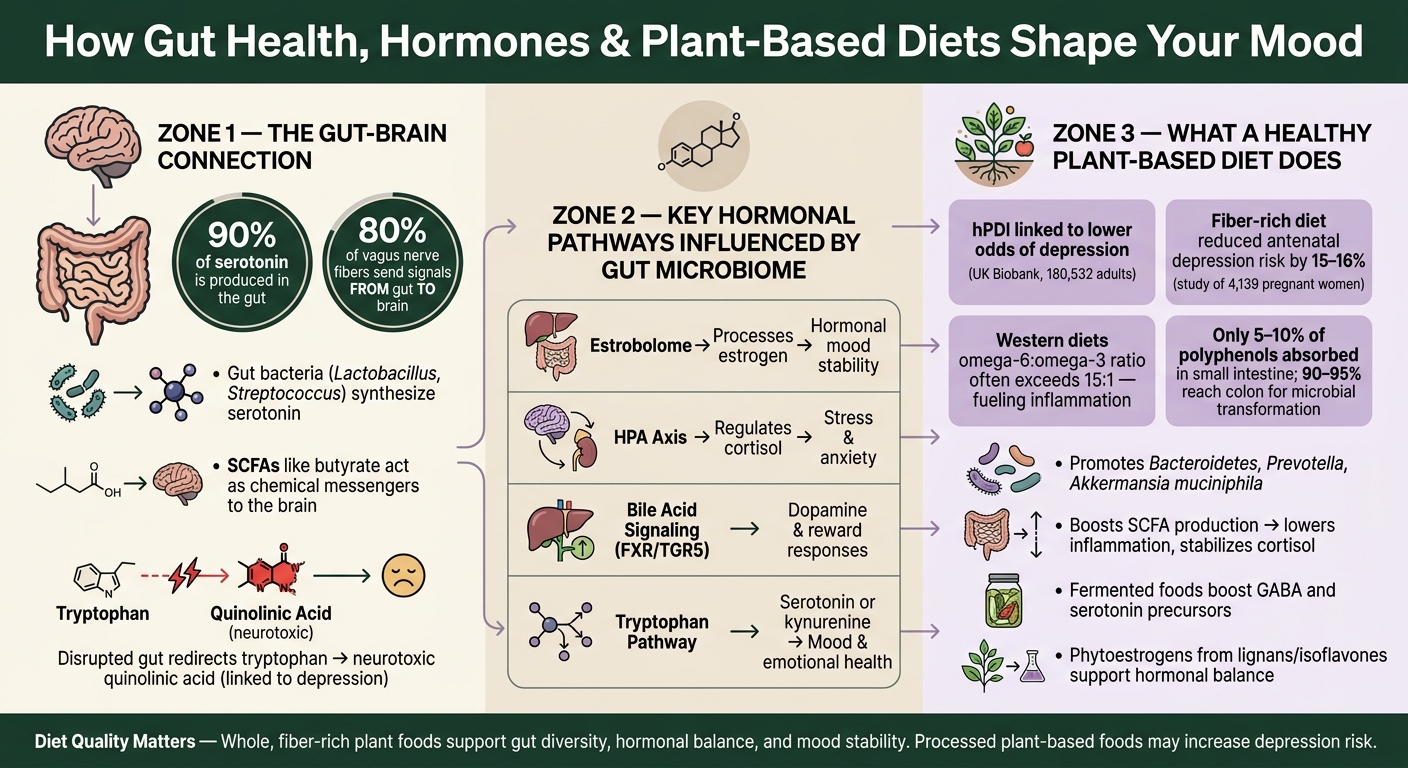
How Gut Health, Hormones & Plant-Based Diets Shape Your Mood
This section delves into how the gut microbiome influences hormonal balance and mood, focusing on its role in neurotransmitter production and the impact of diet on these processes.
How the Gut-Brain Axis Shapes Neurotransmitter Production
The gut does far more than digest food – it plays a key role in producing mood-regulating chemicals. For example, enterochromaffin cells in the gut produce serotonin, a neurotransmitter linked to happiness and well-being. Certain gut bacteria, like Lactobacillus and Streptococcus, directly synthesize serotonin, while others, such as Clostridia, stimulate the gut to produce it.
The vagus nerve acts as a primary communication highway between the gut and brain, with about 80% of its fibers transmitting sensory signals from the gut to the brain. Microbial byproducts, including short-chain fatty acids (SCFAs) like butyrate, serve as chemical messengers that influence brain function. When gut health is compromised, the kynurenine pathway – a key metabolic process – redirects tryptophan away from serotonin production toward neurotoxic compounds like quinolinic acid, which has been linked to depression.
“The vagus nerve is predominantly sensory – approximately 80% of its fibers are afferent – allowing the gut to relay chemical and mechanical information to the brain.” – Middle East Current Psychiatry
Beyond neurotransmitter production, the gut microbiome plays a direct role in regulating hormonal systems, as outlined next.
How the Gut Microbiome Affects Hormonal Pathways
The gut microbiome influences several hormonal systems, including estrogen metabolism. A group of bacteria known as the estrobolome processes and recirculates estrogens in the body. Disruptions in this microbial community can lead to hormonal imbalances, potentially affecting mood, particularly in women.
The gut also interacts with the hypothalamic-pituitary-adrenal (HPA) axis, which controls cortisol – the stress hormone. An imbalance in gut bacteria, known as dysbiosis, can overstimulate the HPA axis, causing elevated cortisol levels and symptoms of anxiety or depression. Additionally, gut microbes modify bile acids, which, through receptors like FXR and TGR5, influence dopamine pathways and emotional regulation.
| Hormonal Pathway | Gut Microbiome Role | Mood Impact |
|---|---|---|
| Estrobolome | Processes and recirculates estrogen | Affects hormonal mood stability |
| HPA Axis | Regulates cortisol production | Influences stress and anxiety |
| Bile Acid Signaling | Modifies bile acids via FXR/TGR5 receptors | Impacts dopamine and reward responses |
| Tryptophan Pathway | Directs tryptophan toward serotonin or kynurenine | Regulates mood and emotional health |
These hormonal pathways are shaped by the gut’s internal functions and external factors like diet, making nutrition a powerful tool for managing mood and hormonal health.
How Diet Affects Inflammation and Hormone Balance
What you eat directly affects your gut bacteria, and in turn, your overall inflammation levels and hormonal balance. Diets high in processed foods and refined sugars – common in Western eating habits – reduce microbial diversity and harm the gut lining. This damage allows harmful compounds like lipopolysaccharides (LPS) to enter the bloodstream, triggering inflammation through cytokines like IL-6 and TNF-α. These inflammatory molecules can cross the blood-brain barrier, disrupting HPA axis function and impacting mood.
On the flip side, plant-based diets rich in fiber and polyphenols promote the production of anti-inflammatory SCFAs like butyrate. These compounds help maintain the gut barrier, lower inflammation, and stabilize cortisol levels. Another factor is the imbalance of omega-6 to omega-3 fats in Western diets, often exceeding a ratio of 15:1, which fuels inflammation. Shifting toward plant-forward diets can help restore balance and reduce inflammatory signaling.
“Diet is a primary and modifiable determinant of gut microbiota composition, diversity, and metabolic activity, thereby shaping microbial-derived metabolites, immune and inflammatory signalling, neuroendocrine regulation, and neural communication with the central nervous system.” – Diana Uțu, Department of Physiology and Pathophysiology, Victor Babeș University of Medicine and Pharmacy
Research Linking Plant-Based Diets to Gut Health and Hormonal Mood
Recent studies have highlighted how plant-based diets can influence mental health through their effects on gut health and hormonal balance.
Research Evidence: Diet, Gut Health, and Mood
A large study conducted through the UK Biobank examined 180,532 adults aged 39–72. It found that individuals who closely followed a healthy plant-based diet (hPDI) had lower odds of experiencing depression. On the other hand, those with high scores on an unhealthy plant-based diet index (uPDI) faced a greater likelihood of depression. Another 10-year study revealed that individuals with the highest uPDI scores were more likely to experience worsening depression over time.
The key takeaway? The quality of plant-based diets matters. As researcher Han-Ni Li explains:
“The influence of plant-based diets on depression seems to be more closely related to diet quality and nutrient adequacy rather than merely the elimination of animal foods.”
In other words, swapping out meat for refined grains or sugary drinks won’t provide the same benefits. Instead, these findings suggest that a nutrient-dense, plant-forward diet can have a meaningful impact on mental well-being, partly by shaping the gut microbiome.
How Plant-Based Diets Change the Gut Microbiome
Plant-based diets rich in fiber and polyphenols encourage the growth of beneficial gut bacteria such as Bacteroidetes, Prevotella, Ruminococcus, and Akkermansia muciniphila. These microbes help reduce inflammation by producing short-chain fatty acids (SCFAs) like butyrate, which strengthen the gut lining, lower systemic inflammation, and regulate the hypothalamic-pituitary-adrenal (HPA) axis.
Additionally, eating a variety of plant foods promotes what researchers call ecological stability in the gut. This means a more diverse and resilient microbial community, which may contribute to greater psychological resilience. In contrast, Western diets high in animal fats and refined sugars are linked to reduced microbial diversity and increased inflammation.
Diet and Hormone-Related Mood Conditions: What the Research Shows
Beyond gut health, plant-based diets also influence hormone regulation, which plays a role in mood stability. For instance, a study involving 4,139 pregnant women found that diets emphasizing fiber-rich foods like tubers and legumes reduced the risk of antenatal depression by 15–16%.
Certain gut bacteria can convert plant compounds, such as lignans and isoflavones, into phytoestrogens. These compounds have mild estrogen-like and antioxidant effects, which can help regulate hormones and improve mood, especially during perimenopause or other hormonal transitions.
Plant-based diets, including the Mediterranean diet, also help balance the HPA axis by lowering cortisol and ACTH secretion. This is particularly important for managing stress-related anxiety caused by chronic HPA overactivation. Additionally, gut microbes like Lactobacillus and Bifidobacterium boost the production of GABA, a neurotransmitter that promotes relaxation and reduces anxiety.
Together, these findings illustrate how plant-based eating patterns not only improve gut health but also support emotional and hormonal well-being.
Plant-Based Foods That Support Gut, Hormone, and Mood Health
Research continues to highlight the connection between diet quality and how it influences gut health, hormones, and mood. Certain plant-based foods are particularly beneficial in supporting these systems.
Fiber and Prebiotics: Benefits for the Microbiome and Mood
Fiber plays a key role in mental health by feeding gut bacteria, which produce short-chain fatty acids (SCFAs) like butyrate. These SCFAs help maintain gut integrity and reduce inflammation. Foods such as bananas, garlic, onions, asparagus, legumes, and whole grains are excellent sources that encourage SCFA production. However, many Americans fall short of the recommended daily fiber intake – 25–32 grams for women and 30–35 grams for men – which may partly explain the link between poor diet quality and higher rates of depression.
In addition to fiber, polyphenols also play a role in promoting hormonal balance.
Polyphenol-Rich Foods and Hormonal Balance
Polyphenols, found in foods like berries, green and black tea, cocoa, apples, and turmeric, go beyond their antioxidant properties. They promote a healthy gut microbiota by encouraging the growth of beneficial bacteria like Bifidobacterium and Akkermansia, while reducing harmful, inflammation-causing microbes. Interestingly, only 5–10% of dietary polyphenols are absorbed in the small intestine, leaving the remaining 90–95% to reach the colon, where gut microbes transform them into bioactive compounds that can cross the blood-brain barrier.
One clinical study, the SANGUT trial, examined the effects of polyphenol intake on individuals with Major Depressive Disorder. Over 12 weeks, researchers found that polyphenols significantly influenced the relationship between body fat and cortisol levels (R² = 0.61, p < 0.001). This suggests that polyphenol-rich foods may support hormonal stress regulation while benefiting gut health.
Plant-Based Omega-3s and Fermented Foods
Plant-based omega-3s and fermented foods also contribute to gut, hormone, and mood health. Sources of omega-3 fatty acids like flaxseeds, walnuts, chia seeds, and soybeans are rich in alpha-linolenic acid (ALA), which promotes microbial diversity and strengthens neuronal membranes. These membranes are critical for serotonin receptor function. A deficiency in omega-3s – defined as serum EPA and DHA levels below 3% of total fatty acids – has been linked to impaired neurotransmitter signaling and a higher risk of depression.
Fermented foods, including kimchi, tempeh, miso, and sauerkraut, introduce beneficial bacteria such as Lactobacillus and Bifidobacterium. These microbes produce neurotransmitters like GABA and serotonin precursors, which support emotional well-being. Fermented soy products, in particular, aid the estrobolome – a group of gut microbial genes involved in estrogen metabolism. This can help stabilize hormone levels and mood, especially during perimenopause. Combining fermented foods with prebiotic-rich ingredients like garlic and onions enhances their effects. The fiber fuels beneficial bacteria, which then produce metabolites that strengthen the intestinal barrier and promote emotional resilience.
“Dietary (poly)phenols depend on gut microbial transformation to generate metabolites with distinct biological activity targeting mechanisms, such as intestinal and blood–brain barrier integrity.” – Food & Function
Clinical Applications and Next Steps
Building on the research outlined earlier, clinical applications are now honing in on personalized strategies that combine multiple approaches for better outcomes.
Personalizing Care With Integrative Methods
Responses to plant-based diets can vary widely depending on factors like hormonal stages, gut microbiome composition, and nutrient levels. For instance, the way fiber is metabolized – and the metabolites it produces – depends heavily on an individual’s gut microbiome. This variability shows why a universal dietary plan often falls short.
This is where integrative care steps in. Platforms like Modyfi Health use a Root-Cause Psychiatry approach, combining functional lab testing – such as gut microbiome analysis, hormone panels, and nutrient screenings – with tailored nutrition therapy. This approach helps clinicians pinpoint deficiencies in nutrients like B12, Vitamin D, iron, or omega-3s (EPA/DHA), which might be affecting mood or gut health. From there, they can create a data-driven, personalized plan.
Matching specific plant compounds to certain conditions also plays a key role. For example:
- EGCG from green tea may help modulate estrogen receptors in PCOS.
- Curcumin from turmeric can reduce pro-inflammatory cytokines linked to endometriosis.
- Soy isoflavones may support cognitive health during menopause.
Pairing curcumin with black pepper (piperine) is especially effective, as it significantly boosts absorption.
Research Gaps and What Still Needs Study
While the science is promising, it’s still a work in progress. One major hurdle is the variability in existing randomized controlled trials (RCTs), which makes it tough to create standardized clinical guidelines for gut-focused treatments. A key question remains unanswered: does gut dysbiosis lead to depression, or is it the other way around?
“It is uncertain whether dysbiosis is a contributing factor to MDD or a consequence of the pathological changes associated with depression.” – Discover Food
More research is needed to understand how polyphenols and fibers interact with individual microbiomes, particularly in terms of dose-response relationships. Researchers are also advocating for larger, long-term human studies and the use of neuroimaging to track how plant-based interventions impact the neuroendocrine-reproductive axis in real time.
These gaps highlight the importance of practical, lifestyle-oriented solutions for emotional well-being.
Using Diet and Lifestyle to Support Emotional Well-Being
Combining precision diagnostics with small dietary changes offers an accessible way to bridge personalized care with everyday life. A plant-based diet focused on whole, minimally processed foods has been linked to lower rates of depression and improved hormonal health. On the other hand, diets high in refined grains and sugary drinks may increase the risk of depression.
“The influence of plant-based diets on depression seems to be more closely related to diet quality and nutrient adequacy rather than merely the elimination of animal foods.” – Han-Ni Li et al., Frontiers in Nutrition
The benefits of plant-forward eating become even stronger when combined with regular exercise, good sleep habits, and stress management techniques. Simple, sustainable changes – like replacing ultra-processed snacks with fiber-rich legumes or adding fermented foods to meals – can improve gut health, support hormonal balance, and build emotional resilience over time.
FAQs
How quickly can gut changes affect mood?
The gut and brain are in constant communication via neural, hormonal, and immune pathways. This connection enables gut microbiota to play a role in shaping mood and cognitive function. While the exact timeframe for these effects can vary, studies suggest that even short-term dietary adjustments can positively influence mood and overall well-being. Modyfi Health taps into this powerful connection by combining functional diagnostic testing with clinical nutrition therapy. Their approach tailors personalized care plans that blend lifestyle adjustments with psychiatric support to promote long-term mental health.
What’s the easiest plant-based way to boost serotonin?
One straightforward way to support serotonin levels naturally is by focusing on whole, minimally processed plant-based foods. Serotonin production relies on tryptophan, an essential amino acid that must come from your diet. Foods rich in fiber – such as whole grains, legumes, vegetables, fruits, and nuts – not only supply nutrients but also promote a healthy gut microbiome. This, in turn, helps with tryptophan metabolism and strengthens the gut-brain connection. Companies like Modyfi Health even offer tailored nutrition plans to help optimize these processes.
Which labs can check gut and hormone-related mood issues?
Functional lab tests are a powerful way to uncover connections between gut health, mood, and hormones. Some commonly used tools include:
- GI-MAP: This test analyzes the microbiome and inflammation levels in your gut.
- DUTCH test: Focused on sex and adrenal hormones, it provides insights into hormonal balance.
- OAT (Organic Acids Test): Helps identify gut dysbiosis and issues with neurotransmitters.
- MRT (Mediator Release Test): Detects food sensitivities that could be triggering inflammation.
These tests offer valuable insights into underlying imbalances that may be affecting overall health.
At Modyfi Health, we don’t just treat symptoms—we investigate the root causes of your emotional well-being. If you are experiencing hormone-related mood swings, anxiety, or depression, your gut microbiome might hold the answers.
Through our specialized Root-Cause Psychiatry approach, our integrated medical team combines advanced functional lab testing (like GI-MAP and DUTCH tests) with targeted clinical nutrition therapy to build a personalized care plan tailored entirely to your unique biology.
Ready to Optimize Your Gut, Hormones, and Mood?
Take control of your mental and physical well-being today with an integrated team that understands the deep connection between your diet and your mind.
👉 Click here to schedule your FREE Discovery with Modyfi Health Team