

Understanding MBCT and Its Clinical Effectiveness
At its core, Mindfulness-Based Cognitive Therapy (MBCT) helps prevent depression relapse by training individuals to recognize their unique early warning signs rather than getting automatically pulled into unhelpful loops of rumination.
The scientific data supporting this approach is robust and provides clear reassurance for long-term recovery:
-
Substantial Risk Reduction: Across multiple clinical studies, MBCT is linked to an estimated 34% relative risk reduction in depressive relapse compared to usual care or a placebo.
-
High-Risk Protection: For individuals with a history of three or more past depressive episodes, the clinical data is even more striking—lowering the risk of relapse by 44% compared to standard care over a 60-week period.
Rather than attempting to erase difficult thoughts or pretend they do not exist, MBCT focuses on changing how someone relates to them. It teaches individuals to simply notice the thoughts, take a step back, and respond with intention. This small but vital psychological shift can keep a difficult day from compounding into a full depressive episode.
MBCT at a Glance: The Essentials
To understand how this protocol fits into a standard recovery plan, here is a straightforward breakdown of what to expect:
-
What it is: A structured, 8-week program that seamlessly blends mindfulness practices with practical cognitive therapy skills.
-
Who it is for: Adults with a history of recurrent depression, typically introduced while they are currently in remission.
-
How it helps: It creates a conscious, helpful pause between a temporary dip in mood and the older, automated spiral of negative thoughts, difficult emotions, and physical body tension.
-
Core skills learned: Practices include the body scan, mindful breathing, mindful movement, decentering, and developing active self-compassion.
-
What to practice tracking: Recognizing subtle personal shifts early, such as changes in sleep architecture, appetite shifts, irritability, social withdrawal, low energy, or a sudden loss of interest.
-
The time commitment: Participants engage in roughly 45 minutes of daily practice during the 8-week course, transitioning to shorter, highly adaptable routines afterward.
-
Integrating with care: It blends exceptionally well alongside ongoing medication management, traditional individual therapy, and structured lifestyle support.
🛑 Important Clinical Note on Timing: Because MBCT requires active focus and emotional processing, it is not appropriate to begin this program during an acute psychological crisis or periods of active suicidality. In those moments, immediate stabilization and professional crisis assessment must always come first.
The main idea behind the entire framework is simple: spot your internal patterns early, pause, and deploy a clinical skill before the downward spiral can build momentum.
Use Mindfulness to Recover From Depression | Being Well Podcast, Dr. Zindel Segal

sbb-itb-23f89d4
How MBCT Prevents Depression Relapse
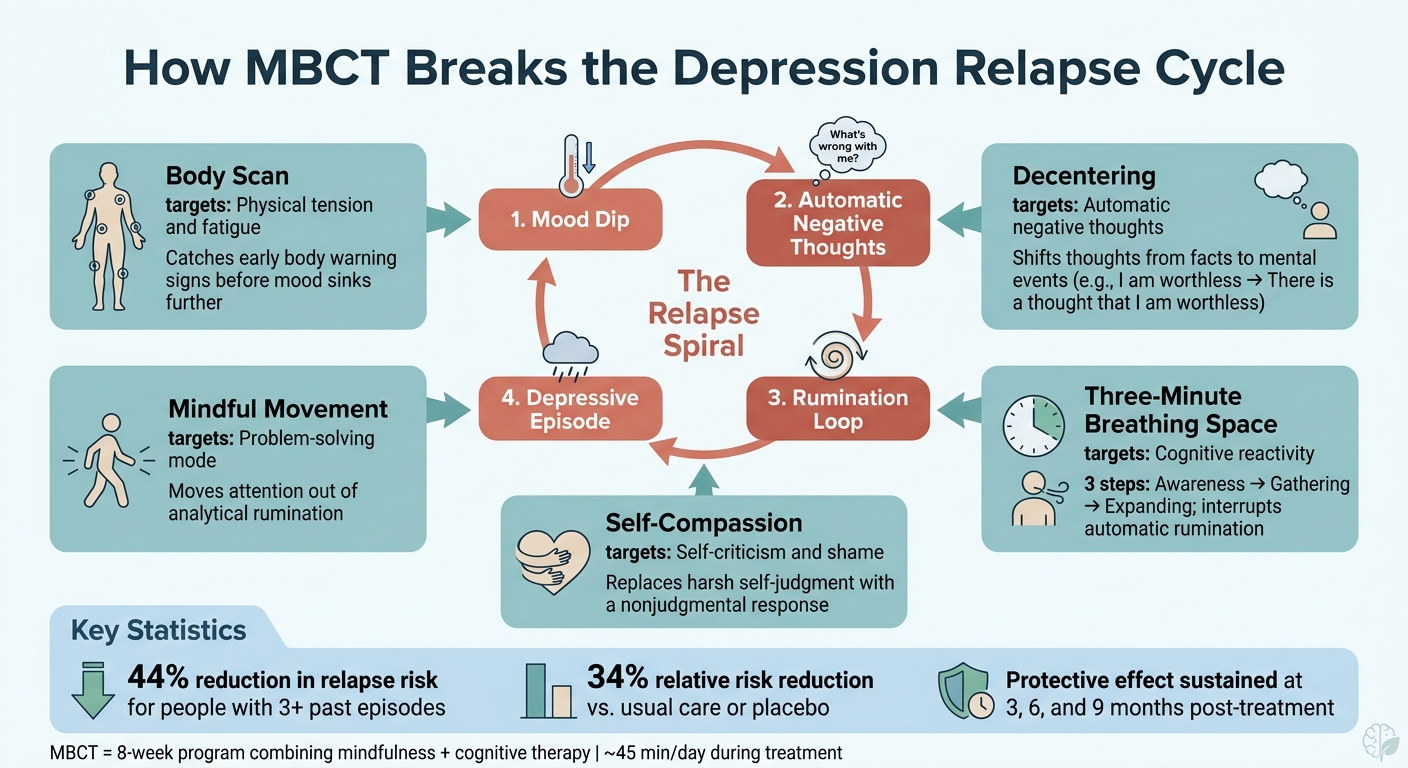
How MBCT Breaks the Depression Relapse Cycle
MBCT focuses on a very specific moment: when a small drop in mood starts waking up an old depression pattern of thoughts, emotions, and body sensations. That is often exactly how a relapse begins. By combining mindfulness practices with practical cognitive skills, MBCT helps create a conscious, supportive pause at that critical inflection point. This brief gap stops the automatic slide, allowing individuals to ground themselves before the downward spiral takes over.
How MBCT Interrupts Rumination and Cognitive Reactivity
When mood dips, many people try to think their way out of it. The problem is, that effort can turn into rumination. Thoughts like Why do I feel this way again? or What’s wrong with me? can pull a person deeper into the spiral instead of helping them step out of it.
MBCT teaches you to notice the low mood, step back, and not feed it with more analysis. That pause between noticing and reacting is the gap MBCT is built to create. With regular practice, that pause becomes easier to find when it matters.
And that’s what makes the next set of skills usable in day-to-day life.
How Mindfulness and Cognitive Skills Work Together
MBCT blends two approaches that work side by side. Mindfulness practices like the body scan, mindful breathing, and mindful movement train attention to stay with the present moment. Cognitive strategies, especially decentering, help you see thoughts as mental events instead of facts.
Rather than arguing with thoughts, MBCT changes how you relate to them. So if a thought like “I’m worthless” shows up, the goal is not to debate it. The goal is to recognize it as a thought, not a truth:
“Repeated practice in noticing, observing with curiosity and compassion, and shifting perspective helps participants to realise that their thoughts, emotions and sensations are just thoughts, emotions and sensations, rather than ‘truth’ or ‘me’.” – J. Mark G. Williams and Willem Kuyken
That shift away from problem-solving mode and toward present-moment awareness sits at the center of MBCT’s relapse-prevention effect.
Table: How MBCT Skills Interrupt the Relapse Cycle
The table below shows how each skill steps in at a different point in the relapse cycle.
| MBCT Skill | Relapse Risk Factor Targeted | How It Helps Prevent Relapse |
|---|---|---|
| Body Scan | Physical tension and fatigue | Helps you catch early body cues |
| Decentering | Automatic negative thoughts | Shows thoughts as mental events |
| Three-Minute Breathing Space | Cognitive reactivity and stress triggers | Interrupts automatic rumination |
| Mindful Movement | Problem-solving mode | Moves you out of problem-solving mode |
| Self-Compassion | Self-criticism and shame | Reduces self-criticism and shame |
How to Use Core MBCT Skills Day to Day
These skills offer the greatest benefit when you deploy them early—right when you first notice a mood shift, harsh self-talk, or physical tension building in your body.
Using the Body Scan and Present-Moment Attention
You can use the body scan to spot early physical signs of a low mood—such as localized muscle tension, fatigue, pain, or subtle changes in your energy baseline—before things sink further. It does not have to take long. Even a few minutes of moving your attention through the body can reveal patterns you might otherwise miss if you stay stuck in your head.
This matters because early physical signals are often the first clue that your mood and your thoughts are starting to pull each other down. If you catch them sooner, it is much easier to step in before that negative loop gets stronger.
The point is not to fix or change what you find. It is simply to notice it, without piling on extra reactions or emotional judgment. When a difficult thought starts to take hold, you can smoothly transition from noticing the physical body to stepping back from the thought itself.
Using Decentering and the Three-Minute Breathing Space
Decentering helps you view a thought simply as a temporary mental event, not an absolute fact. For example, when a critical thought like “I am worthless” surfaces, shifting your internal phrasing to “There is a thought that I am worthless” creates just enough psychological space to keep it from running the show. That small gap can stop a passing low mood from turning into a full, destructive rumination loop.
The Three-Minute Breathing Space is a practical way to create this gap in the middle of a stressful moment. It is structured in three clear steps:
-
Step 1: Awareness – Intentionally notice your current thoughts, emotions, and bodily sensations.
-
Step 2: Gathering – Narrow your cognitive focus and anchor it directly onto the rhythm of your breath.
-
Step 3: Expanding – Widen your attention back out to encompass your entire body as a whole.
This structured practice can successfully interrupt the automatic slide from a temporary low mood into deep rumination. While it does not fix or remove the external stressor itself, it gives you a crucial pause between the trigger and what you choose to do next. If the stressor remains, applying self-compassion can help keep that challenge from turning into a secondary emotional problem.
Practicing Self-Compassion and Spotting Your Relapse Pattern
After an emotional setback, harsh self-criticism can jump in rapidly with thoughts like “Why cannot I handle this?” or “I should be better by now.” MBCT teaches a kinder, nonjudgmental response instead of letting the setback turn into more analytical rumination. At low points, practicing self-compassion helps break the link between immediate reactivity and worse emotional outcomes later. It also keeps deep-seated shame from feeding the next round of negative thinking.
Long-term clinical data shows that measurable increases in both mindfulness and self-compassion are directly responsible for sustained improvements in depressive symptoms up to 15 months after treatment. To support this process, it helps to track your personal early warning signs—such as sleep disruptions, appetite shifts, irritability, social withdrawal, or a sudden loss of interest—so you can respond effectively before the pattern deepens.
How to Build MBCT Into a Long-Term Relapse-Prevention Plan
Once these core skills start to feel familiar, the next logical step is to consistently integrate them into your weekly routine.
This ongoing commitment matters because research shows that MBCT provides a continuous protective effect at 3, 6, and 9 months post-treatment. However, clinical data emphasizes that this sustained protection depends entirely on continued, regular practice.
Creating a Sustainable Weekly Practice Routine
During the initial 8-week course, formal mindfulness practices typically require about 45 minutes a day. This dedication is not accidental; the intensive structure is specifically designed to help you build and solidify the mental muscles and cognitive frameworks you will lean on later.
After the course concludes, your daily routine often becomes lighter and much more practical. Instead of trying to maintain the rigorous pace of the initial course forever, you can transition to shorter practices that naturally fit into daily life. This ongoing maintenance can include:
-
Utilizing the three-minute breathing space during stressful intervals.
-
Incorporating mindful walking into your daily commutes or breaks.
-
Practicing brief body scans to check in with your physical baseline.
Additionally, attending clinical booster sessions every 3 months can help you revisit the core program manual and strengthen your habits. It is also important to remember that MBCT is not reserved only for calm periods. The framework remains highly effective even when residual depressive symptoms are active, meaning your practice can—and should—continue during less stable periods to maintain stability
Integrating MBCT with Medication, Therapy, and Lifestyle Care
Long-term relapse prevention yields the best clinical outcomes when MBCT fits seamlessly into the rest of your healthcare ecosystem, rather than operating in isolation.
-
Medication Alignment: MBCT can be utilized alongside antidepressant medication. Research indicates that it is as effective as maintenance antidepressants in preventing depressive relapse over a two-year follow-up period. Furthermore, the cognitive skills gained can support a supervised, gradual medication tapering process under clinical guidance. Note: Any modification to a medication regimen must be made exclusively by a licensed prescriber.
-
Comprehensive Healthcare Coherence: It is highly beneficial to connect your mindfulness practices with other vital pillars of treatment, such as traditional psychotherapy, targeted nutrition support, and structured exercise planning.
Cultivating present-moment awareness makes early systemic shifts much easier to spot—particularly subtle changes in sleep architecture, appetite fluctuations, sudden drops in energy, or a tendency toward social withdrawal. Catching these clinical warning signs early grants you and your care team more time to respond proactively before a full relapse can materialize.
MBCT Practice Plan During Treatment and After
The plan below shows how practice changes from treatment to maintenance.
| Timeframe | Practice Type | Suggested Frequency | Purpose |
|---|---|---|---|
| During 8-Week Course | Formal practice | Daily (~45 mins) | Build core mindfulness and cognitive skills |
| Maintenance Phase | Informal (3-minute breathing space, mindful walking) | Daily or as needed | Interrupt rumination and maintain present-moment awareness |
| Long-Term (1 year+) | Booster sessions | Every 3 months | Refresh skills and reinforce the relapse-prevention plan |
| During Symptom Dips | Self-compassion practices, present-moment awareness | During symptomatic dips | Manage residual symptoms and reduce relapse risk |
When MBCT Is a Good Fit and Key Takeaways
Once you understand how the mechanics of MBCT operate, the next step involves evaluating whether this intervention lines up with your current stage of recovery.
How to Know If MBCT Is Right for You
First and foremost, MBCT is not the appropriate place to start during an acute psychological crisis or periods of active suicidality. In those critical situations, immediate stabilization, crisis care, and a professional medical assessment must always come first.
For individuals outside of an acute crisis, however, MBCT can be a highly strategic addition to a long-term wellness plan.
-
Target Audience: The program is primarily aimed at adults with a history of recurrent depression who are currently in remission.
-
Residual Symptoms: It is especially beneficial if lingering, residual symptoms continue to persist during periods of recovery.
-
History of Episodes: The framework tends to fit best for individuals who have experienced three or more past depressive episodes, as this historical threshold is typically when the statistical risk of relapse peaks.
If this clinical profile lines up with your personal mental health journey, the next logical move is to look for a comprehensive care program that features the appropriate professional training, clinical oversight, and structural setup to support your recovery.
What to Look for in MBCT-Oriented Care
A solid MBCT program should include:
- An 8-week structure
- Weekly sessions
- Daily home practice
- Trained clinicians
Modyfi Health offers coordinated psychiatric care, therapy, nutrition support, and exercise planning that can support MBCT as part of a broader relapse-prevention plan.
Conclusion: The Key Ways MBCT Helps Prevent Relapse
Ultimately, MBCT prevents depression relapse by fundamentally transforming how you relate to difficult thoughts, rather than attempting to make them disappear.
This psychological shift is deeply profound. Instead of getting automatically pulled into destructive loops of rumination, individuals learn to identify subtle mood changes early, step back objectively, and respond with heightened present-moment awareness and self-compassion.
Clinical meta-analyses have firmly established this efficacy, linking MBCT to an estimated 34% relative risk reduction in depressive relapse when compared directly to standard usual care or a placebo. With consistent daily practice, periodic booster sessions, and the right clinical infrastructure, MBCT serves as an exceptionally strong, evidence-based tool for maintaining long-term psychological stability and preventing future depressive episodes.
FAQ
How is MBCT different from regular mindfulness?
Mindfulness-Based Cognitive Therapy combines foundational mindfulness practices with structured cognitive behavioral therapy exercises specifically designed to address psychological patterns tied to depressive relapse.
Unlike general mindfulness practices, MBCT is a structured, clinically validated eight-week program. It trains individuals to systematically identify negative thought patterns and subtle shifts in mood early, allowing them to view thoughts simply as passing mental events instead of getting automatically swept up in emotional distress.
How do I know if MBCT is right for me?
MBCT may be an excellent fit if you have a history of recurrent depression and are currently in clinical remission. Research indicates it is highly effective for individuals who still experience residual depressive symptoms or who navigate a history of childhood trauma.
This structured framework helps you build nonjudgmental awareness so you can actively interrupt maladaptive patterns such as chronic rumination, harsh self-criticism, and unhelpful emotional coping mechanisms. The clinical team at Modyfi Health can thoroughly evaluate your history to determine whether adding these mindfulness-based tools makes sense for your personalized mental health plan.
Can MBCT help if I still have mild symptoms?
Yes. Mindfulness-Based Cognitive Therapy is highly effective if you are experiencing lingering, low-level depressive symptoms, particularly if you have experienced major depression more than once and continue to navigate residual symptoms during recovery.
MBCT is specifically engineered to help you notice automatic negative thoughts and cognitive reactivity without getting pulled into a downward spiral. The primary goal is to establish a distinct psychological space between an uncomfortable thought and your active response, allowing you to handle challenging daily moments with conscious intention rather than operating on a destructive autopilot loop.
At Modyfi Health, our psychiatric and therapeutic providers can seamlessly weave these specialized mindfulness-based tools directly into a cohesive, comprehensive care plan.
Integrative Depression Care at Modyfi Health
Achieving remission from depression is a vital step, but true, long-term resilience requires a continuous and coordinated strategy. At Modyfi Health, we believe that sustainable recovery goes beyond a single therapeutic protocol. That is why we integrate evidence-based approaches like Mindfulness-Based Cognitive Therapy (MBCT) into a comprehensive, whole-person care model tailored to support your nervous system, mind, and body.
Our collaborative, multidisciplinary team works under one roof to build a stable foundation against the risk of relapse:
-
Targeted Psychiatry & Medication Management: Our licensed prescribers evaluate, monitor, and stabilize biochemistry to manage residual symptoms or safely support supervised medication tapering when clinically appropriate.
-
Specialized Psychotherapy: From structured cognitive strategies and mindfulness skills that interrupt the rumination loop to traditional therapeutic modalities, we help you reshape your relationship with difficult thoughts.
-
Nutritional Therapy & Metabolic Support: Physical health deeply impacts neurological recovery. We assess and integrate targeted nutrition care to optimize the biological fuel your brain needs to maintain mood stability.
-
Exercise Planning & Lifestyle Care: Long-term wellness is sustained through daily movement and habit architecture. We design coordinated physical activity plans that reinforce sleep, energy baselines, and overall mental resilience.
Ready to Secure Your Long-Term Recovery?
Preventing relapse is an active, personalized process, and you do not have to map it out alone. Our team is ready to design a synchronized, virtual care plan built around your unique history and long-term health goals.