

Saffron for depression shows real promise in clinical trials, but it is not a proven replacement for antidepressants like fluoxetine (Prozac). Most studies used 30 mg a day of a standardized extract for 6 to 8 weeks. That is far more concentrated than cooking amounts. Before trying it, ask a clinician or pharmacist to review your medications and the product label.
Several meta-analyses have found that saffron eases depressive symptoms more than placebo. In small head-to-head trials, it also performed similarly to SSRIs. Still, most of those trials were small, short, and run in Iran, so the results may not apply to everyone.
Safe treatment matters more than the dose. <u>Don’t stop, reduce, or replace an antidepressant on your own.</u> Review supplement testing, interaction risks, and a follow-up plan with your clinician. If you have suicidal thoughts, call or text 988 in the U.S. Call 911 for immediate danger.
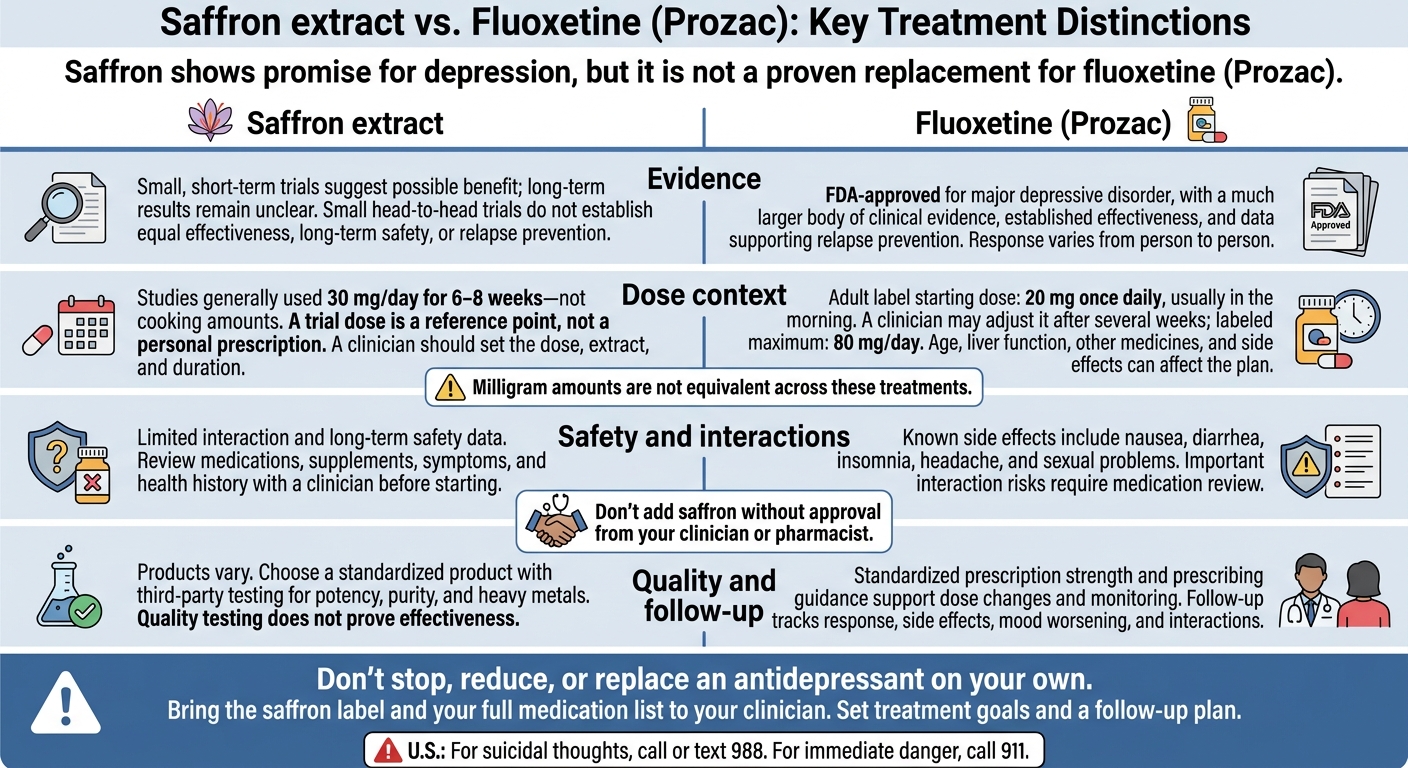
The infographic below compares saffron extract with fluoxetine across evidence, dosing, safety, and follow-up.
What the Research Shows About Saffron for Depression
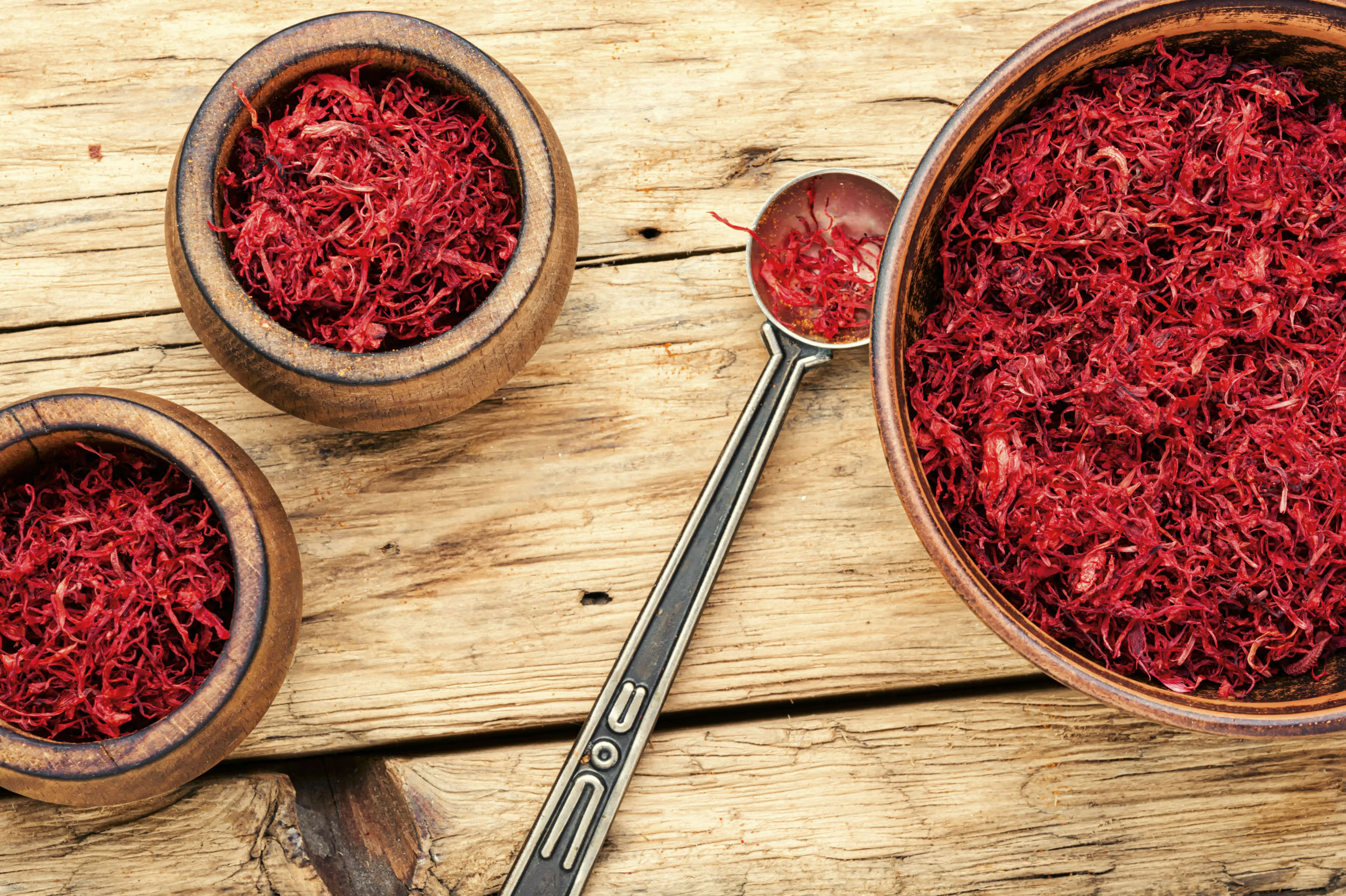
Saffron comes from the dried stigmas of the Crocus sativus flower. Researchers think its main compounds, crocin, crocetin, and safranal, may affect serotonin, inflammation, and stress-hormone pathways. These mechanisms remain under study.
How Effective Is Saffron?
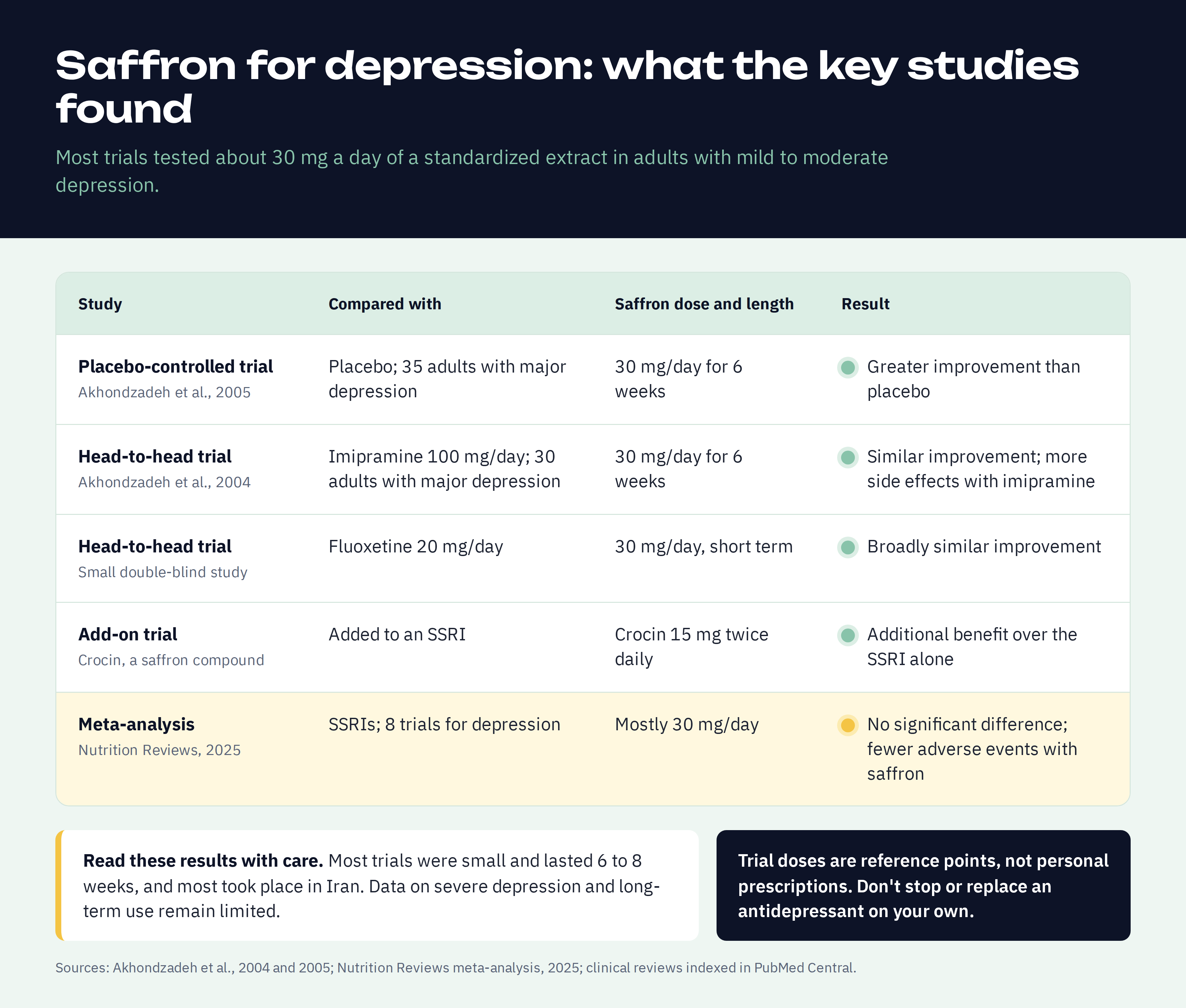
Most clinical trials tested saffron in adults with mild to moderate depression. In placebo-controlled studies, saffron produced larger improvements in depression scores. In head-to-head trials, its results looked similar to standard antidepressants.
Meta-analyses point the same way. One analysis of eight trials found no significant difference between saffron and SSRIs for depressive symptoms. Saffron also caused fewer side effects in those trials.
The evidence has real limits. Most trials enrolled fewer than 100 people and lasted 6 to 8 weeks. Most took place in Iran. Products also varied, from stigma extracts to petal preparations. Data on severe depression, long-term use, and relapse prevention remain thin.
The table below summarizes key studies behind these findings.
sbb-itb-23f89d4
Saffron Dosing in Clinical Trials
Most trials used 30 mg a day of a standardized saffron extract, often split into two 15 mg doses. Treatment usually lasted 6 to 8 weeks. Benefits, when they appeared, often showed up within several weeks.
A trial dose is a reference point, not a personal prescription. Products differ in extract type and standardization, so milligram amounts are not interchangeable between brands. A clinician should help set the product, dose, and duration.
Safety and Side Effects
In trials, saffron at about 30 mg a day caused few side effects. Reported effects included nausea, headache, dry mouth, and appetite changes. Short-term tolerability looks favorable, but long-term safety data remain limited.
Much higher amounts carry real risk. Doses of 5 grams or more have caused toxic effects. At those levels, saffron can also stimulate the uterus, so it is unsafe during pregnancy.
Some groups need extra caution: people who are pregnant or breastfeeding, and people with bipolar disorder. Anyone taking antidepressants, blood pressure medicines, or sedatives should also check first. Research on combining saffron with SSRIs remains limited, though small add-on trials reported no serious problems.
Product Quality
Saffron is one of the most expensive spices, and supplement quality varies. Some products contain fillers or adulterated saffron. Others list total spice weight instead of the standardized extract that studies used.
Choose a product with third-party testing for potency, purity, and heavy metals. Compare the extract type and daily amount with the studies above. Quality testing confirms what is in the bottle, but it does not prove the product treats depression.
How Saffron Compares With Fluoxetine (Prozac)
Fluoxetine is an FDA-approved selective serotonin reuptake inhibitor (SSRI) for major depressive disorder. It has decades of research, standardized dosing, and evidence for preventing relapse after a good response. Results vary from person to person, and improvement may take several weeks.
The adult label lists a usual starting dose of 20 mg once daily. A clinician adjusts the dose over time based on response, side effects, age, liver function, and other medicines.
Side Effects and Interactions
Common side effects include nausea, diarrhea, insomnia, headache, and sexual problems. Seek urgent help for suicidal thoughts, sudden mood worsening, severe agitation, mania, or signs of serotonin syndrome. These signs include confusion, sweating, shaking, muscle twitching, or a rapid heartbeat.
Fluoxetine can interact with MAOIs, tramadol, certain migraine medicines, lithium, and other serotonergic products. Aspirin, NSAIDs, warfarin, and other blood thinners can raise bleeding risk. Because saffron may also act on serotonin, don’t add it to fluoxetine without approval from your clinician or pharmacist.
Why the Difference Matters
The key difference goes beyond short-term symptom scores. Fluoxetine has stronger evidence, standardized strength, and data on staying well after a response. Saffron’s evidence comes from small, short trials using varied products.
Bring the saffron label and your full medication list to your clinician. They can check whether the product matches those studied and whether interactions are a concern.
Talk With Your Clinician Before Trying Saffron
Saffron for depression has encouraging but early evidence. Trials are small, and products vary. Saffron may work as an add-on for some people, but it should not replace a prescribed antidepressant. Don’t stop an antidepressant abruptly, and make any changes with your clinician’s guidance.
At your visit, review your diagnosis, symptom severity, current medications, health conditions, and the saffron label. Check the dose, standardization, and third-party testing. Set treatment goals, schedule a follow-up, and agree on whom to contact if symptoms worsen.
Saffron works best as one part of a clinician-directed plan. That plan may include psychotherapy, medication management, and lab testing when symptoms point to a medical cause.
Seek prompt evaluation for psychosis, mania, severe symptoms, or a major decline in your ability to function. For suicidal thoughts, call or text 988. For immediate danger, call 911.
Ready to Turn This Research Into a Real Plan?
Supplements work best when someone reviews the whole picture. Modyfi brings psychiatry, therapy, nutrition, and exercise together in one coordinated virtual plan. Your provider can review your current medications and check whether saffron fits safely alongside them. They can also track how your symptoms respond over time.
👉 Explore Providers to Book an Appointment and Start Your Care Plan
(Note: Modyfi proudly accepts most major commercial insurance plans. We do not accept Medicare or Medicaid.)
FAQs
How can I tell if a saffron supplement matches those studied?
Compare the label with the trial details. Look for a standardized saffron extract, not just total spice weight. Check that the daily amount and length of use match the studies. Most tested 30 mg a day for 6 to 8 weeks.
Look for third-party testing for potency and purity, since products vary widely. Share the label with a clinician or pharmacist. Don’t assume a different extract, dose, or duration will work the same way.
Could saffron worsen anxiety or trigger mania?
In trials, saffron more often eased anxiety than worsened it. Some studies measured anxiety alongside depression and found improvements similar to SSRIs. A small number of people reported restlessness or agitation.
Evidence on mania remains limited. Because saffron may affect serotonin, people with bipolar disorder should use it only with a clinician’s guidance. Seek prompt care for racing thoughts, reduced need for sleep, or unusual risk-taking.
How would I know if saffron is helping my depression?
Start by recording your symptoms before you begin. A validated questionnaire such as the PHQ-9 can help you and your clinician track changes over time.
Review progress after several weeks, since most trials lasted 6 to 8 weeks. If symptoms do not improve, or if they worsen, revisit the plan with your clinician. Research on saffron is still early, so never change prescribed medication without professional guidance.
Research on saffron is still preliminary. It hasn’t established saffron as an equivalent replacement for prescribed antidepressants. Never change your medication plan without professional guidance.
Can I take saffron with my antidepressant?
Possibly, but only with your prescriber’s approval. Small add-on trials combined saffron or its compound crocin with SSRIs and reported no serious problems. Those studies were short and included few people.
Both saffron and many antidepressants may act on serotonin. A prescriber or pharmacist can check your specific medications, doses, and health history before you add it.
How long does saffron take to work for depression?
Most trials ran for 6 to 8 weeks. When saffron helped, improvements often appeared within several weeks.
If you notice no change after a full trial period, talk with your clinician about next steps. Depression that persists deserves a fresh look at the treatment plan, not just a longer wait.
Is saffron safe during pregnancy?
Experts do not consider medicinal doses of saffron safe during pregnancy. At high amounts, saffron can stimulate the uterus and may raise the risk of miscarriage.
Small amounts used in cooking are generally not a concern. If you are pregnant, trying to conceive, or breastfeeding, talk with your obstetric clinician before taking any saffron supplement.