


Whole-person care and traditional psychiatry take very different approaches to mental health treatment. Traditional psychiatry focuses on diagnosing symptoms and prescribing medication to manage them, often in short visits. Whole-person care, or Root Cause Psychiatry, goes beyond simple symptom management. While traditional models stop at neurotransmitter balance, this approach investigates the metabolic, inflammatory, and nutritional barriers that prevent the brain from healing naturally.
Key differences include:
- Traditional Psychiatry: Symptom-focused, medication-centered, brief appointments.
- Whole-Person Care: Root-cause-focused, considers lifestyle and biology, team-based care.
Whole-person care often yields better outcomes for treatment-resistant conditions and long-term wellness by involving patients in their recovery journey.
Methods include advanced functional testing, personalized nutrition, and addressing social determinants as biological stressors. While traditional psychiatry is effective for acute crises, Root Cause Psychiatry offers a superior framework for long-term recovery by neutralizing the environmental and inflammatory triggers that hinder mental wellness.
Moving Toward a Whole Person Paradigm in Mental Healthcare
sbb-itb-23f89d4
What Is Traditional Psychiatry?
Traditional psychiatry operates within a medical framework, viewing mental illnesses as disruptions in brain function. Psychiatrist Samuel Guze summarized this approach by stating, “Psychopathology represents signs of disrupted brain function”.
This model focuses on identifying symptoms and linking them to established diagnostic categories. The emphasis is on measurable and treatable aspects of mental health. Below, we delve into the core principles that define this approach.
Core Principles of Traditional Psychiatry
At the center of traditional psychiatry is the Diagnostic and Statistical Manual of Mental Disorders (DSM), a key resource for standardizing diagnoses. The latest version, DSM-5-TR, was released in March 2022 and includes updated criteria for over 70 disorders. Over the years, the DSM’s scope has grown significantly.
The diagnostic process involves identifying clusters of symptoms, known as syndromes, and matching them to DSM criteria. While this method provides a standardized language for clinicians, it is primarily descriptive — focusing on categorizing symptoms rather than identifying the underlying biological drivers, such as neuroinflammation or metabolic dysfunction, that Root Cause Psychiatry seeks to address. Our goal is to move beyond simple inter-rater reliability to achieve biological precision in every treatment plan.
Treatment Methods Used
After diagnosis, treatment generally follows a step-by-step algorithm: prescribe medication to address suspected neurotransmitter imbalances, adjust dosages based on how symptoms respond, and monitor progress. Common medications include SSRIs for depression and anxiety, antipsychotics for severe mental illnesses, and stimulants for ADHD.
In addition to medication, traditional psychiatry often incorporates psychotherapy, particularly evidence-based methods like Cognitive Behavioral Therapy (CBT). However, current healthcare reimbursement systems tend to favor brief medication check-ins over comprehensive assessments. Christina Mainelli, CEO of Quartet Health, highlights this limitation:
“The fee-for-service world does not reimburse for treating the whole person. Services like transportation, wellness visits, or peer support are often not reimbursed”.
The main aim of this approach is symptom reduction and stabilization, especially during acute crises such as psychosis, severe depression, or suicidal episodes. In these situations, rapid pharmaceutical intervention can be life-saving.
What Is Whole-Person Care?
Whole-person care takes a broader view of health, recognizing that your brain doesn’t operate in isolation. It’s influenced by factors like your gut health, immune system, sleep patterns, metabolism, and even your social connections. Instead of zeroing in on neurotransmitter imbalances, this approach digs deeper into root causes such as inflammation, nutrient deficiencies, trauma, sleep problems, and microbiome imbalances. The goal shifts from simply managing symptoms to addressing the underlying issues, using medication as one of many tools rather than the main solution. This perspective prioritizes long-term healing over short-term fixes.
The model focuses on four interconnected dimensions: Mind (mental and emotional health), Body (physical well-being, nutrition, and sleep), Spirit (personal beliefs and values), and Social/Environment (relationships, housing, and access to food). Michelle Pampin, CEO of Welkin Health, describes it as:
“the patient-centered optimal use of diverse healthcare resources to deliver the physical, behavioral, emotional, and social services required to improve care coordination, well-being, and health outcomes”.
Core Principles of Whole-Person Care
At its heart, whole-person care relies on teamwork across multiple disciplines. Instead of the traditional 15-minute medication check-ins, care teams – including various specialists – coordinate through shared platforms to provide seamless care. By 2020, over half of U.S. physicians (53.1%) recommended at least one complementary health approach to their patients, and 42% of hospitals had integrated these treatments into their care models.
Treatment plans are highly customized, considering a person’s biological makeup, personal values, spiritual beliefs, and life goals. For example, the U.S. Department of Veterans Affairs has embraced this model, implementing whole-person care strategies in 90% of its 1,200 clinics and hospitals. A key aspect of this approach is addressing social determinants of health – issues like housing instability, food insecurity, and social isolation, all of which directly impact mental health. Care teams don’t just prescribe medications; they tackle these environmental challenges, creating a more comprehensive and effective path to recovery.
Treatment Methods Used
Whole-person care employs a range of targeted strategies to address the biological and lifestyle factors behind mental health challenges.
Providers often use functional lab testing to uncover underlying biological issues. These tests measure inflammatory markers, nutrient levels, hormone balance, and metabolic health to pinpoint the causes of psychiatric symptoms. For example, they might check for vitamin D deficiency, thyroid problems, or gut microbiome imbalances – areas that traditional psychiatry often overlooks.
Nutrition therapy is another cornerstone of this approach. Since the gut microbiome produces neurotransmitters that affect mental health, clinical nutritionists work with patients to cut out inflammatory foods and support gut health. Sleep is also a major focus; ensuring 7–9 hours of quality sleep each night is critical, as sleep deprivation can disrupt emotional regulation and brain plasticity.
Take the case of a 37-year-old executive treated by Dr. Tashkandi in March 2026. Struggling with treatment-resistant depression and unresponsive to two different SSRIs, this patient didn’t receive another medication. Instead, the focus shifted to improving sleep, reducing inflammatory foods, and reintroducing regular exercise. In just six months, the patient’s depression lifted, and they were able to taper off medication under medical supervision.
Other interventions might include pharmacogenomics (genetic testing to tailor medication choices), exercise therapy, herbal supplements, and evidence-based psychotherapy techniques. For example, Modyfi Health integrates psychiatric evaluations, functional lab testing, nutrition guidance, meal planning, and exercise support – all within a single virtual care platform. This kind of comprehensive care reflects the essence of the whole-person approach.
Data is the antidote to guesswork. If traditional treatments haven’t provided the relief you seek, it’s time to look deeper. Schedule your Root Cause Evaluation to discover what your biological markers—from inflammation to nutrient levels—reveal about your mental health.
Key Philosophical Differences
The divide between traditional psychiatry and whole-person care goes beyond treatment methods – it reflects fundamentally different ways of understanding mental health. Recognizing these core differences helps illuminate how each approach shapes patient outcomes and recovery over time.
Isolated vs. Connected Care
Traditional psychiatry often focuses on brain function in isolation, emphasizing biochemical imbalances and symptom management. This perspective tends to separate mental health from other factors like physical well-being, nutrition, and social influences.
Whole-person care takes a broader view, rejecting this compartmentalized approach. Dr. Peyman Tashkandi explains:
“Your brain is not a closed system sealed off from your gut, your immune system, your circadian rhythms, your social connections, or your metabolic health.”
This perspective acknowledges the constant interplay between mental and physical health, as well as social, economic, and even spiritual influences. For example, the gut-brain axis directly affects neurotransmitter production, meaning digestive health can significantly impact mood and cognition. Supporting this integrative approach, the global market for integrative health and medicine reached $82.27 billion in 2020, with an expected annual growth rate of 22% through 2028.
These philosophical differences also transform the way patients engage in their care.
Patient Role in Treatment
The role of the patient varies dramatically between these two models. Traditional psychiatry often positions patients as passive participants, with brief, medication-centered visits. The main question asked is: “What is wrong with you?”
In contrast, whole-person care makes patients active collaborators in their healing journey. Treatment plans are developed together, focusing on uncovering root causes. The guiding question shifts to: “What is happening in your whole system?”
Robert M. McCarron, D.O., Professor of Psychiatry at UC Irvine, highlights the benefits of this approach:
“If the treatment plan is mainly generated from a patient and not a physician, there is a higher chance for long-term engagement in recovery.”
This partnership encourages patients to take an active role in their recovery by making lifestyle changes – such as improving sleep patterns, adjusting diet, and managing stress – rather than relying solely on medication. While this approach demands more effort upfront, it lays the foundation for lasting improvement.
Treatment Approach Comparison
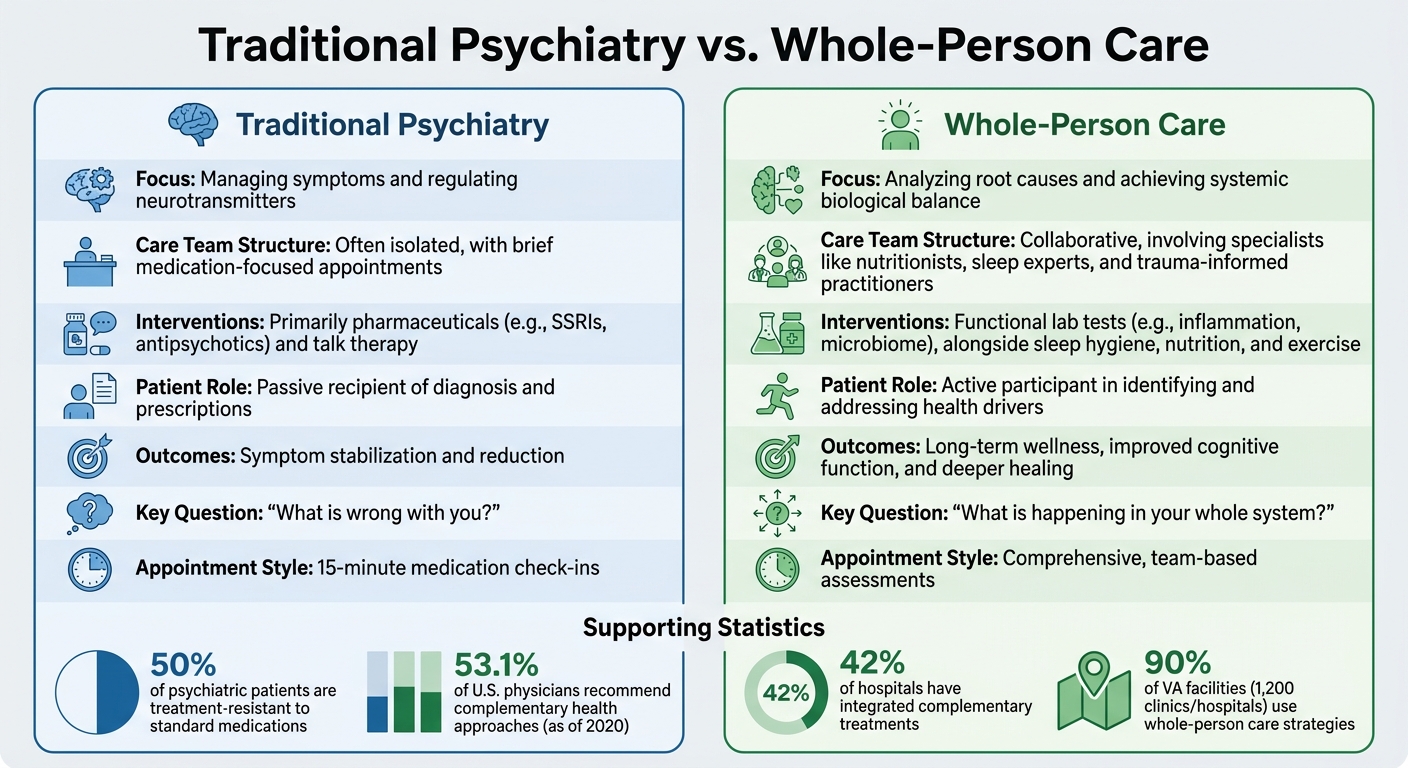
Traditional Psychiatry vs Whole-Person Care: Key Differences in Mental Health Treatment
Direct Comparison Table
Here’s a side-by-side look at traditional psychiatry versus whole-person care:
| Feature | Traditional Psychiatry | Whole-Person Care |
|---|---|---|
| Focus | Managing symptoms and regulating neurotransmitters | Analyzing root causes and achieving systemic biological balance |
| Care Team Structure | Often isolated, with brief medication-focused appointments | Collaborative, involving specialists like nutritionists, sleep experts, and trauma-informed practitioners |
| Interventions | Primarily pharmaceuticals (e.g., SSRIs, antipsychotics) and talk therapy | Functional lab tests (e.g., inflammation, microbiome), alongside sleep hygiene, nutrition, and exercise |
| Patient Role | Passive recipient of diagnosis and prescriptions | Active participant in identifying and addressing health drivers |
| Outcomes | Symptom stabilization and reduction | Long-term wellness, improved cognitive function, and deeper healing |
Whole-person care digs into factors like sleep patterns, inflammation levels, gut health, and even a patient’s career alignment with personal values. For example, in one case, improvements in sleep, diet, and exercise enabled a patient to taper off SSRIs within six months while achieving lasting mental health benefits. These differences highlight the unique approach of whole-person care.
Whole-Person Care in Practice
So, how does whole-person care actually work? Let’s take a closer look at Modyfi Health, a virtual clinic that embodies this approach by integrating traditional and whole-person care principles.
Modyfi Health offers psychiatric evaluations that go far beyond standard symptom checklists. They incorporate functional lab testing to assess key health markers like inflammation, nutrient levels, hormone balance, and gut microbiome health. Each patient receives a custom care plan that blends medication management with strategies like nutrition therapy, meal planning, and exercise guidance.
The clinic’s multidisciplinary team includes board-certified psychiatrists, therapists with specialized expertise, and clinical nutritionists. Together, they address mental health conditions such as anxiety, depression, ADHD, and PTSD through a model called “Root-Cause Psychiatry.” This approach recognizes that the brain is deeply interconnected with the gut, immune system, circadian rhythms, and overall metabolic health. Medication is just one tool in a broader, personalized treatment strategy.
Patient Outcomes: Traditional Psychiatry vs. Whole-Person Care
Research Supporting Whole-Person Care
Studies suggest that whole-person care promotes long-term wellness by addressing more than just immediate symptoms. Traditional psychiatry often focuses on symptom management, as the root causes of many psychiatric conditions remain unclear. As Robert M. McCarron, D.O., Professor of Psychiatry at UC Irvine, puts it:
“The treatments for most psychiatric conditions are usually not curative and are more often meant to reduce symptoms associated with a condition.”
Whole-person care takes a different approach, targeting underlying factors. For example, the WPC-LA pilot program demonstrated a 7% to 24% reduction in emergency room visits and an 8% to 21% increase in primary care use. Impressively, 53% of participants experiencing homelessness maintained housing for at least 12 months after the intervention.
Quartet Health’s integrated behavioral health home model also highlights the benefits of this approach. In April 2024, the program reported a 30% to 40% reduction in total care costs for patients with serious mental illness. According to CEO Christina Mainelli, the initiative engaged over 25% of traditionally hard-to-reach patients, with 95% returning for follow-up appointments.
Specific interventions further confirm the success of whole-person care. For instance:
- Exercise as a treatment for depression reduced symptoms by 58%, compared to 22% in a placebo group.
- Mindfulness-Based Cognitive Therapy (MBCT) proved as effective as first-line antidepressants in preventing relapses of major depressive episodes.
- An 8-week mindful self-compassion program led to nearly a 1% drop in HbA1c levels and significantly lowered depressive symptoms in patients with diabetes.
These findings emphasize how whole-person care addresses root causes while improving overall health, particularly for individuals with complex needs.
When Whole-Person Care Works Best
Whole-person care is especially effective for treatment-resistant conditions. About 50% of psychiatric patients are considered treatment-resistant, meaning they do not respond to standard psychotropic medications. For such individuals, integrative approaches – like nutritional guidance, lifestyle adjustments, and mind-body therapies – offer new possibilities.
This model is also vital for patients with severe mental illness (SMI) and physical health challenges. People with SMI live 15 to 25 years less than the general population, often due to physical illnesses rather than suicide. Traditional psychiatry’s tendency to separate physical and mental health care can overlook critical factors, such as cardiometabolic risks.
Whole-person care effectively manages side effects of antipsychotic medications, like weight gain and metabolic issues, by integrating exercise, dietary plans, and supplements such as Omega-3s. It also provides solutions for conditions that conventional medicine may inadequately address, including recurrent depression, chronic pain, insomnia, and fatigue.
A key factor in whole-person care’s success is patient activation. Dr. McCarron highlights the importance of this approach:
“If the treatment plan is mainly generated from a patient and not a physician, there is a higher chance for sustained motivation to change and improve health.”
This collaborative method has shown measurable results, such as a 77.7% reduction in stress levels and a 65.2% improvement in nutrition among participants. By empowering patients to take an active role in their care, whole-person models deliver lasting benefits.
Choosing the Right Mental Health Care Model
Deciding between traditional psychiatry and a whole-person care approach comes down to how each model views and treats mental health. This choice impacts everything from the time your provider spends with you to the treatment options they offer.
Traditional psychiatry often follows a symptom-focused approach. It matches your symptoms to diagnostic criteria and adjusts medications accordingly. This method works well in urgent situations, like when someone is experiencing suicidal thoughts or active psychosis, where immediate stabilization is the priority. However, if you’ve cycled through medications without lasting improvement or are managing chronic issues like recurrent depression or treatment-resistant anxiety, this approach might feel limiting. That’s where a whole-person care model steps in, aiming to address the deeper causes – like inflammation, gut health imbalances, and sleep disruptions – rather than just managing symptoms.
Whole-person care takes a broader perspective, seeing the brain as deeply connected to the gut, immune system, sleep, and metabolism. Instead of focusing only on suppressing symptoms, it looks for the underlying factors that might be contributing to your mental health challenges.
When evaluating mental health providers, it’s important to ask the right questions. Do they assess areas like sleep, diet, stress, and social connections, or are they primarily focused on symptom management? Also, think about the level of involvement you’re comfortable with. Traditional psychiatry often involves brief, 15-minute medication check-ins, whereas integrative care emphasizes a more collaborative and detailed exploration of your overall health. These considerations can help you find a provider whose approach aligns with your long-term wellness goals.
Take Modyfi Health as an example of this integrated care model. Their team includes board-certified psychiatrists, therapists, and clinical nutritionists who offer services like comprehensive psychiatric evaluations, functional lab testing, nutrition therapy, and tailored treatment plans. Rather than focusing solely on symptom management, their fully virtual care model empowers patients to actively participate in their wellness journey by addressing the root causes of mental health challenges.
FAQs
How do I know if whole-person care is right for me?
Whole-person care could be a great fit if you’re looking for an approach that goes beyond just treating symptoms. This method takes into account factors like your lifestyle, nutrition, and mental health. By combining physical, mental, and social aspects of health, it provides personalized care tailored to your specific needs. Plus, it encourages you to play an active role in your health decisions, making it a good option for anyone aiming to improve overall well-being with a more complete and context-aware treatment plan.
What tests might be used to find root causes?
Functional lab testing plays a key role in a whole-person care approach, especially when it comes to understanding mental health. These tests dig deeper to identify biological factors that might be influencing someone’s mental well-being. For instance, they can detect nutrient deficiencies, hormonal imbalances, inflammation, or metabolic dysfunctions. By pinpointing these underlying issues, healthcare providers can develop tailored treatment plans designed to improve mental health outcomes in a more targeted and effective way.
Can I do whole-person care while taking medication?
Yes, whole-person care can incorporate medication as part of its approach. This method looks at physical, mental, emotional, and lifestyle factors collectively. Often, medication management works alongside therapies, nutrition guidance, and lifestyle adjustments to enhance results. For instance, Modyfi Health provides personalized care plans that blend these components, demonstrating how medication can play a role in a broader strategy for mental health and overall wellness.
Take the Next Step Toward Lasting Resilience: You don’t have to settle for just ‘managing’ symptoms. At Modyfi, we combine the best of psychiatric expertise with cutting-edge functional medicine to treat the whole you. Click here to book your initial assessment and start building your personalized blueprint for mental wellness.