


Feeling tired all the time, then wired at night? Stress may be part of the problem, but rarely the only one. Poor sleep, long-term stress, and a disrupted cortisol rhythm can feed each other. Fatigue can also come from sleep apnea, anemia, thyroid problems, depression, anxiety, medications, or other health issues.
Here’s the short version:
- Cortisol is not “bad.” The body needs it to wake up, stay alert, and keep energy steady.
- Stress can disrupt cortisol timing. That can mean low energy in the morning and a busy mind at night.
- Poor sleep amplifies stress, and stress worsens sleep. That loop can last for weeks.
- Small daily habits can help: a set wake time, 10–15 minutes of morning outdoor light, lighter exercise, regular meals, enough fluids, and less caffeine late in the day.
- Fatigue that lasts several weeks, gets worse, or affects daily life deserves a medical evaluation.
- Emergency symptoms like chest pain, fainting, confusion, or major shortness of breath need help right away. For self-harm thoughts, call or text 988.
Sleep is the first place to look. Adults ages 18–60 need at least 7 hours a night, yet about a third of U.S. adults get less, according to CDC data.
Before assuming “it’s just cortisol,” start with sleep rhythm and stress load. If fatigue persists, a medical evaluation is the next step.
The short animation below shows how the body’s stress response works and what happens when it stays switched on too long.
How stress affects your body – Sharon Horesh Bergquist
sbb-itb-23f89d4
Why Stress Can Leave You Tired All the Time
The body has a built-in alarm system called the hypothalamic-pituitary-adrenal (HPA) axis. When the brain detects a threat, the hypothalamus signals the pituitary gland. The pituitary then tells the adrenal glands to release cortisol. After the stressor passes, cortisol signals back to the brain, and the alarm settles down. The body then returns toward baseline.
The trouble starts when the alarm doesn’t fully switch off.
How the HPA Axis Shifts Your Energy in the Short Term
During stress, cortisol frees up energy and sharpens alertness. The tradeoff is that digestion, recovery, and sleep move down the priority list. For a while, that can feel like a burst of energy. If stress continues, the cost starts to show up in sleep, focus, mood, and motivation.
Chronic stress doesn’t always mean cortisol stays high. It can also disrupt the daily cortisol rhythm. That may mean a flatter daily pattern, a weaker morning rise, or cortisol staying higher later in the day.
How Chronic Stress Creates a Sleep-Fatigue Loop
Stress and sleep push on each other in both directions. An active HPA axis keeps the body more aroused. That can make it harder to fall asleep, stay asleep, or reach deep sleep. In a small sleep-lab study, adults with chronic insomnia had higher 24-hour ACTH and cortisol levels than good sleepers. Those with the most disturbed sleep secreted the most cortisol.
Deep sleep normally helps quiet the HPA axis. When stress cuts into that sleep, the stress system loses one of its main brakes. The result can be a loop: stress hurts sleep, and poor sleep makes the stress response harder to control.
Short-term sleep loss can shift cortisol too. In a study of healthy young men, two nights of restricted sleep raised evening cortisol and flattened its daily rhythm. Higher cortisol at night, when it should fall, helps explain the “tired but wired” feeling many people describe. These shifts can also affect mood, focus, and inflammation.
The infographic below compares what cortisol does in the short term with what ongoing stress may add. These are possible links, not guarantees. Many of these symptoms have other causes, and no single symptom proves a cortisol problem.
Short-Term Stress vs. Ongoing Stress: What Changes in the Body
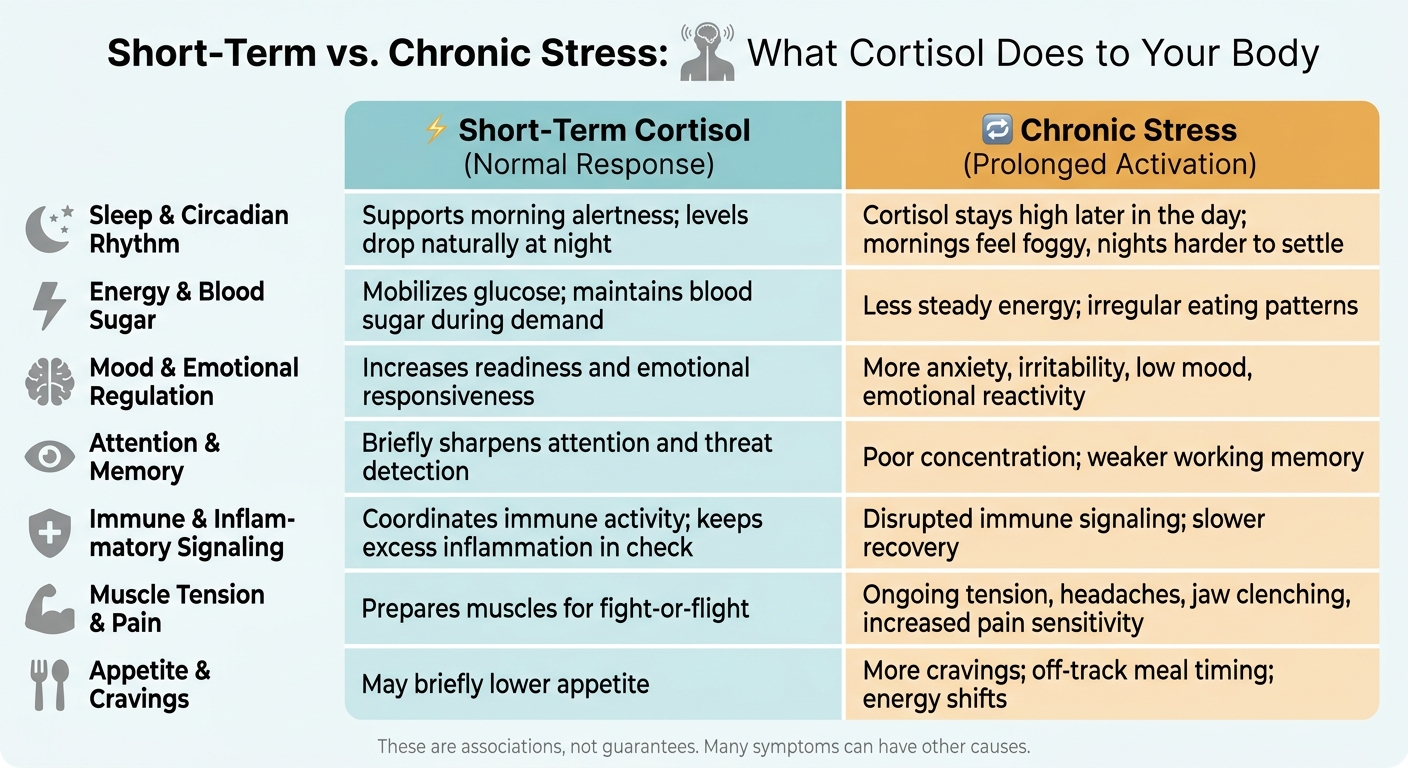
Chronic stress affects more than energy. Its effects can reach sleep, mood, focus, and immune function.
Cortisol matters. It helps keep blood sugar steady between meals, supports blood pressure, affects metabolism, and helps coordinate immune signaling. When stress keeps the HPA axis switched on, the body can lose its usual rhythm. That shift can disrupt sleep, energy, mood, focus, and inflammation. Once the rhythm drifts, the effects can last all day.
Short cortisol spikes are part of a normal stress response. They help the body meet immediate demands. Problems start when the system doesn’t fully switch off. Over time, immune cells may respond less to cortisol, which can make inflammation harder to control.
Practical Steps to Restore Energy and Support a Healthier Cortisol Rhythm
Start with a few anchor habits, track how you feel for two weeks, and build from there. These habits can help reset the sleep-wake pattern that stress tends to disrupt.
Set a Consistent Sleep Schedule and Get Morning Light
Start with wake time. Get up at the same time every day, including weekends. A steady wake time helps rebuild a healthy cortisol pattern: higher in the morning, lower at night. If needed, shift bedtime earlier to protect at least 7 hours of sleep.
After waking, get outside as soon as possible. Even 10–15 minutes of outdoor light gives the circadian system a strong timing cue. A porch, a yard, or a short walk all count. Outdoor light is far brighter than indoor light, even on cloudy days.
At night, do the opposite. Dim the lights. Skip work messages. Choose something quiet, like reading or light stretching. The CDC recommends keeping electronic devices out of the bedroom.
How Movement, Meals, Hydration, and Caffeine Affect Your Energy
For people who already feel drained, intense workouts can make fatigue worse. Low-to-moderate movement is a better starting point. Think a 10–20-minute walk or a few short movement breaks during the workday. The goal is to support recovery without draining the energy that remains.
As energy improves, add resistance training once or twice a week and build slowly. If fatigue, soreness, or sleep worsens the next day, scale back. Exercise also acts as a body-clock cue, which can help steady sleep and daytime energy.
Food matters too. Regular meals with protein, fiber-rich carbohydrates, and unsaturated fats can help smooth out big swings in hunger and energy. For hydration, drink to thirst and use urine color as a rough check – pale yellow is a good sign. You’ll need more fluids in heat, during exercise, or when you’re sick.
Caffeine is where many people get stuck. It can mask poor sleep for a while. Relying on it again and again can keep the fatigue loop going. In one sleep study, caffeine taken 6 hours before bed still cut total sleep by about an hour. Stopping at least 6 hours before bedtime is a safer target. Common sources include:
- Coffee
- Tea
- Energy drinks
- Pre-workout products
- Chocolate
- Some medications
Ways to Lower Your Body’s Stress Load During the Day
The goal here is to interrupt the stress cycle before it runs all day. Short resets during the day work better than trying to calm down at 9:00 p.m.
One simple option is 2–5 minutes of slow breathing with a longer exhale. Inhale gently for about 4 seconds, exhale for about 6 seconds, and repeat for 5 cycles. In a small study of healthy adults, several weeks of diaphragmatic breathing practice lowered cortisol levels. If lightheadedness occurs, stop.
Another option is progressive muscle relaxation. Tense and release muscle groups one at a time, starting at the feet and moving upward. The practice may ease muscle tension and help the body shift toward rest before sleep.
Work stress usually needs more than good intentions. Boundaries help. Options include:
- Turn off notifications after a set time
- Stop checking email in bed
- Use a short end-of-day ritual, like a walk or writing down tomorrow’s top three tasks
That kind of routine signals to the brain that the workday is over. If anxiety, trauma, grief, or burnout keeps the system on high alert, therapy may help in ways breathing exercises can’t.
If fatigue stays intense after these basics, a medical evaluation is the next step.
When Fatigue Needs a Medical or Root-Cause Evaluation
Some fatigue does not improve after the basics: steady sleep, morning light, movement, and nutrition. When that happens, a medical evaluation is the next step. See a clinician if fatigue has lasted several weeks, is getting worse, or keeps returning. The same applies if it makes it hard to work, drive, exercise, or get through the day. That is a cue for evaluation, not a cue to push harder alone. Stress may be part of the story, but long-lasting fatigue has many possible causes. Labeling it a cortisol problem without a proper workup can delay care that actually helps.
Some symptoms need fast attention. Don’t wait for a routine visit if you have chest pain, major shortness of breath, fainting, confusion, or severe weakness. The same applies to major bleeding, unexplained weight loss, persistent fever or night sweats, or sudden sleep episodes. For self-harm thoughts, call or text 988.
What a Clinical Evaluation Typically Covers
A clinician will usually start with the basics. When did the fatigue start? Is it constant, or does it come and go? What makes it better or worse?
From there, the conversation often covers sleep quality, snoring, breathing pauses during sleep, and shift work. It also covers stress, mood, trauma history, diet, weight changes, alcohol, caffeine, and exercise load. Recent illness matters too.
A full medication review is part of the visit. Over-the-counter sleep aids, antihistamines, and some blood-pressure drugs can all cause tiredness. Menstrual history, pregnancy, and postpartum or menopause symptoms also matter when they apply.
One distinction guides the next step. Sleepiness means a tendency to doze off, and it usually improves with rest. Fatigue is a broader sense of exhaustion. It may include weakness, slowed thinking, or low motivation, and rest does not always relieve it.
When Targeted Lab Testing May Be Worth Considering
After the history and exam, testing should match the most likely causes. Each lab should answer a clear question. Broad testing without specific reasons rarely helps. According to a review in American Family Physician, untargeted lab testing may change treatment in only about 5% of patients.
Depending on the symptoms, a clinician may look at:
- A complete blood count and iron studies, especially with heavy menstrual bleeding or diet-related risk
- Thyroid-stimulating hormone
- Glucose or A1C
- A comprehensive metabolic panel
- Vitamin B12 or folate if diet patterns or other clues suggest a deficiency
Inflammation markers or a sleep study may also make sense if the history points that way.
CCortisol testing is a separate issue. A random cortisol level can’t show that daily stress is causing exhaustion. Cortisol shifts across the day, and sleep timing, illness, and medications all affect it. Testing is most useful when a clinician suspects a specific condition, such as adrenal insufficiency or Cushing syndrome. It is not a routine screen for fatigue.
Start With Rhythm, Then Seek Help if Fatigue Continues
Feeling tired all the time is a signal worth taking seriously. Steady sleep timing, morning light, paced movement, regular meals, hydration, and stress-reduction practices are a strong place to start. These habits are also worth keeping during a medical evaluation. If fatigue persists, a clinical workup can help find the actual cause.
Symptoms Are Signals. Let’s Find the Source.
If rejection feels more intense than the moment seems to call for, the pattern deserves a closer look. Modyfi brings psychiatry, therapy, nutrition, and exercise together in one coordinated virtual plan. ADHD care and emotional regulation support work as one, with a network of providers sharing the same approach. No referral chain. No separate offices. One plan built around your specific situation.
👉 Explore our Providers and Start Your Care Plan
(Note: Modyfi proudly accepts most major commercial insurance plans. We do not accept Medicare or Medicaid.)
FAQs
How do I know if stress is causing my fatigue?
Stress-related fatigue often follows a pattern. Many people feel tired but wired: exhausted during the day, then alert at night. Trouble falling asleep, waking in the night, and a racing mind at bedtime are common. Fatigue that worsens during demanding periods and eases during calmer ones also points toward stress.
Still, no single symptom proves that stress is the cause. Anemia, thyroid problems, sleep apnea, depression, and medication side effects can look similar. Some of these need specific treatment.
There is no reliable home test that confirms stress-related fatigue. A clinician can review the full picture, rule out other causes, and decide whether any testing makes sense.
Can cortisol problems make me tired during the day and alert at night?
Yes, a disrupted cortisol rhythm can contribute. Cortisol normally peaks in the morning to support waking and alertness. It then falls through the evening so the body can wind down.
Chronic stress, irregular sleep, and late-night screen use can shift that pattern. Research shows that even two nights of short sleep can raise evening cortisol in healthy adults. Higher cortisol at night can keep the body alert when it should be resting.
The result is a frustrating loop. Poor sleep leads to daytime fatigue, and evening alertness makes the next night harder. Consistent wake times, morning light, and a calmer evening routine can help restore the rhythm.
When should I see a doctor for ongoing fatigue?
See a clinician if fatigue lasts more than a few weeks or keeps getting worse. The same applies if it affects work, driving, or daily life. Fatigue alongside low mood, anxiety, brain fog, or loss of interest also deserves attention.
Sleep problems are another reason to book a visit. Trouble falling or staying asleep at least three nights a week for three months can signal chronic insomnia. Loud snoring or pauses in breathing during sleep can point to sleep apnea. Both conditions respond to treatment.
Seek urgent care for chest pain, fainting, confusion, severe shortness of breath, or unexplained weight loss. For self-harm thoughts, call or text 988.
Is adrenal fatigue real?
No. “Adrenal fatigue” is not a recognized medical diagnosis. A systematic review found no evidence that it exists as a real condition.
The theory claims that chronic stress wears out the adrenal glands. Research does not support that idea. The symptoms people describe are real, but they usually have other explanations, such as poor sleep, depression, or thyroid problems.
Adrenal insufficiency is different. It is a real, diagnosable condition in which the adrenal glands don’t make enough cortisol. It requires medical testing and treatment, not supplements marketed for “adrenal support.”
Can low iron, B12, or thyroid problems cause constant tiredness?
Yes. Iron-deficiency anemia, low vitamin B12, low folate, and an underactive thyroid are common, treatable causes of fatigue. Low iron is especially common in people with heavy menstrual periods or certain diet patterns.
These conditions can build slowly. People often adapt to feeling worn down and assume it is stress or a busy schedule.
Routine blood tests can check for them, including a complete blood count, iron studies, B12, folate, and TSH. Testing works best when symptoms and history guide it.
Can depression or anxiety cause physical exhaustion?
Yes. Fatigue is one of the most common symptoms of depression. It can also come with anxiety, which keeps the body on alert and drains energy over time.
Depression-related fatigue often comes with low mood, loss of interest, or changes in sleep and appetite. Anxiety-related fatigue often follows long stretches of worry, tension, or poor sleep.
Treating the underlying condition often improves energy. Therapy, medication when appropriate, sleep support, and regular movement can all play a role. Screening for depression and anxiety is a standard part of a fatigue evaluation.