

Exercise can significantly reduce neuroinflammation, which is a key factor driving clinical depression. Recent research highlights that physical activity directly decreases inflammatory markers like IL-6, TNF-α, and IL-1β—compounds that are often elevated in people struggling with mood disorders.
Beyond reducing inflammation, exercise boosts overall brain health by increasing brain-derived neurotrophic factor (BDNF) and regulating vital neurotransmitters like serotonin and dopamine.
Here are the key takeaways you need to know:
- Chronic brain inflammation contributes to depression by disrupting mood-regulating neurotransmitters and damaging brain areas like the hippocampus.
- Pathways targeted: Exercise actively reduces inflammation, suppresses harmful genetic pathways (such as cGAS-STING), and promotes healthy neuroplasticity.
- Effective activities: Moderate-intensity aerobic exercise, yoga, and strength training are most effective for improving mood and reducing inflammatory markers.
- Synergistic approach: Studies suggest that combining regular exercise with targeted nutrition (such as Vitamin D) heavily enhances your clinical results.
This evidence supports exercise as a valuable tool for managing depression, especially in cases resistant to traditional treatments.
Why it works: Exercise alters molecular pathways, reduces microglial activation, and improves overall brain-body communication, offering measurable improvements in both mood and inflammation levels.
How Exercise Affects Neuroinflammation in Depression
When inflammatory markers like IL-6, IL-1β, and TNF-α are elevated, they disrupt the delicate balance of neurotransmitters in the central nervous system. This disruption can negatively impact the specific brain regions responsible for everyday mood regulation.
Over time, this persistent, low-grade inflammation may cause cellular damage to neurons in areas like the hippocampus. Because the hippocampus plays a crucial role in mood and memory functions, safeguarding it is vital to overcoming depressive episodes.
The Anti-Inflammatory Effects of Exercise
Exercise helps reduce neuroinflammation by targeting multiple biological pathways. One major pathway is the cGAS-STING-NF-κB signaling cascade, a process that drives microglial activation in the hippocampus. By inhibiting this cascade, exercise lowers the production of proinflammatory cytokines, offering protection to hippocampal neurons.
A study published in 2026 in the Journal of Immunology Research sheds light on another pathway. Researchers, led by Junrui Chen, discovered that exercise reduces the expression of Growth Differentiation Factor 15 (GDF15), a marker linked to immune responses. In a chronic restraint stress mouse model, treadmill exercise suppressed GDF15-induced ERK activation, which in turn lowered levels of TNF-α, IL-1β, and IL-6.
“Treadmill exercise may exert antidepressant effects in a chronic restraint stress (CRS) mouse model by modulating the proinflammatory Growth Differentiation Factor 15 (GDF15)‐extracellular signal‐regulated kinase (ERK) signaling pathway.” – Journal of Immunology Research
The table below highlights the key mechanisms through which exercise combats neuroinflammation:
| Mechanism | Action | Molecular Targets |
|---|---|---|
| cGAS-STING Inhibition | Reduces innate immune response | cGAS, STING, NF-κB |
| GDF15 Downregulation | Lowers neuroinflammation | GDF15, ERK signaling |
| Myokine Release | Enhances neuroplasticity | Irisin, BDNF |
| Metabolic Regulation | Redirects harmful pathways | Kynurenine, Lactate |
| Glial Modulation | Reduces microglial activation | Iba-1, Proinflammatory cytokines |
These molecular processes work alongside direct muscle-to-brain communication during physical activity.
How the Brain and Body Communicate During Physical Activity
Exercise creates a dynamic connection between the brain and the body, primarily through the release of signaling molecules called myokines from skeletal muscles. One well-known myokine, irisin, plays a key role in supporting neuroplasticity and counteracting the effects of inflammation.
Additionally, exercise impacts the kynurenine pathway, a metabolic process that can produce harmful byproducts when disrupted. Physical activity shifts this pathway within skeletal muscles, preventing the accumulation of neurotoxic compounds. Together, these changes form a “molecular transducer network” that helps explain the antidepressant effects of exercise.
What the Research Shows: Exercise, Neuroinflammation, and Depression
Clinical Trials: Exercise as a Primary or Add-On Treatment
Research keeps pointing to aerobic exercise as a solid option for managing depression, whether used alone or alongside medication. A review in Scientific Reports highlights that moderate-intensity aerobic exercise delivers the broadest improvements in depressive symptoms compared to low- or high-intensity workouts.
“Aerobic exercise has demonstrated the most consistent antidepressant effects across the majority of studies.” – Scientific Reports
High-intensity exercise often leads to lower adherence because it can be uncomfortable, while low-intensity exercise may not trigger enough physiological change. Moderate-intensity exercise strikes the right balance, offering both effectiveness and sustainability. Evidence suggests that sticking with a program for at least six weeks is necessary to see meaningful changes in neuroinflammation and behavior. These clinical improvements align with measurable reductions in key inflammatory markers, as detailed below.
Changes in Inflammatory Markers with Exercise
Exercise has been shown to reduce proinflammatory cytokines like TNF-α, IL-1β, and IL-6, which are often linked to depression. It also helps restore neurotransmitters such as serotonin (5-HT), dopamine (DA), and norepinephrine (NE), which can be depleted by chronic inflammation. Additionally, exercise lowers Iba-1 levels, signaling reduced microglial activation, and increases BDNF, which supports neurogenesis and synaptic plasticity. These physiological changes align with noticeable improvements in mood, cognition, and overall behavior.
| Marker | Effect of Exercise | Why It Matters |
|---|---|---|
| TNF-α, IL-1β, IL-6 | Decreased | Reduces central and systemic neuroinflammation |
| Iba-1 | Decreased | Indicates reduced microglial activation in the hippocampus |
| GDF15 | Downregulated | Inhibits a proinflammatory ERK signaling pathway |
| 5-HT, DA, NE | Restored | Normalizes mood-regulating neurotransmitters |
| BDNF | Increased | Supports neurogenesis and synaptic plasticity |
What Animal Studies Reveal About Exercise and Neuroinflammation
Animal studies offer additional insights into how exercise impacts neuroinflammation and depression-like symptoms.
In December 2025, researchers at Hubei University of Traditional Chinese Medicine used a Chronic Unpredictable Mild Stress (CUMS) model in mice over 70 days. They found that regular treadmill exercise significantly suppressed the cGAS/STING/NF-κB signaling pathway, reduced microglial activation in the hippocampus, and restored serotonin and dopamine levels.
Similarly, in January 2026, Junrui Chen and colleagues published findings in the Journal of Immunology Research using a Chronic Restraint Stress (CRS) model. Their work showed that exercise downregulated proinflammatory GDF15-ERK signaling, directly lowering levels of TNF-α, IL-1β, and IL-6, while also improving cognitive behavior.
“Modulation of the GDF15-ERK pathway may have therapeutic implications for depression.” – Journal of Immunology Research
Both the CUMS and CRS models effectively mimic core depressive symptoms like anhedonia and behavioral despair, making their findings particularly relevant for applying exercise’s anti-inflammatory benefits in clinical settings. Together, these studies reinforce the role of exercise in reducing neuroinflammation, providing a strong foundation for its use in depression treatment protocols.
This Type of Exercise Treats Depression Better Than Pills (latest research):
sbb-itb-23f89d4
Using Exercise in Depression Treatment: What the Evidence Supports
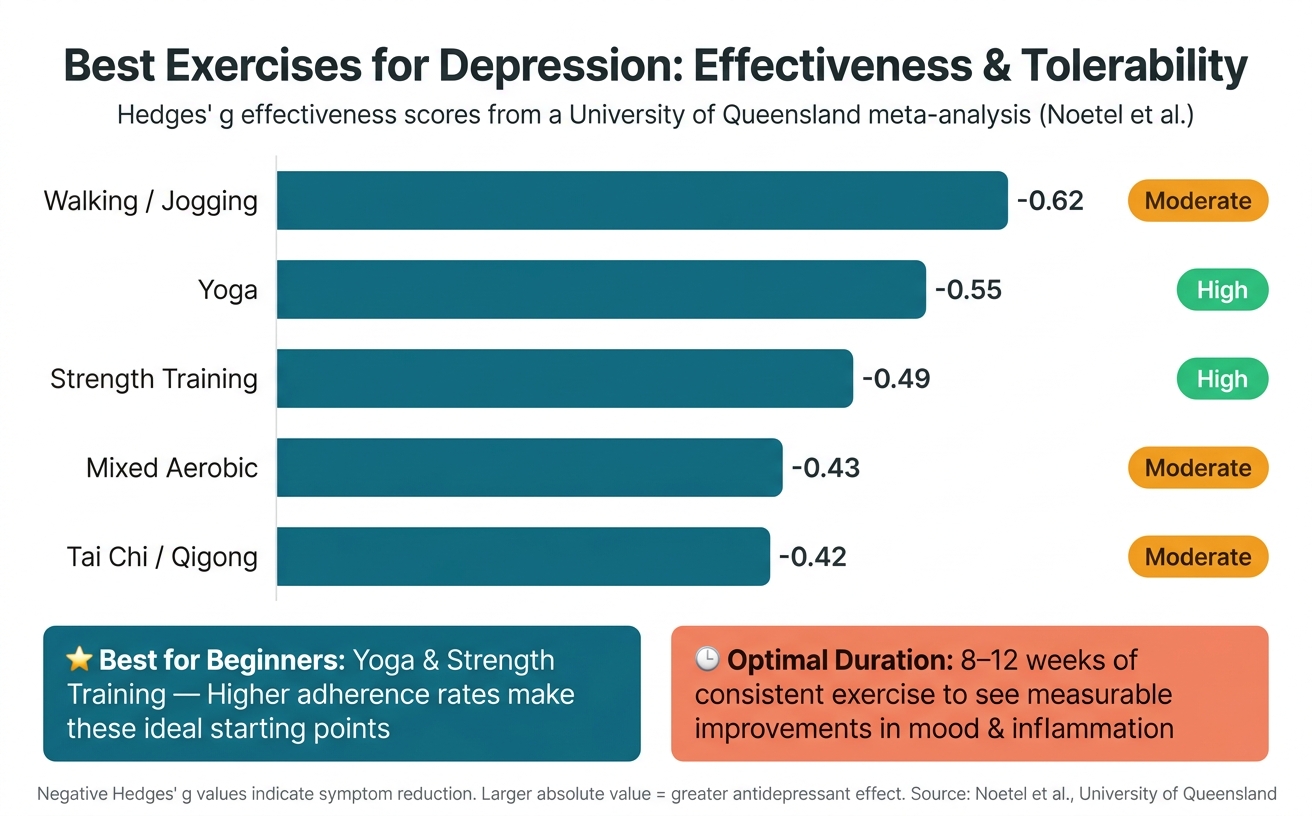
Best Exercises for Depression: Effectiveness & Tolerability
Exercise as a Tool in Treatment-Resistant Depression
Exercise has gained attention as a promising option for individuals with treatment-resistant depression (TRD). Around 30% of people with Major Depressive Disorder (MDD) experience TRD, which is often linked to chronic low-grade neuroinflammation and mitochondrial dysfunction. These underlying issues are not always addressed by standard treatments.
Exercise, however, enhances mitochondrial function and supports biogenesis, helping to restore energy metabolism disrupted by inflammation. This has led some researchers to refer to it as “mitochondrial medicine” for depression. Elevated C-reactive protein (CRP) levels may serve as an indicator for patients who are likely to benefit from exercise-based interventions. Such insights highlight the importance of tailored exercise programs, which are explored further in the next section.
Practical Exercise Protocols Based on Current Research
Studies have identified specific exercise types that are especially effective in reducing depressive symptoms. Research from Michael Noetel and his team at the University of Queensland highlights walking or jogging, yoga, and strength training as top choices
“Exercise is an effective treatment for depression, with walking or jogging, yoga, and strength training more effective than other exercises, particularly when intense.” – Michael Noetel et al., University of Queensland
The table below summarizes the effectiveness and tolerability of different exercise types, measured using Hedges’ g:
| Exercise Type | Effectiveness (Hedges’ g) | Tolerability |
|---|---|---|
| Walking / Jogging | -0.62 | Moderate |
| Yoga | -0.55 | High |
| Strength Training | -0.49 | High |
| Mixed Aerobic | -0.43 | Moderate |
| Tai Chi / Qigong | -0.42 | Moderate |
For individuals struggling with motivation, yoga and strength training are often recommended first due to their higher adherence rates. Over time, patients may transition to more vigorous activities, such as High-Intensity Interval Training (HIIT), which can further reduce neurotoxic kynurenine activity. Additionally, increased blood lactate levels from intense exercise can stimulate BDNF (Brain-Derived Neurotrophic Factor) production, which supports brain function. Research suggests that protocols lasting 8–12 weeks are effective in improving inflammatory markers and mood.
How Modyfi Health Integrates Exercise into Depression Care

How Modyfi Health Integrates Exercise into Depression Care
Modyfi Health incorporates exercise into its personalized approach to depression treatment through its Root-Cause Psychiatry framework. This model uses functional diagnostic testing to assess inflammation and mitochondrial biomarkers, helping to identify patients who are ideal candidates for exercise-based interventions.
The intensity and type of exercise are then customized by physiologists to align with other treatments, such as nutrition, medication, and psychotherapy. Research supports this integrated model. For example, combining exercise with nutritional strategies like Vitamin D supplementation has been shown to amplify antidepressant effects compared to using either approach alone.
Gaps in the Research and Where the Field Is Headed
Limitations in the Current Evidence
The current body of research on exercise and its effects on depression is all over the map. Studies differ in terms of exercise type, intensity, duration, and the populations involved, which makes it tough to pin down a consistent “exercise prescription” for mental health benefits. As Md Najmul Hossain et al. pointed out:
“Recognizing the likelihood of diverse mechanisms and their dependency on age and population, this review emphasizes the need for broader consideration in future studies and models.”
Animal models, like the Chronic Unpredictable Mild Stress (CUMS) model, offer some insights, but they can’t fully replicate the complexity of depression in humans. Another big question mark is causality – does oxidative imbalance actually cause depression, or is it just a side effect?. Tackling these gaps is key to creating more targeted and effective research approaches.
Directions for Future Research
One area that needs immediate attention is sex-specific research. Women are nearly twice as likely as men to experience depression, yet most studies fail to consider female-specific biological pathways.
The future is also leaning toward precision medicine, creating exercise plans tailored to someone’s unique molecular profile. Advances in wearable tech and multi-omic tools are already making it possible to monitor inflammatory biomarkers in real time. This could mean that, instead of sticking to rigid plans, clinicians could tweak recommendations on the fly based on how a patient’s body is responding.
How Modyfi Health Integrates Exercise into Depression Care
Modyfi Health incorporates exercise into its personalized approach to depression treatment through its Root-Cause Psychiatry framework. This model uses functional diagnostic testing to assess inflammation and mitochondrial biomarkers, helping to identify patients who are ideal candidates for exercise-based interventions.
Our coordinated care frameworks track inflammatory biomarkers like TNF-α and IL-6, adapting physical activity alongside expert psychiatric and nutritional support to fit your unique needs.
👉 Schedule a consultation with Modyfi Health today to uncover the root causes of your symptoms and build a personalized treatment plan that works for your biology.
Conclusion: Exercise as a Treatment for Neuroinflammation and Depression
Exercise has been shown to reduce neuroinflammation and alleviate depressive symptoms through a variety of anti-inflammatory pathways, as supported by both clinical and nutritional research findings.
For example, a longitudinal study involving 13,461 older adults (average age 68) revealed that increased physical activity was strongly linked to lower levels of hsCRP (β = −0.40) and fewer depressive symptoms (β = −0.48). When paired with nutritional strategies like Vitamin D supplementation, the benefits become even more pronounced. In fact, inflammatory markers and behavioral outcomes in such cases often align closely with those observed in healthy individuals.
“Combined vitamin D supplementation and exercise produced greater antidepressant-like effects than either intervention alone, accompanied by improvements in behavioral, antioxidant, inflammatory, and neurotrophic markers.” – The Egyptian Journal of Neurology, Psychiatry and Neurosurgery
These findings highlight the importance of integrating exercise into broader care strategies. The most effective approaches involve coordinated care frameworks that track inflammatory biomarkers like TNF-α and IL-6, adapt interventions to individual needs, and combine physical activity with psychiatric and nutritional support. Models like Modyfi Health’s Root-Cause Psychiatry approach exemplify this by blending exercise science, functional diagnostics, and personalized nutrition into tailored treatment plans for depression.
With advancements in precision medicine and biomarker monitoring, exercise-based treatments are becoming more targeted and measurable. This progress points toward a future where depression care is increasingly personalized, focusing on delivering exercise interventions that are both effective and uniquely suited to each patient.
FAQs
How much exercise is needed to reduce inflammation linked to depression?
Regular aerobic exercise performed consistently over 4 to 6 weeks has been shown to help decrease neuroinflammation linked to depression. Engaging in moderate-intensity exercise often strikes the right balance between delivering results and being manageable.
Which workouts are best if I have low energy or treatment-resistant depression?
When dealing with low energy or treatment-resistant depression, gentle exercises like yoga, Qigong, or mindfulness practices can be incredibly helpful. These activities not only enhance BDNF (Brain-Derived Neurotrophic Factor) levels but also improve mood without putting too much strain on your body.
For those who feel up to it, moderate aerobic activities such as walking, swimming, or cycling are excellent options. Aim for an intensity of 35–60% VO2 or 50–70% HRmax, and adjust the effort based on how much energy you have that day. These exercises strike a balance, offering both mental and physical benefits.
What lab markers can show whether exercise is helping my depression?
Exercise can influence depression, and certain lab markers may help gauge its effectiveness. These include brain-derived neurotrophic factor (BDNF), inflammatory cytokines like IL-6 and TNF-α, as well as metabolic indicators such as C-reactive protein (CRP) and the metabolic syndrome index. These markers provide insight into shifts in neuroinflammation and overall immunometabolic health.
