
Most of your serotonin isn’t in your brain – it’s in your gut. This neurotransmitter plays a key role in mood, digestion, and sleep, linking the gut and brain through a two-way communication system called the gut-brain axis. Here’s what you need to know:
- 90–95% of serotonin is produced in the gut by specialized cells called enterochromaffin (EC) cells.
- The vagus nerve acts as the main communication pathway, with most signals traveling from the gut to the brain.
- A healthy gut microbiome supports serotonin production, while poor diet, stress, and inflammation can disrupt it.
- Serotonin impacts digestion, mood, cognition, and sleep, but the gut and brain maintain separate serotonin systems.
To support serotonin balance:
- Eat foods rich in tryptophan (turkey, eggs, nuts) and fiber (beans, oats, asparagus).
- Include fermented foods (yogurt, kimchi) to promote gut bacteria.
- Manage stress, prioritize sleep, and exercise regularly.
Serotonin bridges your gut and brain, influencing both physical and mental health. Small lifestyle changes can strengthen this connection and improve overall well-being.
Serotonin and the Gut: How Your Digestive System Shapes Your Brain
sbb-itb-23f89d4
How Serotonin Works in the Gut and Brain
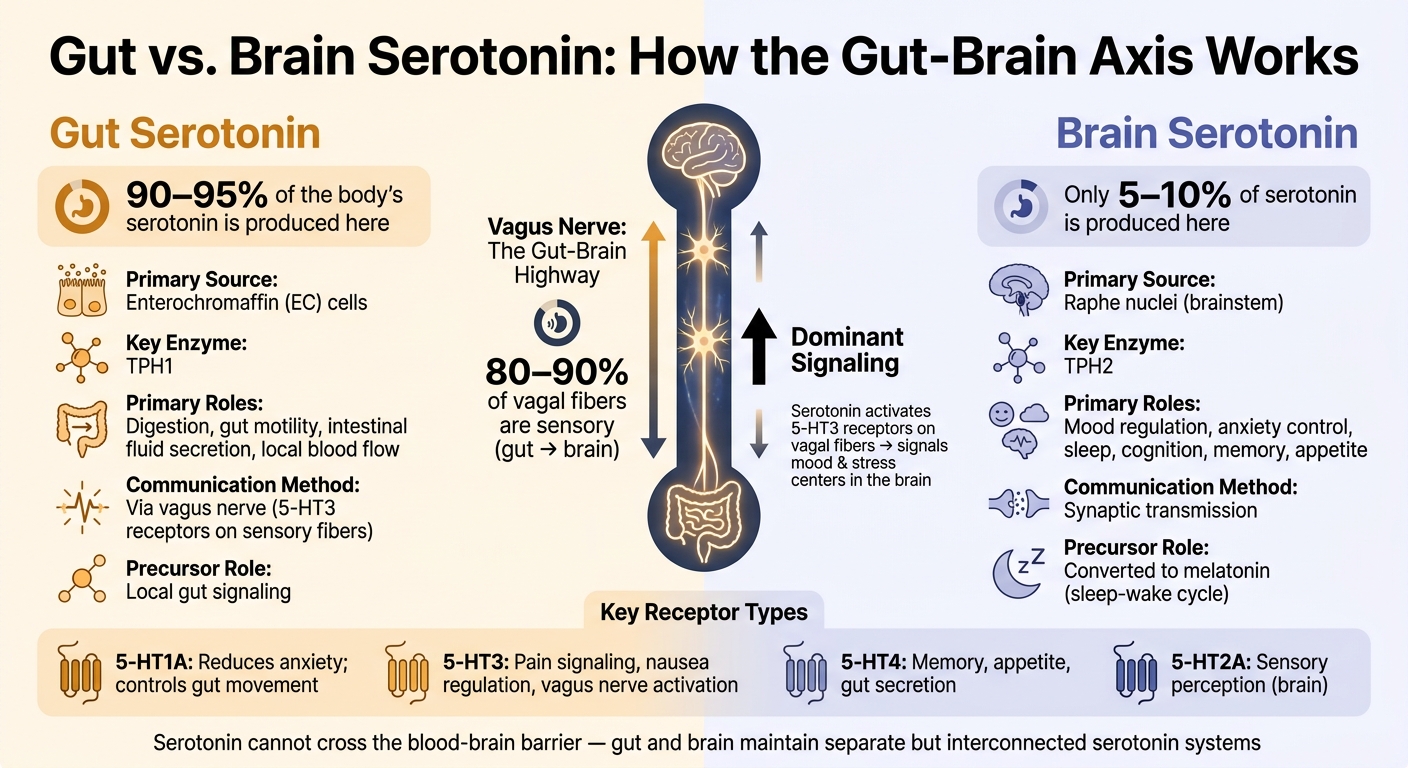
Gut vs. Brain Serotonin: How the Gut-Brain Axis Works
Serotonin Biology: The Basics
Serotonin is created from dietary tryptophan through a two-step process involving TPH enzymes. The gut uses TPH1, while the brain relies on TPH2. The first step converts tryptophan into 5-hydroxy-L-tryptophan (5-HTP), which is then turned into serotonin. Because serotonin cannot cross the blood-brain barrier, the gut and brain maintain separate serotonin systems, each fulfilling unique roles.
“Your gut produces so much serotonin that it dwarfs the brain’s supply the way a reservoir dwarfs a bathtub.” – AJ Keller, CEO, Neurosity
Serotonin in the Gut: How It Regulates Digestion
In the gut, enterochromaffin (EC) cells produce and release serotonin, which plays a key role in digestion. Through 5-HT3 and 5-HT4 receptors, serotonin manages processes like peristalsis, intestinal fluid secretion, and local blood flow. These actions are triggered by food movement and microbial interactions, ensuring smooth digestion. When serotonin signaling is disrupted, it can lead to issues like constipation, diarrhea, or bloating.
Serotonin in the Brain: Mood and Cognition
The brain generates serotonin in the raphe nuclei, located in the brainstem, and distributes it widely to regulate mood, anxiety, sleep, appetite, and cognitive functions like memory and learning. Serotonin also serves as a precursor to melatonin, the hormone that governs the sleep-wake cycle.
The brain’s serotonin system uses various receptor types, such as 5-HT1A, which helps reduce anxiety, and 5-HT2A, which impacts sensory perception. This complexity is why medications like SSRIs (selective serotonin reuptake inhibitors) are used to treat mental health conditions, including major depressive disorder, anxiety disorders, PTSD, and OCD.
“Serotonin is a primary treatment target for many psychiatric and neurological disorders associated with decreased CNS and plasma serotonin concentration, such as major depressive disorder, post-traumatic stress disorder, obsessive-compulsive disorder, and anxiety disorders.” – StatPearls
Comparing Gut and Brain Serotonin
Here’s a quick breakdown of how serotonin differs in the gut and brain:
| Feature | Gut Serotonin | Brain Serotonin |
|---|---|---|
| Primary Source | Enterochromaffin (EC) cells | Raphe nuclei in the brainstem |
| Key Enzyme | TPH1 | TPH2 |
| Primary Roles | Digestion, motility, secretion, blood flow | Mood, sleep, cognition, anxiety regulation |
| How It Communicates | Via the vagus nerve | Via synaptic transmission |
| Precursor Role | Local gut signaling | Precursor to melatonin |
Although the blood-brain barrier keeps these serotonin systems separate, they are still interconnected. For example, serotonin from the gut activates 5-HT3 receptors on the vagus nerve, sending signals to the brainstem. These signals influence brain areas that contribute to emotional regulation, illustrating how the gut and brain serotonin systems work together to affect overall well-being.
How Serotonin Drives Gut-Brain Communication
Key Communication Pathways
The gut and brain are in constant conversation, using neural, endocrine, immune, and metabolic routes to stay connected. Among these, the vagus nerve stands out as the most direct link. Think of it as a two-way communication highway, though it’s mostly the gut doing the talking. In fact, 80–90% of the vagus nerve’s fibers are sensory, meaning they gather information from the gut and relay it to the brain.
When serotonin is released in the gut, it activates 5-HT3 receptors on the vagus nerve’s sensory fibers. This triggers signals to brain areas that influence mood and stress levels.
“The vagus nerve is the primary conduit for transmitting peripheral signals from the gut to the brain and vice versa.” – Young Keun Hwang and Jae Sang Oh, International Journal of Molecular Sciences
But the vagus nerve isn’t the only player. Immune signaling also has a big impact. When the gut is inflamed, inflammatory cytokines redirect tryptophan (a serotonin precursor) into the kynurenine pathway, which produces neurotoxic compounds linked to depression. Keeping inflammation under control not only supports digestion but also safeguards serotonin levels, which are vital for mental health. This intricate system highlights serotonin’s role as a bridge between gut health and emotional well-being.
How Gut Bacteria Influence Serotonin Production
Your gut microbiome plays a starring role in serotonin production. Certain bacteria, like Lactobacillus and Bifidobacterium, help maintain tryptophan levels, ensuring there’s enough raw material to produce serotonin. Meanwhile, other microbes generate short-chain fatty acids (SCFAs) like butyrate, which boost the activity of TPH1, the enzyme responsible for creating about 90% of serotonin in the gut.
“Gut bacteria produce metabolites such as short-chain fatty acids (SCFAs), which have been shown to enhance the expression of tryptophan hydroxylase 1 (TPH1), the rate-limiting enzyme in serotonin synthesis.” – Young Keun Hwang and Jae Sang Oh, International Journal of Molecular Sciences
Some bacterial strains have even been linked to measurable effects on mood. For instance, Akkermansia muciniphila has been shown in studies to increase serotonin levels in the hippocampus, a brain region tied to memory and emotional regulation. Another clinical study revealed that a mix of Lactobacillus acidophilus, Bifidobacterium bifidum, and Streptococcus thermophilus significantly reduced major depressive episodes in participants after just 8 weeks. These findings underscore a simple yet powerful connection: nurturing a healthy microbiome can enhance serotonin production, leading to better emotional balance and sharper mental function.
Serotonin as a Biochemical Connector
Serotonin doesn’t just link the gut and brain – it’s also a key player in regulating stress, pain, and emotions. Different serotonin receptors handle different tasks along this gut-brain axis. For example:
- 5-HT1A receptors: Found in both the gut and brain, they help manage anxiety and control intestinal movement.
- 5-HT4 receptors: Influence memory, appetite, and gut secretion.
- 5-HT3 receptors: Located on vagus nerve fibers and in the hippocampus, these receptors are crucial for pain signaling and nausea regulation.
“In the search for the language that allows microbiota to communicate with the gut and the brain, serotonin seems to be the most important mediator.” – Elena Layunta et al., Frontiers in Endocrinology
This diversity of receptors shows just how versatile serotonin is in managing gut and brain functions. And the communication isn’t one-sided. While gut serotonin affects brain activity, the brain also sends signals back through the vagus nerve’s motor fibers, influencing gut movement and secretion. This constant feedback loop is at the core of the gut-brain connection.
What Disrupts Serotonin Balance in the Gut-Brain Axis
Understanding what can upset serotonin’s delicate balance is just as important as knowing how it works. Everyday factors – like diet, stress, and sleep – can interfere with serotonin production and the gut-brain connection. Here’s how these elements, along with medical conditions, play a role.
Diet and Nutritional Gaps
Serotonin production begins with tryptophan, an essential amino acid found in foods like eggs, turkey, and cheese. However, only 1–2% of tryptophan is used for serotonin synthesis. Diet plays a significant role in this process. For instance, a lack of fiber in meals reduces gut bacteria that produce short-chain fatty acids like butyrate, which are crucial for stimulating serotonin-producing cells. On the other hand, eating high-protein meals can actually work against serotonin production. Why? Tryptophan competes with other amino acids (like leucine and valine) to cross the blood-brain barrier. Interestingly, carbohydrate-rich meals help by triggering insulin, which clears out competing amino acids, giving tryptophan a better shot at reaching the brain.
Deficiencies in Vitamin B6, Vitamin B9 (folate), and iron also hinder serotonin synthesis by disrupting the enzymes (TPH1 and TPH2) that convert tryptophan into serotonin.
Stress, Sleep, and Daily Habits
Your lifestyle, especially stress and sleep patterns, has a big impact on serotonin levels. Chronic stress, for example, triggers the release of proinflammatory cytokines (like TNF-α and IL-6). These cytokines activate an enzyme called indoleamine 2,3-dioxygenase (IDO), which diverts tryptophan into the kynurenine pathway. This pathway produces neurotoxic compounds like quinolinic acid instead of serotonin.
“Increased IDO activity could lead to heightened TRP [tryptophan] degradation via the KYN pathway, subsequently reducing plasma TRP levels… driven by proinflammatory cytokines.” – Hui Wang et al., Frontiers in Pharmacology
Stress also activates the HPA axis, which floods the body with cortisol. This hormone disrupts serotonin receptor sensitivity and weakens communication between the gut and brain via the vagus nerve. Poor sleep complicates things further by interfering with serotonin’s conversion into melatonin, creating a loop where low serotonin leads to worse sleep, and worse sleep leads to lower serotonin.
Medical Conditions and Medications
Certain health issues can drastically alter serotonin’s role in the gut-brain axis. For instance, in Irritable Bowel Syndrome (IBS), enterochromaffin cells release too much serotonin, over-activating sensory neurons and amplifying stress signals to the brain. In Inflammatory Bowel Disease (IBD), serotonin signaling becomes disrupted, which shifts the gut microbiota toward a pro-inflammatory state.
Neurological conditions like Major Depressive Disorder (MDD), Alzheimer’s disease, schizophrenia, and Parkinson’s disease also interfere with serotonin pathways. These disruptions often involve tryptophan metabolism and lead to imbalances in serotonin levels. Additionally, the gut’s pattern recognition receptors (like TLR2 and TLR4), which detect pathogens, can block the serotonin transporter (SERT). This results in abnormal serotonin accumulation and local inflammation.
“Disruption of the microbiota–gut–brain axis results in a wide range of pathologies that are affected, from the brain to the intestine.” – Elena Layunta, Institute of Biomedicine, University of Gothenburg
The table below outlines how various conditions affect serotonin pathways and their consequences for gut-brain health:
| Condition | Serotonin Alteration | Impact on Gut-Brain Health |
|---|---|---|
| IBS | Excess 5-HT release | Over-activates sensory neurons; increases stress responses |
| IBD | Disrupted 5-HT signaling | Alters microbiota toward a pro-inflammatory state |
| MDD | Reduced SERT availability | Impairs mood, cognition, and emotional regulation |
| Alzheimer’s | Tryptophan metabolic issues | Promotes neuroinflammation via neurotoxic metabolites |
How to Support Serotonin Through Gut-Brain Health
Improving serotonin levels doesn’t just elevate mood – it also strengthens the connection between your gut and brain. The good news? Many factors that influence serotonin are within your control. Your diet, sleep habits, and stress management can all play a role in shaping this vital gut-brain relationship.
Foods That Support Serotonin Production
Eating foods high in tryptophan – like turkey, eggs, cheese, and nuts – provides the building blocks for serotonin. But there’s a catch: tryptophan needs a healthy gut environment to work effectively.
This is where fiber steps in. Foods such as beans, lentils, oats, artichokes, and asparagus nourish gut bacteria that produce butyrate, a short-chain fatty acid that stimulates serotonin production in the gut lining. Aim for 25–30 grams of fiber daily to encourage the growth of beneficial gut bacteria.
Fermented foods are another game-changer. Options like yogurt, kefir, kimchi, sauerkraut, and miso introduce helpful bacteria that boost microbial diversity and reduce inflammation. A 2021 study from Stanford University found that a 10-week diet rich in fermented foods increased microbial diversity and decreased 19 inflammatory compounds, including interleukin-6. Additionally, polyphenol-rich foods – such as blueberries, green tea, dark chocolate, and extra-virgin olive oil – can promote the growth of beneficial bacteria like Bifidobacterium and Lactobacillus.
“Diet is a primary and modifiable determinant of gut microbiota composition, diversity, and metabolic activity, thereby shaping microbial-derived metabolites, immune and inflammatory signaling, neuroendocrine regulation, and neural communication with the central nervous system.” – Diana Uțu et al., Nutrients
In addition to food, targeted supplementation with specific probiotics can further enhance serotonin production.
Probiotics, Prebiotics, and the Microbiome
Not all probiotics are created equal. Certain strains, often referred to as psychobiotics, directly impact serotonin pathways. For example, Bifidobacterium breve CCFM1025 activates TPH1, the enzyme responsible for serotonin production in the gut. Other strains, like Lactobacillus helveticus and Bifidobacterium longum, have been shown to reduce symptoms of depression, anger, and rumination. A 2025 meta-analysis found that probiotic and prebiotic supplementation significantly improved cognitive function (SMD of 0.48) and reduced anxiety and depression symptoms (SMD of 0.29).
Prebiotics, which act as food for gut bacteria, further support serotonin synthesis. Choosing strain-specific probiotics based on your unique microbial profile can offer even more targeted benefits.
“Tryptophan metabolism emerged as an important hub in bidirectional gut microbiota-brain communication that can contribute not only to the development of depression but also to the treatment outcomes.” – Iva Lukić, Laboratory of Molecular Biology and Endocrinology, University of Belgrade
Lifestyle Changes That Support Gut-Brain Balance
Beyond diet, simple lifestyle changes can strengthen the gut-brain connection. Daily exercise – just 30 minutes – can boost beneficial gut bacteria and improve mood. Prioritizing 7–9 hours of quality sleep is equally important, as your microbiome relies on stable circadian rhythms.
Stress management also plays a critical role. Techniques like diaphragmatic breathing or meditation can improve vagus nerve function, enhancing communication between your gut and brain. Chronic stress, on the other hand, can increase gut permeability, allowing harmful bacterial toxins into the bloodstream and triggering brain inflammation. Cutting back on ultra-processed foods, artificial sweeteners, and emulsifiers is another important step, as these ingredients can encourage inflammation and reduce microbial diversity.
“The gut is not a passive recipient. It is sending a constant stream of signals upward, and your mood, stress response, and cognitive clarity are all shaped by what it transmits.” – Khush Sachdave, Chief Editor, LYMA
For those dealing with ongoing mood issues, brain fog, or digestive problems, working with a care team – such as the board-certified psychiatrists and clinical nutritionists at Modyfi Health – can offer deeper insights. Functional lab tests, including gut microbiome analysis, can help create a tailored plan to connect your gut health with your mental wellness.
Conclusion: Building a Daily Routine for Serotonin Health
Taking care of your serotonin levels – and by extension, the gut-brain connection – comes down to consistent, manageable habits that can lead to long-term improvements. Science tells us that 90–95% of serotonin is produced in the gut, meaning your diet, sleep, and stress management play a big role in shaping your mood and mental sharpness.
A structured daily routine can help bring these habits to life. For starters, aim for 15–20 minutes of morning sunlight to kickstart serotonin production and regulate your circadian rhythm. At lunchtime, pair tryptophan-rich foods like turkey, eggs, or salmon with complex carbs to boost tryptophan absorption. Later in the day, a 30-minute aerobic workout can promote the growth of beneficial gut bacteria that reduce inflammation. As evening approaches, try following the 10-3-2-1 rule: avoid caffeine 10 hours before bed, stop eating 3 hours before bed, limit beverages 2 hours before bed, and turn off screens 1 hour before bed. This routine can help your body convert serotonin into melatonin, setting the stage for restful sleep.
Of course, individual factors matter. For example, about 40% of people have a genetic variation in the MTHFR gene, which affects their ability to convert standard folic acid into the active form of B9, a key nutrient for serotonin production. This is why personalized approaches are so important. Functional tests, like a detailed stool analysis, can uncover specific imbalances that generic advice might overlook.
“A common misconception is that serotonin alone can fix mental health issues, but it is more complex than that… mental health conditions like depression are influenced by various factors, including genetics, life experiences, and other brain chemicals.” – Harold Hong, MD, Psychiatrist
If you’re dealing with persistent low mood, brain fog, or digestive struggles that don’t improve with lifestyle changes, it’s worth seeking professional guidance. At Modyfi Health, our board-certified psychiatrists and clinical nutritionists work together to uncover the root causes of your symptoms. We develop a plan tailored to your unique biology—not just a one-size-fits-all solution. By customizing your routine to your specific needs, you can better support your serotonin balance and overall well-being.
👉 Schedule a consultation with Modyfi Health today to restore your gut-brain balance and reclaim your vitality.
FAQs
If gut serotonin can’t cross into the brain, how can it still affect mood?
Although serotonin made in the gut can’t pass through the blood-brain barrier, it still plays a role in mood regulation thanks to the gut-brain axis. Here’s how it works: serotonin in the gut activates receptors on the vagus nerve. This nerve then sends signals to the brainstem, which, in turn, affects areas of the brain responsible for managing emotions and stress. Essentially, the gut communicates with the brain indirectly, without needing to physically transfer serotonin.
What are the most common signs my gut-brain serotonin balance is off?
Disruptions in the balance of gut-brain serotonin can lead to a mix of physical and emotional symptoms. On the emotional side, you might notice mood swings, heightened anxiety, irritability, sadness, or even a sense of being overwhelmed. Physically, it can show up as sleep problems, changes in appetite, memory difficulties, or digestive issues like irregular bowel habits or nausea. These symptoms highlight just how closely gut health and emotional well-being are linked.
Which probiotic strains are most likely to support serotonin pathways?
Research highlights that probiotics can influence serotonin pathways through their impact on the gut-brain axis. Specific strains such as Limosilactobacillus fermentum LF16, Lacticaseibacillus rhamnosus LR06, Lactiplantibacillus plantarum LP01, and Bifidobacterium longum 04 have been associated with boosting serotonin levels and enhancing mood.
For those looking to experience these benefits, experts suggest taking psychobiotics in doses exceeding 1 billion CFU daily for a minimum of eight weeks to see meaningful results.
