


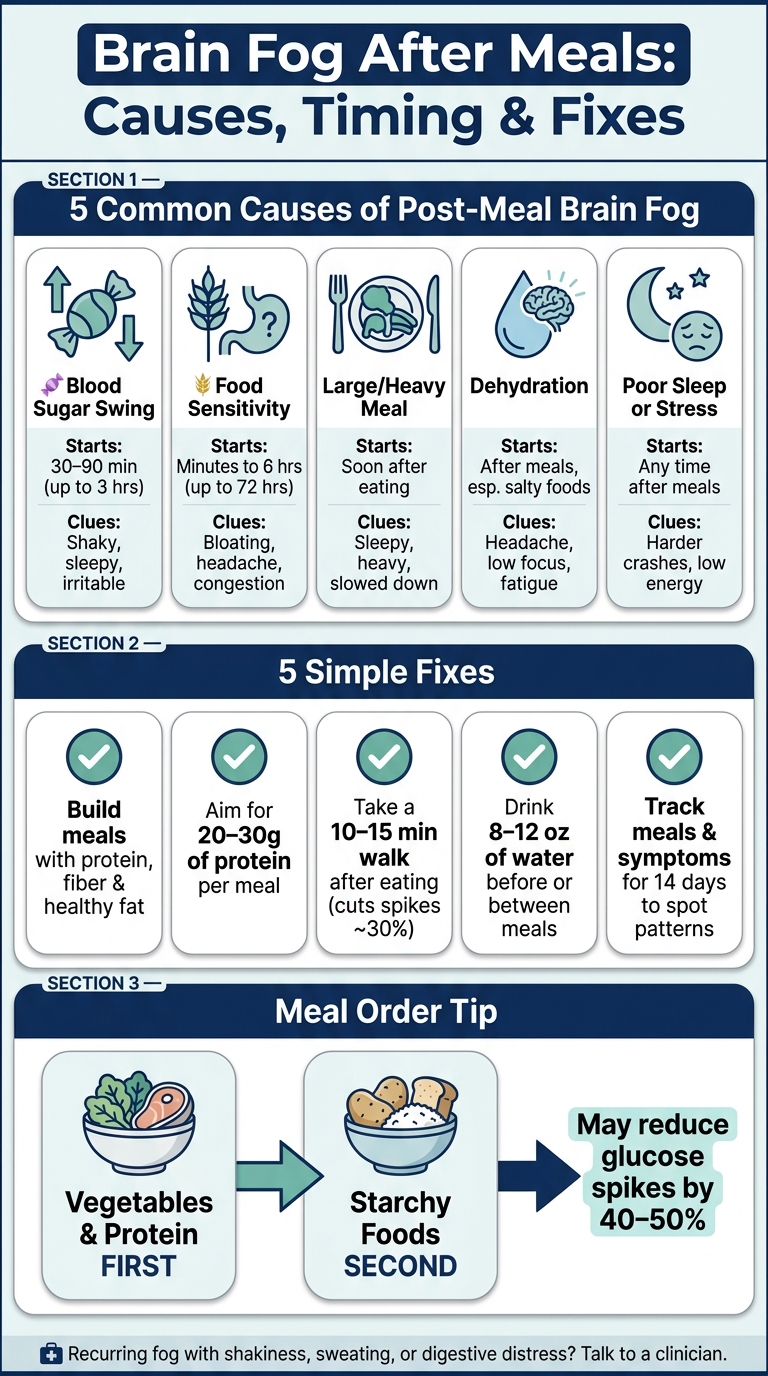
That sluggish, hard-to-focus feeling after a meal usually traces back to one of five things: a blood sugar swing, a food sensitivity, a meal that was just too large, mild dehydration, or a rough night of sleep catching up with you. Most people notice it somewhere between 30 minutes and 3 hours after eating.
What the evidence actually shows:
- Blood sugar swings — a high-sugar or refined-carb meal can spike glucose, then crash it, taking focus down with it
- Food sensitivities — often paired with bloating, headaches, or congestion, not just fog
- Portion size — large or heavy meals shift the body into digestion mode, which can mean drowsiness
- Dehydration — even mild fluid loss can dull focus, especially after salty meals
- Sleep and stress — both make post-meal energy crashes hit harder
The fastest way to find your pattern: for the next two weeks, jot down what you ate, when the fog started, and anything else you felt. A few small changes also tend to help across the board — building meals around protein, fiber, and healthy fat (aim for 20–30 grams of protein per meal), taking a short walk after eating, and staying ahead of hydration.
| Cause | When It Often Starts | Common Clues |
|---|---|---|
| Blood sugar swing | 30–90 minutes or up to 3 hours | Shaky, sleepy, irritable, hungry |
| Food trigger | Minutes to 6 hours; sometimes longer | Bloating, headache, congestion, flushing |
| Large meal | Soon after eating | Sleepy, heavy, slowed down |
| Dehydration | After meals, often with salty foods | Headache, low focus, fatigue |
| Poor sleep or stress | Any time after meals | Harder crashes, low focus, low energy |
The main point: if the same fog keeps showing up after the same meals, that pattern matters more than a one-time bad afternoon.
For a visual breakdown of the blood sugar mechanism behind this, here’s a helpful explainer:
sbb-itb-23f89d4
Blood Sugar Swings Are a Common Cause
A meal loaded with sugar or refined carbs can send blood glucose up fast. Your pancreas then releases insulin to pull it back down. Sometimes that drop goes too far – usually below 70 mg/dL. When that happens, you may feel foggy, sluggish, shaky, or irritable 30 to 90 minutes later.
That up-and-down pattern can hit your brain, too. When glucose drops, attention, memory, and processing speed can take a hit.
Foods That Spike and Crash Your Energy
The biggest red flags are sugary drinks and refined carbs. Think white bread, pasta, sweets, soda, and packaged snacks.
These foods tend to push blood sugar up fast. And when you eat them by themselves – with no protein, fiber, or healthy fat – the spike is sharper and the crash can feel worse. It’s a bit like flooring the gas pedal and then slamming the brakes.
How to Build Meals That Support Steady Energy
A steadier meal starts with protein, fiber, and healthy fat. That mix slows digestion and helps keep blood sugar on more even ground.
A few simple meal ideas:
- Breakfast: Three eggs scrambled in olive oil with sautéed arugula, half an avocado, and a half-cup of berries
- Lunch: 6 oz of chicken or wild salmon with ¾ cup of quinoa and 1–2 cups of roasted vegetables
- Snack: Greek yogurt with berries, walnuts, and chia seeds
Meal order can help too. Eating protein and fiber-rich vegetables before the starchy part of your meal may reduce after-meal glucose spikes by up to 40–50%.
And there’s one more simple move: take a 10–15 minute walk after eating. That can cut spikes by about 30% because your muscles pull glucose out of the bloodstream.
Blood Sugar Fog vs. Other Causes: A Quick Comparison
Blood sugar swings are common, but they’re not the only reason you might feel off after eating. Here’s a quick side-by-side look:
| Cause | Usual Timing After Meal | Common Symptoms | Useful Diet Clues |
|---|---|---|---|
| Blood Sugar Swing | 1–3 hours | Shakiness, irritability, sudden sleepiness, mentally sluggish | Better with protein and fiber |
| Food Sensitivity | 2–6 hours (up to 72 hours) | Bloating, headache, congestion, “mental molasses” | Triggered by specific items like gluten or dairy; requires an elimination trial |
If that blood sugar pattern doesn’t match what you’re dealing with, the next place to look is food triggers and gut-related symptoms.
Food Sensitivities, Gut Symptoms, and Inflammation
If blood sugar swings don’t match what you’re dealing with, the next clue is often your reaction to certain foods.
Signs a Food Trigger May Be Involved
If blood sugar isn’t the issue, food triggers are the next place to check. Common ones include gluten, dairy, MSG, artificial sweeteners, and high-histamine foods.
These reactions often follow a clear pattern: the same food, the same symptoms, around the same time. That’s what makes them easier to spot over time, but harder to catch in the moment. And the symptoms don’t always stay in the gut. Along with brain fog, you might get bloating, sinus pressure, skin flushing, joint discomfort, or headaches. In some cases, symptoms show up within minutes. In others, they take hours.
Food-related brain fog happens often enough that it’s worth tracking instead of guessing.
When symptoms keep showing up after the same foods, that pattern tells you more than any one-off reaction.
Why the Gut-Brain Connection Matters
Your gut and brain are in constant back-and-forth communication. When the gut lining gets irritated or more permeable, inflammatory signals can reach the brain and make it harder to focus.
Research backs this up. A 2025 study found that gastrointestinal symptom severity is significantly associated with brain fog scores.
How to Track Possible Food Triggers
The fastest way to test a possible trigger is to track food, timing, and symptoms together. Keep a simple log for 1 to 2 weeks. Write down:
- What you ate
- Portion sizes
- What time you ate
- When the brain fog started
- Any digestive symptoms that followed
If a pattern starts to show up, a structured elimination trial can help sort out whether a food is part of the problem. Remove one suspected food category for 14 days. Then keep tracking meals and symptoms for 1 to 2 weeks, and add suspected foods back one at a time. Some sensitivities can take up to 72 hours to appear, so this takes patience.
Do elimination trials with professional guidance so you don’t cut out more foods than needed.
Heavy Meals, Dehydration, and Poor Sleep Can Make Fog Worse
Even a balanced meal can leave you feeling foggy if it’s too large, too salty, or eaten on top of bad sleep. If blood sugar and food triggers don’t fully explain what’s happening, zoom out a bit. Look at what surrounds the meal: portion size, hydration, and sleep.
How Large or Rich Meals Affect Mental Clarity
Large meals can make you sleepy because digestion shifts the body into a rest-and-digest state, sending more of the body’s energy toward processing food. That can leave you drowsy.
What you eat matters, but how much you eat can matter just as much. A big portion of an otherwise balanced meal can still leave you dragging. A simple rule of thumb: stop eating when you feel about 80% full.
If portion size doesn’t seem to explain the fog, hydration is often the next place to look.
How Dehydration Affects Focus After Eating
Even mild dehydration can hurt focus. Try drinking 8–12 ounces of water before or between meals, especially after salty or processed foods. If post-meal fog shows up with a headache, check hydration first.
If the fog keeps showing up anyway, sleep and stress are often part of the picture.
How Sleep Debt and Stress Add to Post-Meal Fatigue
Poor sleep and chronic stress don’t just affect mood. They can also worsen insulin sensitivity and make post-meal energy dips feel sharper.
Digestion tends to work better when you’re calm, but chronic stress keeps the body in stress mode, which works against that. If you eat while rushed, tense, or distracted, the crash can feel worse.
When the same factors keep showing up, the pattern usually gets a lot easier to spot.
How to Spot Patterns and When to Get Help
When the same symptoms keep coming back, start with the basics: timing, triggers, and related symptoms. Post-meal brain fog often has more than one cause, so repetition tells you a lot.
Diet Clues Worth Paying Attention To
Timing can help narrow things down. If the fog shows up soon after eating, that may suggest a fast blood sugar swing or a food reaction. If it hits later, it may line up more with a crash or a delayed sensitivity.
Track your meals, timing, and symptoms for 14 days. The goal is simple: spot foods or meal patterns that keep showing up before bad days. If the same foods appear again and again, those are the repeat triggers worth looking into.
If that pattern keeps showing up, bring your food and symptom log to a clinician.
When Recurring Brain Fog Warrants a Clinical Evaluation
A one-off episode usually matters less than a pattern that keeps repeating. It’s worth getting checked if your post-meal brain fog often comes with shakiness, sweating, intense hunger, or irritability. Those can point to reactive hypoglycemia.
The same goes for fog that sticks around with:
- persistent digestive distress
- frequent headaches
- symptoms that return even after dietary changes
Basic labs can help rule out a few common drivers. That often includes A1c, fasting insulin, ferritin, and TSH to check for insulin resistance, iron deficiency, or thyroid issues. If one food seems like the problem, a structured elimination trial can help sort out whether that food group is involved.
FAQs
Why do I feel foggy even after a healthy meal?
Even a meal that looks “healthy” on paper can leave you foggy.
Why? Because the problem isn’t always the label. Sometimes it’s how your body responds after you eat. A meal can trigger a blood sugar spike, then a drop, and that swing can mess with your focus and energy. In other cases, certain ingredients may not sit well with you, including dairy, gluten, or additives.
Portion size matters too. A large meal can push your body into rest-and-digest mode, which often makes you feel sleepy or mentally slow. And if you’re dealing with something like iron deficiency or a thyroid imbalance, you may feel these normal post-meal shifts more strongly than other people.
Can brain fog after eating be a sign of something more serious?
Usually not — but it’s worth paying attention to the pattern, not just the symptom itself. Occasional fogginess after a heavy or sugary meal is common and rarely a sign of anything serious.
That said, recurring brain fog can sometimes point to an underlying issue worth checking, especially when it shows up alongside other signs like persistent fatigue, digestive problems, unexplained weight changes, or mood shifts. Conditions like thyroid imbalances, iron deficiency, and reactive hypoglycemia can all contribute to post-meal fog, and basic bloodwork can usually rule these in or out.
The key distinction is frequency and pattern. A one-off foggy afternoon after a big lunch is normal. The same fog showing up after the same types of meals, week after week, is the kind of pattern worth bringing to a clinician.
Is brain fog after eating linked to ADHD or anxiety?
There can be some overlap, though the mechanisms are different. People with ADHD often already deal with attention and focus challenges, so a blood sugar dip after a meal can feel more disruptive — it’s stacking on top of an existing difficulty rather than creating a new one.
Anxiety works a bit differently. Chronic stress affects digestion and blood sugar regulation, which can make post-meal energy crashes feel sharper. Stress hormones like cortisol can also interfere with focus on their own, making it harder to tell whether the fog is coming from the meal, the stress, or both.
If brain fog seems tied to both eating patterns and broader attention or anxiety symptoms, it’s worth looking at the full picture rather than treating each piece separately — which is often where an integrative evaluation can help connect the dots.
Which foods most often trigger brain fog after eating?
Common triggers often come back to blood sugar swings or food sensitivities.
Meals packed with refined carbs, sugar, or other fast-digesting foods can send blood sugar up fast. Then the crash hits. And that drop can leave you feeling foggy.
Other common triggers include:
- Gluten
- Dairy
- Artificial sweeteners
- Processed grains
- Refined oils
- Additives
- High-histamine foods, such as aged cheeses, wine, fermented foods, and leftovers
How do I know if it’s blood sugar or a food sensitivity?
A lot of the time, it comes down to timing and the signs you notice.
Blood sugar problems usually show up 1 to 3 hours after a carb-heavy meal. Common signs include shakiness, irritability, or a sudden crash in energy.
Food sensitivities often show up sooner, sometimes within minutes to an hour. They may also come with flushing, congestion, or headaches.
If you’re trying to tell the difference, pattern tracking can help. Elimination trials or metabolic testing may make the cause clearer.
Your Brain Fog Might Have More Than One Root Cause
If the patterns above sound familiar but nothing fully explains what you’re feeling, that’s often a sign the issue isn’t just diet. At Modyfi, our network of providers brings psychiatry, therapy, nutrition, and exercise together to look at the full picture — not just the meal.
👉 Explore Providers to Book an Appointment and Start My Care Plan
(Note: Modyfi proudly accepts most major commercial insurance plans in MD, DC, VA, and WV; currently, we do not accept Medicare or Medicaid.)