


Chronic inflammation can disrupt your hormones and mood. It interferes with key systems in your body, including stress responses, blood sugar regulation, and brain chemistry. This can lead to symptoms like fatigue, mood swings, and difficulty concentrating. Here’s what you need to know:
- Inflammation basics: Acute inflammation helps healing, but chronic inflammation can harm your body silently over time.
- Hormonal effects: Stress hormones (like cortisol), insulin, and sex hormones (like estrogen) are all impacted, making emotional regulation harder.
- Brain impact: Inflammatory molecules can weaken the blood-brain barrier, reducing serotonin and dopamine, which are essential for mood stability.
- Signs to watch for: Fatigue, irritability, joint pain, and brain fog often signal inflammation-related issues.
- What helps: Anti-inflammatory diets (like the Mediterranean diet), better sleep, exercise, and stress management can reduce inflammation and improve hormonal balance.
If symptoms persist, lab tests like hs-CRP, cytokine levels, and hormone panels can pinpoint underlying causes. Combining targeted nutrition and lifestyle changes with professional care may address the root issues effectively.
Fiber, Leaky Gut, and Hormones: How to Reduce Inflammation and Eat For Whole-Body Health
sbb-itb-23f89d4
How Inflammation Throws Off Hormonal Balance and Mood
Chronic inflammation has a way of interfering with hormones that control energy, stress, and mood. Let’s break down how this happens across key systems in the body.
Cortisol Dysregulation and Stress
When inflammation becomes chronic, it keeps the hypothalamic-pituitary-adrenal (HPA) axis in overdrive, leading to constant cortisol production. Over time, this excess cortisol creates resistance in glucocorticoid receptors, meaning the cells stop responding to cortisol’s anti-inflammatory signals. The result? A vicious cycle: inflammation drives cortisol up, but the body stops responding to it effectively, allowing inflammation to persist and even worsen.
“Chronic psychosocial stress activates the hypothalamic–pituitary–adrenal (HPA) axis, leading to hypercortisolemia, glucocorticoid receptor resistance, and sustained low-grade inflammation.” – Mario Pinzi et al., Cells
Studies show that roughly 27% of individuals with Major Depressive Disorder (MDD) have C-reactive protein (CRP) levels exceeding 3 mg/L – indicating low-grade inflammation – and nearly 60% show CRP levels above 1 mg/L. These hormonal disruptions set the stage for metabolic and neurochemical imbalances.
Insulin Resistance and Blood Sugar Swings
Inflammation also throws off blood sugar regulation. Cytokines like IL-6 and TNF-α interfere with how cells respond to insulin, leading to reduced sensitivity. This disruption causes energy highs and lows, which can result in irritability, difficulty focusing, and a dip in mood. This is often referred to as the “immuno-metabolic” type of mood disorder. Additionally, inflammation can disturb sex hormone levels, adding another layer to mood challenges.
Sex Hormone Imbalances and Mood Swings
Estrogen plays a role in controlling inflammation by suppressing pathways like NF-κB and NLRP3. When estrogen levels drop – whether during the late luteal phase, postpartum, or perimenopause – it removes this anti-inflammatory effect, allowing inflammatory cytokines to rise. The result? Intensified mood swings and emotional sensitivity.
| Hormonal Phase | Inflammatory Status | Mood Impact |
|---|---|---|
| Late Luteal Phase | Increase in IL-6 and TNF-α as estrogen/progesterone drop | Heightened stress sensitivity; PMS and PMDD symptoms |
| Postpartum | Rebound in pro-inflammatory activity after hormone drop | Higher risk of postpartum depression and anxiety |
| Perimenopause | Elevated baseline inflammation and mitochondrial stress | Depression, brain fog, and sleep disturbances |
“Hormonal transitions (puberty, menstrual cycle, pregnancy, postpartum, and perimenopause) represent periods of heightened vulnerability to mood instability… shifts in sex hormones shape microglial reactivity, cytokine release, mitochondrial function, and the organization of limbic–prefrontal circuits.” – Giuseppe Marano et al
Neuroinflammation and Brain Chemistry
As inflammation disrupts systems throughout the body, it also impacts the brain. Chronic inflammation can weaken the blood-brain barrier, allowing inflammatory molecules to enter. Once in the brain, these molecules activate the kynurenine pathway, which diverts tryptophan away from serotonin production and toward the creation of quinolinic acid – a neurotoxic compound associated with cognitive issues and excitotoxicity. This shift reduces serotonin and dopamine levels while altering glutamate signaling, contributing to “sickness behavior” symptoms like fatigue, lack of pleasure, trouble concentrating, and social withdrawal.
Signs That Inflammation May Be Affecting Your Mood and Hormones
Understanding how inflammation impacts mood and hormones is one thing, but recognizing the signs in your own body is a crucial step toward addressing the issue.
Physical and Emotional Symptoms to Watch For
Chronic inflammation can show up in ways that often overlap, making it tricky to pinpoint. On the physical side, you might notice ongoing fatigue, joint discomfort, skin conditions like psoriasis, or unexplained weight gain – especially around the belly. Why the belly? Because visceral fat isn’t just passive; it actively releases inflammatory molecules called cytokines, which can worsen the situation.
Emotionally, inflammation can take a toll too. Symptoms like anhedonia (losing interest in things you once loved), heightened anxiety, or feeling more reactive to stress can all be clues.
Cognitive shifts are another red flag. Inflammation can interfere with the hippocampus and prefrontal cortex, leading to brain fog, trouble concentrating, or difficulty making decisions. In fact, research shows that about 30% of people with depression also struggle with persistent cognitive issues, often linked to inflammatory pathways.
For women, hormonal transitions can make these symptoms even more noticeable. If you experience mood swings, fatigue, or irritability during the late luteal phase, postpartum, or perimenopause, it could be tied to reduced estrogen, which normally helps to keep inflammation in check.
“Inflammatory signaling is more strongly associated with affective symptoms and neural circuit alterations in women than in men.” – Giuseppe Marano, Unit of Psychiatry, Fondazione Policlinico Universitario A. Gemelli IRCCS
If these symptoms sound familiar, lab tests can help confirm whether inflammation is playing a role.
Lab Tests and Diagnostic Markers
Symptoms alone don’t always tell the full story, which is where lab tests come in. Standard blood panels often miss critical markers tied to mood and hormonal imbalances, so it’s worth asking for more specific tests.
One of the most common starting points is high-sensitivity C-reactive protein (hs-CRP). Levels above 3 mg/L can point to an “inflammatory biotype” of depression – characterized by more severe symptoms, slower physical movement, and a poor response to typical antidepressants. Interestingly, lower hs-CRP levels (under 1 mg/L) tend to predict better outcomes with SSRIs like escitalopram, while higher levels might suggest trying medications that target noradrenaline or dopamine instead.
Other important markers include:
- Cytokines like IL-6 and TNF-α, which provide a deeper look at immune system activity. Elevated levels are often linked to fatigue and anhedonia.
- Vitamin D and cortisol, which reveal how your body is coping with stress and inflammation.
- S100B, a protein that can indicate whether inflammation has breached the blood-brain barrier, directly affecting brain function.
- The kynurenine/tryptophan ratio, which shows if tryptophan (an amino acid) is being diverted away from serotonin production toward neurotoxic pathways.
- Estrogen and progesterone levels, as drops in these hormones can activate inflammatory responses, especially in women.
Here’s a quick breakdown of key markers to discuss with your healthcare provider:
| Marker | What It Measures | Why It Matters |
|---|---|---|
| hs-CRP | Systemic inflammation | Levels >3 mg/L are linked to “inflamed depression” and reduced antidepressant effectiveness |
| IL-6 & TNF-α | Pro-inflammatory cytokines | High levels are tied to fatigue, anhedonia, and stress regulation issues |
| Vitamin D & Cortisol | Metabolic and stress hormones | Low Vitamin D and abnormal cortisol levels can worsen inflammation |
| S100B | Blood–brain barrier integrity | Elevated levels suggest inflammation is impacting the brain |
| Kynurenine/Tryptophan Ratio | Neurotoxic pathway activity | Indicates a shift away from serotonin production toward harmful metabolites |
| Estrogen/Progesterone | Sex hormone fluctuations | Hormonal dips can trigger inflammatory responses |
Combining these markers with thyroid and sex hormone panels can provide a more complete picture of your body’s immune and metabolic state. This kind of detailed testing goes beyond just treating symptoms – it helps identify the root causes driving them.
Dietary Strategies to Lower Inflammation and Support Hormonal Mood Balance
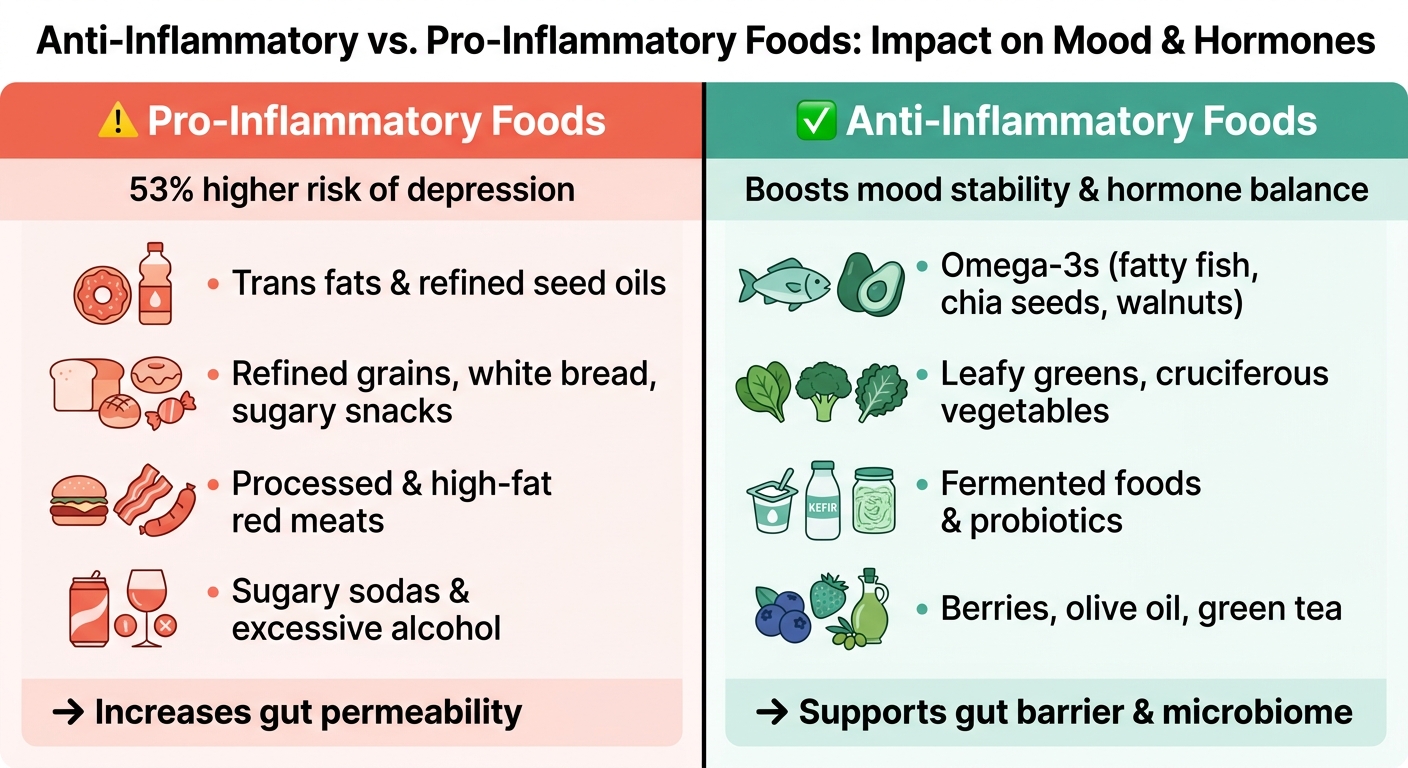
Anti-Inflammatory vs Pro-Inflammatory Foods: Impact on Mood & Hormones
When inflammation levels are high, targeted food choices can help bring things back into balance. These choices not only reduce inflammation but also support hormonal stability, which directly impacts mood. As part of a broader approach to mental wellness, the link between what we eat, our hormones, and our emotional well-being is undeniable.
How to Follow an Anti-Inflammatory Diet
The Mediterranean diet is a great starting point for reducing inflammation and boosting mood. This diet focuses on whole, nutrient-dense foods like healthy fats, lean proteins, and fiber. Research consistently links this eating pattern to lower inflammation and fewer depressive symptoms.
“Anti-inflammatory dietary patterns, particularly the Mediterranean diet, are associated with improvements in depressive symptoms across randomized controlled trials and systematic evidence syntheses.” – Frontiers in Nutrition
The basics are simple: load up on vegetables, legumes, whole grains, and fruits. Use extra-virgin olive oil as your go-to fat, and prioritize fish and plant-based proteins over red or processed meats. Don’t overlook B vitamins like B6, B12, and folate – low levels of these are often tied to mood-related issues over time.
Foods That Worsen Mood and Hormonal Health
Certain foods can work against you by promoting inflammation. Refined carbs, trans fats, processed meats, sugary drinks, and too much alcohol can trigger inflammatory responses and harm the gut lining. This creates a ripple effect, impacting both mood and hormonal health.
In fact, people eating highly inflammatory diets have a 53% higher risk of depression compared to those who stick with anti-inflammatory patterns.
| Food Type | Pro-Inflammatory | Anti-Inflammatory |
|---|---|---|
| Fats | Trans fats, refined seed oils | Omega-3s (fish, flax), olive oil, nuts |
| Carbohydrates | Refined grains, sugary snacks, white bread | Whole grains, legumes, colorful fruits |
| Proteins | Processed meats, high-fat red meats | Fatty fish, beans, lentils, lean poultry |
| Beverages | Sugary sodas, excessive alcohol | Green/black tea, water, berry smoothies |
| Effect on Gut | Increases permeability (“leaky gut”) | Strengthens barrier; supports beneficial microbes |
Anti-Inflammatory Foods Worth Adding to Your Diet
Some foods stand out for their ability to fight inflammation and support hormonal health. Fatty fish like salmon and sardines are packed with EPA (eicosapentaenoic acid) – about 2 grams daily can ease anxiety and depressive symptoms while providing essential omega-3s. Leafy greens, berries, and walnuts deliver polyphenols that can block key drivers of brain inflammation and encourage brain-derived neurotrophic factor (BDNF), which aids in neuron repair and recovery. Turmeric (curcumin) is another powerhouse, helping to suppress inflammatory markers like IL-6 and TNF-α.
And let’s not forget extra-virgin olive oil. Beyond being a healthy fat, its polyphenols help stabilize blood sugar, which plays a big role in mood and hormonal balance.
Meal Timing and Blood Sugar Stability
What you eat is important, but when you eat matters too. Skipping meals or eating at odd times can send your blood sugar on a rollercoaster ride, triggering cortisol spikes. To avoid this, combine protein, healthy fats, and fiber in every meal. This slows the absorption of glucose, keeping your energy and mood steady throughout the day.
Eating meals at consistent times also helps regulate your circadian rhythm, which is closely linked to cortisol levels and hormonal cycles.
How Gut Health Affects Inflammation and Hormones
Your gut plays a huge role in keeping inflammation and hormones in check. A healthy gut microbiome – featuring strains like Lactobacillus and Bifidobacterium – produces short-chain fatty acids (SCFAs) like butyrate. These SCFAs strengthen the gut lining and reduce inflammatory signals that could affect the brain. The vagus nerve acts as a communication superhighway between the gut and brain, constantly sharing updates on microbial balance and immune activity.
Supporting your gut is easier than you might think. Fermented foods like yogurt, kefir, and sauerkraut provide probiotics, while a diet rich in vegetables, legumes, and whole grains supplies the fiber that these microbes thrive on. Interestingly, about 10.5% of fiber’s positive effect on mood comes from its ability to lower CRP (C-reactive protein) levels, an inflammation marker.
“The gut–brain connection is real, and your body may be asking for support.” – Bliss Lewis, MD
Combining Nutrition and Lifestyle Changes with Professional Care
Diet plays a key role in reducing inflammation, but its impact increases significantly when paired with stress management, quality sleep, and regular exercise.
Lifestyle Habits That Help Lower Inflammation
To get the most out of an anti-inflammatory diet, three lifestyle habits stand out: managing stress, improving sleep, and staying physically active.
Chronic stress can overstimulate the HPA axis, intensifying inflammation that diet alone might not resolve. Activities like yoga or meditation can help calm this system, encouraging positive changes in the brain that diet alone can’t achieve. Sleep is another cornerstone – poor sleep disrupts your circadian rhythm, increases neuroinflammation, and throws off hormones, potentially undoing the benefits of healthy eating. Meanwhile, regular exercise not only regulates the nervous system but also boosts gut microbiota diversity, which plays a major role in immune health and inflammation control. This aligns with the idea that:
“Exercise is an evidence-based treatment for depression.”
| Lifestyle Habit | How It Helps |
|---|---|
| Stress Management | Reduces HPA axis overstimulation and lowers pro-inflammatory cytokines |
| Sleep Hygiene | Aligns circadian rhythm and minimizes neuroinflammation |
| Physical Activity | Supports nervous system balance and enhances gut microbiota diversity |
When combined with proper nutrition, these habits create a stronger defense against inflammation and related hormonal disruptions.
When to Seek Integrative Professional Care
Even with lifestyle improvements, there are times when professional care becomes essential. If symptoms like persistent fatigue, mood instability, or hormonal imbalances persist despite your efforts, it may be time to dig deeper. Conventional care often focuses on symptoms, potentially overlooking root causes like gut dysbiosis, nutrient deficiencies, or chronic inflammation.
This is where integrative care can make a difference. Modyfi Health uses functional lab testing – covering nutrient levels, hormones, gut health, and inflammation markers – to identify the root causes of symptoms. According to Modyfi Health:
“Functional nutrition therapy explores the biological roots of mood, cognition, and energy.”
Our team, which includes board-certified psychiatrists, clinical nutritionists, and exercise specialists, works together to create personalized plans. This approach turns lab results into actionable strategies, offering tailored support, especially during hormonal shifts like postpartum or perimenopause. These periods often see fluctuating estrogen levels, which can amplify neuroinflammation and contribute to mood challenges.
Modyfi Health operates entirely online via telehealth across Maryland, DC, Virginia, and Delaware, and accepts most major insurance plans.
👉 Schedule your FREE discovery call with Modyfi Health today to co-create an integrated plan that heals the whole person.
Conclusion: Steps You Can Take to Feel Better
Chronic inflammation doesn’t just impact your body – it can also throw off the hormones and brain chemistry that influence your mood every day. Studies have shown a strong link between diet, lifestyle, and mental health. For example, a review of 42 randomized controlled trials revealed that 28 of them reported noticeable improvements in at least one mental health measure after participants adopted an anti-inflammatory diet.
Making small but steady changes can make a big difference. Swapping out ultra-processed foods for colorful vegetables, whole grains, and omega-3–rich fish like salmon or sardines can help lower inflammation throughout your body. Supporting the gut-brain connection is another key step – did you know that about 90% of the body’s serotonin is produced in the gastrointestinal tract? Including fermented foods like kefir or yogurt in your diet can strengthen this connection. Research even suggests that an anti-inflammatory diet can lower the risk of depression by 8%, and when paired with quality sleep, regular exercise, and stress management, that benefit jumps to 21%. These dietary and lifestyle changes provide a solid foundation for improving mood and hormonal balance.
However, if these steps don’t seem to be enough, additional testing might uncover underlying issues. For instance, high levels of inflammation markers like CRP could indicate a reduced response to standard treatments. If you’re still dealing with symptoms such as constant fatigue, mood swings, or hormonal imbalances despite making lifestyle changes, it’s a good idea to seek help from a specialist. Modyfi Health offers functional lab testing to measure inflammation markers, hormone levels, and gut health. Their team of board-certified psychiatrists, clinical nutritionists, and therapists works together to address the root causes of your symptoms, not just manage them.
FAQs
How can I tell if my mood symptoms are inflammation-related?
Mood symptoms tied to inflammation often manifest as fatigue, low energy, sleep disturbances, reduced appetite, social withdrawal, anhedonia (loss of interest or pleasure in activities), and difficulty concentrating. On a biological level, these symptoms are frequently linked to low-grade inflammation, which is commonly marked by elevated C-reactive protein (CRP) levels ranging from 1–10 mg/L.
Modyfi Health takes a Root-Cause Psychiatry approach to address these issues. This method combines functional testing with personalized care to explore how inflammation – often influenced by gut health and dietary habits – affects mental well-being. By focusing on these underlying factors, Modyfi Health aims to provide more tailored and effective solutions for improving mental health.
Which lab tests best confirm inflammation affecting hormones and mood?
Modyfi Health leverages cutting-edge diagnostic tools to understand how inflammation influences hormones and mood. They focus on key inflammatory markers like hs-CRP, IL-6, IL-1α, and TNF-α, alongside hormone measurements such as testosterone, estradiol, progesterone, and SHBG. To dig deeper, they also use advanced lipid panels and gut health markers to uncover underlying issues. This comprehensive approach allows them to create tailored care plans that link biological insights to mental well-being.
How long do diet and lifestyle changes take to improve mood and hormones?
When tackling inflammation, changes in hormones and mood often become evident within weeks or months of sticking to consistent dietary and lifestyle adjustments. Anti-inflammatory strategies, such as following the Mediterranean diet, can help support hormonal balance and promote mood stability. At Modyfi Health, we rely on functional lab testing and tailored nutrition plans to uncover the root causes of inflammation. This approach helps you develop habits that support lasting mental and physical well-being.