

When exploring natural ways to manage stress, understanding the difference between daily practice vs. therapeutic dosing for anxiety support is essential. Turmeric, specifically its active compound curcumin, has emerged as a powerful natural option for anxiety relief by targeting biological pathways linked to brain inflammation and neurotransmitter balance. Here’s a breakdown:
- Daily Use: Low doses (e.g., 200–500 mg of curcumin) through food or supplements for mild anxiety and overall wellness.
- Therapeutic Dosing: Higher doses (500–2,000 mg with enhanced absorption) for targeted relief of persistent or severe anxiety.
- Key Benefits: Reduces inflammation, combats oxidative stress, improves gut-brain health, and regulates stress hormones like cortisol.
Bioavailability matters – curcumin is poorly absorbed on its own. Pair turmeric with black pepper (piperine) or opt for advanced curcumin formulations like nano-curcumin or Theracurmin for better absorption. Clinical benefits often appear after 4–8 weeks of consistent use. Always consult a healthcare provider before starting therapeutic doses, especially if you’re on medications or have underlying health conditions.
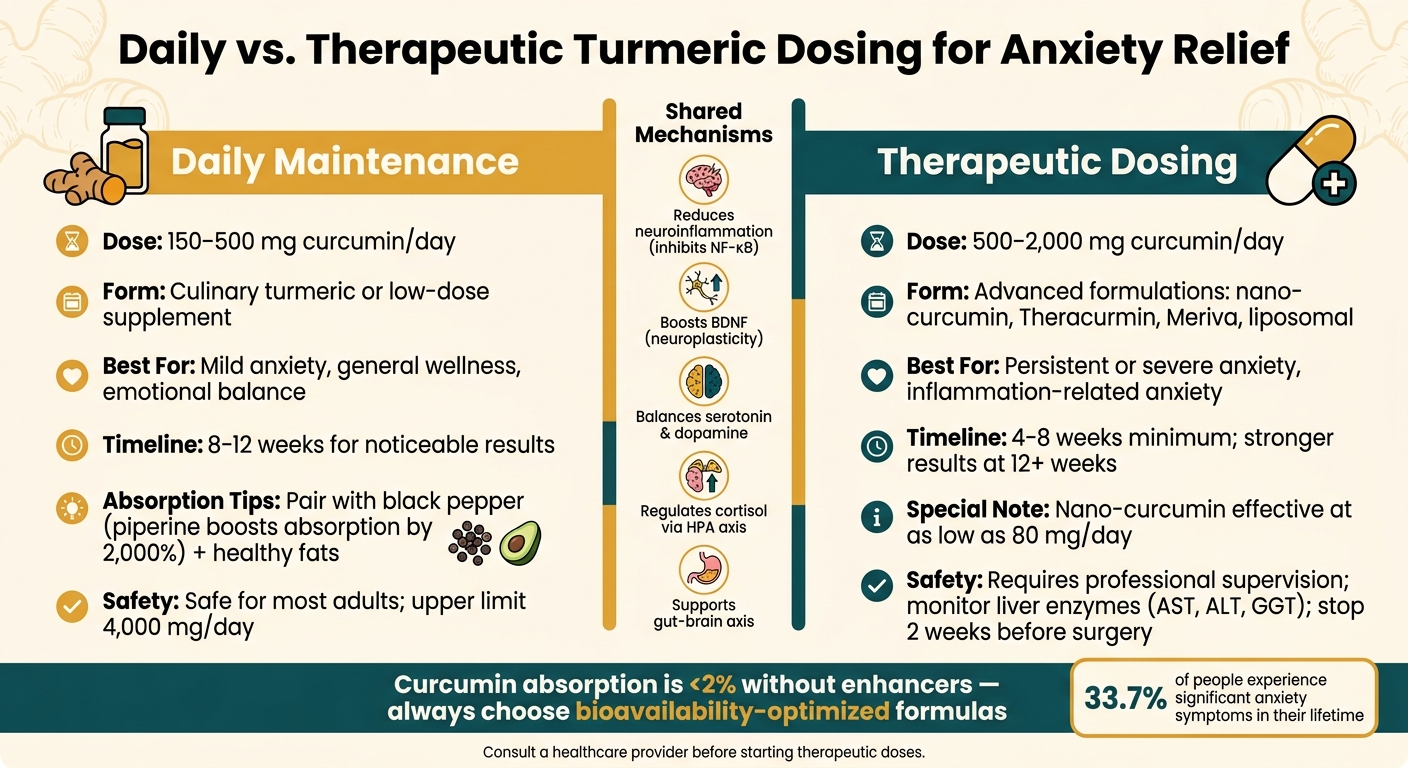
Daily vs. Therapeutic Turmeric Dosing for Anxiety Relief
What are the BENEFITS of TURMERIC (Curcumin) for the BRAIN? Neuroprotective Effects of CURCUMIN
sbb-itb-23f89d4
The Root Causes of Anxiety
Anxiety isn’t just about “feeling stressed” – it’s tied to measurable physiological changes that go beyond simple willpower. Studies suggest that up to 33.7% of people will encounter significant anxiety symptoms at some point in their lives. For most, anxiety involves multiple biological systems working together. Let’s break down the key systems involved.
Biological Factors Behind Anxiety
Anxiety is driven by several interconnected biological processes. One major factor is neuroinflammation. When the brain’s immune cells, known as microglia, become overactive, they release inflammatory proteins like IL-1β, IL-6, and TNF-α. This inflammation can disrupt mood, focus, and energy levels, often leading to what’s described as “sickness behavior.”
Another critical system is the HPA axis (hypothalamic-pituitary-adrenal axis). Prolonged stress can overactivate this system, leading to excessive cortisol production. This creates a cycle of restlessness, poor sleep, and physical tension. The gut-brain axis also plays a role. When the gut lining becomes compromised (commonly referred to as “leaky gut”), bacterial byproducts like lipopolysaccharides (LPS) can enter the bloodstream. This triggers widespread inflammation that affects neurotransmitter production.
On a cellular level, mitochondrial dysfunction can reduce the energy available to neurons, increasing oxidative stress and causing damage in areas like the prefrontal cortex – an area crucial for emotional regulation. Additionally, lower levels of BDNF (Brain-Derived Neurotrophic Factor), a protein essential for brain adaptability, are linked to a smaller hippocampus and reduced resilience to stress.
“Anxiety disorders are the most prevalent mental health conditions globally, contributing to substantial healthcare costs and a significant disease burden.” – Neuropsychiatric Disease and Treatment
How Turmeric Fits into a Root-Cause Approach to Mental Health
Curcumin, the active compound in turmeric, addresses several of these biological pathways at once. This makes it a powerful tool for restoring balance. For instance, curcumin inhibits the NF-κB pathway, a major driver of neuroinflammation, while also neutralizing free radicals to lower oxidative stress. It supports BDNF production, promoting brain adaptability, and helps regulate cortisol by modulating the HPA axis. Emerging research even suggests curcumin improves gut microbiota health, strengthening the gut-brain connection.
Here’s a summary of how curcumin targets these pathways:
| Biological Factor | How Curcumin Responds |
|---|---|
| Neuroinflammation | Inhibits NF-κB; reduces CRP and C3 levels |
| Oxidative Stress | Neutralizes free radicals and lowers ROS |
| Neuroplasticity (BDNF) | Boosts BDNF via the CREB pathway |
| HPA Axis / Cortisol | Helps regulate cortisol levels |
| Gut-Brain Axis | Improves gut microbiota for better brain signaling |
| Neurotransmitter Balance | Increases serotonin, dopamine, and norepinephrine |
Unlike treatments that only mask symptoms, turmeric takes a deeper approach. By improving the biological systems that contribute to anxiety, it helps tackle the issue at its core. For the best results, it works well alongside other interventions like addressing nutrient deficiencies (e.g., magnesium and B vitamins), improving sleep, and supporting gut health.
Turmeric and Curcumin: What You Need to Know for Mental Health
Turmeric’s potential in addressing anxiety and mood issues lies in its biochemical properties. To make the most of it, understanding the differences between turmeric and curcumin – and how each works in the body – can help you decide whether to incorporate it into your diet or opt for targeted supplements.
Turmeric vs. Curcumin: What Is the Difference?
Turmeric (Curcuma longa) is the vibrant yellow root commonly found in spice racks, but it often gets confused with curcumin, its most studied component. Here’s the catch: curcumin only makes up about 3% of turmeric by weight. So, while a teaspoon of turmeric powder adds flavor to your dishes, it delivers only a small amount of curcumin, the compound most associated with mental health benefits.
Curcumin is part of a group of compounds called curcuminoids, which also includes demethoxycurcumin and bis-demethoxycurcumin. Whole turmeric, however, contains other active elements like bisacurone and turmeronols, which have their own anti-inflammatory effects and may help reduce emotional fatigue, even in small doses.
| Feature | Turmeric (Whole Spice) | Curcumin (Isolated Extract) |
|---|---|---|
| Curcumin Content | ~3% by weight | Standardized for high potency |
| Bioavailability | Very low; needs fats or heat | Often formulated for better absorption |
| Primary Use | General wellness, culinary | Targeted therapeutic support |
| Key Compounds | Curcumin, bisacurone, turmeronols | Curcumin, demethoxycurcumin |
This breakdown highlights how turmeric and curcumin serve distinct purposes, particularly when it comes to managing mood and anxiety.
How Turmeric Affects Anxiety and Mood
Curcumin tackles anxiety through multiple pathways, making it a powerful option for addressing root causes of mood disorders.
One of its primary effects is modulating neurotransmitters. Curcumin inhibits monoamine oxidase enzymes (MAO-A and MAO-B), which boosts the availability of serotonin, dopamine, and norepinephrine – key players in mood regulation.
“Curcumin plays a role in the secretion of serotonin and dopamine, as well as inhibiting monoamine oxidase (MAO) and regulating the hypothalamus-pituitary-adrenal axis.” – BMC Complementary Medicine and Therapies
Beyond neurotransmitter activity, curcumin promotes neuroplasticity by increasing brain-derived neurotrophic factor (BDNF). This helps the brain grow new neurons and repair damage caused by chronic stress, setting curcumin apart from whole turmeric in more targeted therapeutic uses.
“By promoting neurogenesis – the growth of new neurons – and enhancing neuroplasticity… curcumin can potentially reverse the neuronal damage associated with depression.” – Maria Spanoudaki et al.
Curcumin also acts as a potent antioxidant, protecting neurons from oxidative stress while complementing its anti-inflammatory role. These combined benefits make curcumin a promising option for improving mental health.
What the Research Says About Turmeric and Anxiety
Studies consistently show turmeric’s potential in reducing anxiety symptoms. A 2024 meta-analysis of 8 randomized controlled trials involving 567 participants reported a significant reduction in anxiety symptoms (SMD: -1.56). Similarly, a 2025 systematic review of 15 RCTs with 1,123 participants confirmed anxiety relief in individuals with chronic conditions (SMD: -0.22).
In a 2023 study conducted at Tabriz University of Medical Sciences, 500 mg of curcumin daily was given to 96 new mothers over 8 weeks. The results showed a notable decrease in postpartum anxiety scores compared to a placebo group (mean difference: -1.4; 95% CI: -2.1 to -0.7; P < 0.001).
“Present meta-analysis demonstrated that curcumin intake might contribute to alleviation of anxiety disorder.” – Clinical Nutrition ESPEN
Two practical insights emerge from this research. First, bioavailability is crucial. Native curcumin has less than 2% absorption when taken orally, so formulations like piperine-enhanced curcumin, liposomal curcumin, or nano-sized particles (e.g., Theracurmin) dramatically improve effectiveness. Second, consistency is key. Clinical benefits typically appear after 4 to 8 weeks of daily use, with some studies showing even stronger results after 12 weeks or more.
These findings underline the importance of choosing the right form – whether dietary turmeric or a high-potency curcumin supplement – for your mental health goals.
Daily Turmeric Use: Building a Maintenance Routine
Incorporating turmeric into your daily routine can offer steady, long-term support for anxiety, focusing on addressing root causes of mental wellness.
Adding Turmeric to Your Everyday Diet
Start with culinary turmeric to introduce a consistent, low-level intake of curcuminoids. Add it to soups, stews, chilis, or curries – a teaspoon of turmeric powder provides about 200 mg of curcumin. While this might seem modest, its effects can build over time when consumed regularly.
To boost absorption, remember that curcumin is fat-soluble. Pair turmeric with healthy fats like olive oil, avocado, or nuts. Including black pepper is also key – its piperine can enhance curcumin absorption by up to 2,000%. A simple way to incorporate it is by preparing turmeric tea: simmer 2 teaspoons of turmeric powder in 1–2 cups of water for 5 minutes, then add lemon and honey for flavor.
“Anyone who’s trying to manage inflammation could benefit from adding some turmeric to their foods.” – Mary-Eve Brown, R.D.N., Oncology Clinical Dietitian/Nutritionist, Johns Hopkins Medicine
If your diet alone doesn’t provide enough curcuminoids, you might want to explore low-dose supplements for additional support.
Low-Dose Supplements for General Wellness
While dietary turmeric is a great start, its curcumin content is relatively low compared to what research suggests is needed for therapeutic benefits. For general wellness and mild anxiety support, a standardized curcumin extract (95% curcuminoids) at 500 mg per day is a good option. Splitting this into two 250 mg doses with meals (breakfast and dinner) helps maintain consistent levels in your body.
When selecting a supplement, look for those designed to improve curcumin’s absorption, such as formulations with piperine (BioPerine), phytosomes (Meriva), or colloidal particles (Theracurmin). To ensure quality, choose products verified by third-party testers like USP or NSF. Keep in mind that benefits, particularly for mental health, may take 8 to 12 weeks to become noticeable – this isn’t an overnight fix.
Before starting, it’s essential to check safety guidelines to ensure turmeric fits your personal health situation.
Safety Guidelines for Daily Turmeric Use
Culinary turmeric is safe for most people, but supplements require more caution. Here’s a quick guide to potential interactions and precautions:
| Condition or Medication | Risk | What to Do |
|---|---|---|
| Blood thinners (e.g., warfarin, clopidogrel) | Increased bleeding risk | Avoid or consult your doctor |
| NSAIDs (e.g., ibuprofen, aspirin) | Reduced drug effectiveness | Discuss with your doctor before combining |
| Gallstones or gallbladder disease | Gallbladder contractions | Seek medical advice |
| Kidney stone history | Higher risk of stone formation | Avoid high-dose supplements |
| Chemotherapy (e.g., doxorubicin) | Potential interference | Avoid turmeric supplements |
| Upcoming surgery | Impaired blood clotting | Stop supplements at least 2 weeks prior |
After consuming turmeric drinks, rinse your mouth to avoid staining your teeth. Also, watch for signs of sensitivity like hives, rashes, or stomach discomfort – even food-based turmeric can cause issues for some people.
For most healthy adults, the safe upper limit for curcumin intake is 4.0 g per day. However, sticking to the 500 to 1,000 mg range is effective and well within safe limits for a daily maintenance routine.
Therapeutic Dosing: Using Turmeric for Targeted Anxiety Relief
When regular daily doses aren’t enough, therapeutic dosing steps in as a focused approach under professional guidance. While daily turmeric use promotes overall balance, therapeutic dosing zeroes in on acute or severe anxiety by addressing its biological causes, aligning perfectly with the root-cause perspective this guide emphasizes.
What Therapeutic Dosing Involves
Therapeutic doses typically range between 500 mg and 2,000 mg per day, shifting the focus from general health benefits to directly tackling anxiety symptoms. This is achieved by modulating cortisol levels through the HPA axis, boosting serotonin and dopamine, and reducing neuroinflammation.
Because standard curcumin has poor bioavailability, therapeutic regimens depend on advanced formulations like nano-curcumin, Theracurmin, and Meriva to enhance absorption.
“Curcumin nanoformulation and Theracurmin, a form of colloidal submicroscopic particles, seem to be the most effective bioavailable formulations.” – MDPI Life
Interestingly, nano-curcumin can deliver therapeutic benefits at doses as low as 80 mg per day.
“Studies suggest that an effective dose of curcumin is typically between 500 and 2,000 mg per day. The effects of curcumin usually become apparent after 4–8 weeks.” – BMC Complementary Medicine and Therapies
These advanced formulations help determine when a more intensive therapeutic approach might be necessary.
When to Consider Therapeutic Dosing
Therapeutic dosing is especially beneficial for those with persistent or inflammation-related anxiety. Research indicates that individuals with more severe anxiety often experience stronger benefits from curcumin at therapeutic levels.
“Curcumin has more anxiolytic effect in patients with the greater intensity of anxiety.” – Clinical Nutrition ESPEN
It’s also worth exploring if anxiety is paired with inflammatory conditions like obesity, type 2 diabetes, or chronic pain. Studies show that maintaining therapeutic doses for at least 8 weeks can significantly reduce anxiety symptoms.
Safety Considerations and Monitoring
While enhanced dosing can be effective, it requires careful monitoring to ensure safety. Common side effects at these levels include nausea, stomach pain, diarrhea, and abdominal fullness. For instance, in a postpartum trial, 4 out of 96 participants discontinued use due to gastrointestinal discomfort. Taking curcumin with food often minimizes these issues.
Drug interactions are another critical factor. At higher doses, curcumin may inhibit enzymes like CYP3A4, CYP2C9, and CYP2D6, which play a role in metabolizing medications. It can also increase the risk of bleeding when combined with anticoagulants (e.g., warfarin, clopidogrel) or NSAIDs.
Given these risks, professional supervision is non-negotiable. Regular monitoring of liver enzymes (AST, ALT, GGT) is recommended during long-term use. Additionally, curcumin supplements should be stopped at least 2 weeks before surgery due to their antiplatelet properties.
Choosing the Right Turmeric Approach with Modyfi Health
Matching Your Turmeric Use to Your Health Goals
When incorporating turmeric into your wellness routine, it’s essential to align its use with your specific health needs. For mild anxiety, a low-dose daily regimen might be enough. However, if your anxiety is more persistent or linked to inflammation, you may need a therapeutic dose tailored to your unique biological profile.
“Always establish an individualized biological baseline with a licensed medical provider before introducing new therapeutic regimens.” – Modyfi Health
At Modyfi Health, functional lab testing plays a key role in determining the right approach. Tests like nutrient panels and inflammation markers help identify underlying imbalances that could be contributing to your anxiety. From there, the clinical team creates a plan based on your cellular deficiencies. Whether you need a standard daily dose or a more targeted therapeutic regimen, this personalized strategy ensures turmeric is used effectively as part of your care.
How Modyfi Health Integrates Turmeric Into Your Care Plan
At Modyfi Health, we guide patients through the nuances of daily practice vs. therapeutic dosing for anxiety support, ensuring your supplement regimen is tailored to your unique biological baseline. Your journey to whole-person wellness can begin with a complimentary 15-minute discovery call to share your mental health goals, opening the door to an extensive medical-psychiatric and nutritional evaluation.
Our integrated team of board-certified psychiatrists, specialized therapists, and registered dietitians operates collaboratively within one virtual care clinic. Rather than relying on guesswork, we utilize advanced functional testing—including systemic inflammation markers and nutrient panels—to build a personalized plan that addresses the biological root causes of distress. Through this coordinated care, nutrition therapy is seamlessly paired with integrative psychiatry to strengthen the gut-brain axis, where our providers guide you on the precise dosing of physician-grade, highly bioavailable curcumin formulations.
Modyfi Health provides comprehensive telehealth services across Maryland, DC, Virginia, and Delaware, and accepts most major insurance plans.
👉 Schedule your FREE discovery call with Modyfi Health today to co-create an integrated care plan that brings your body and mind back into balance.
When Turmeric Should Not Be the Main Focus
In certain cases, turmeric isn’t the immediate solution. For example, if your anxiety stems from trauma, sleep disorders, or specific nutrient deficiencies, those issues should be addressed first.
Functional testing can reveal conditions like an MTHFR gene variation, which affects up to 40% of the population. This genetic variation can hinder your body’s ability to convert standard nutrients into forms essential for neurotransmitter production. In such cases, methylated B vitamins like methylfolate and methylcobalamin take priority over turmeric. Similarly, if microbiome testing uncovers gut dysbiosis, probiotics like Lactobacillus rhamnosus or Bifidobacterium longum may be more effective. For anxiety tied to poor sleep or acute stress, Magnesium Glycinate is often recommended first because of its calming effects on the nervous system.
“Taking unsupervised over-the-counter probiotics without a roadmap can actually disrupt your digestion and stall your mental health progress.” – Modyfi Health
Without a clear clinical plan, you risk wasting time and resources on treatments that may not address the root cause of your anxiety. Modyfi Health ensures turmeric is only one part of a carefully tailored mental health strategy, making it a meaningful addition to your overall care.
Conclusion: Using Turmeric Wisely for Anxiety Support
Turmeric’s potential in easing anxiety lies in understanding the right dosage and tailoring its use to individual needs. It’s not a universal fix for anxiety, but it can play a role in supporting mental health when used thoughtfully. For general wellness and mild emotional fatigue, a low daily dose of 150–500 mg of standardized curcumin extract may be helpful. On the other hand, addressing more severe anxiety symptoms often requires a therapeutic dose of 1,000 mg or more of bioavailable curcumin as part of a broader clinical approach.
The way turmeric is formulated is just as important as the dosage. Research suggests that consistent use over 8–12 weeks is essential to see noticeable improvements.
“Curcumin intake might contribute to alleviation of anxiety disorder… [it] has more anxiolytic effect in patients with the greater intensity of anxiety.” – Amir Hossein Faghfouri, Researcher
Ultimately, turmeric should be part of a personalized, clinically guided strategy. At Modyfi Health, this involves combining functional lab testing, root-cause analysis, and insights from a diverse team of specialists. This approach ensures not only that turmeric is appropriate for you, but also determines the best way to incorporate it – considering factors like timing, dosage, and complementary interventions.
FAQs
Should I use turmeric in food or a curcumin supplement for anxiety?
Adding turmeric to your meals can be an easy way to support daily anxiety management. Turmeric contains curcumin, which may have calming effects by reducing inflammation and influencing neurotransmitters.
For those looking for therapeutic benefits, clinical research recommends a standardized curcumin supplement – typically around 1 gram per day or nano-curcumin – for at least 12 weeks. Supplements are a more effective way to achieve these concentrated doses, as the amount of turmeric used in cooking is generally too small to offer the same impact.
How do I know if I need daily or therapeutic curcumin dosing?
For ongoing support, use daily dosing over a period of 8–12 weeks, even if bioavailability is limited. When targeting anxiety more directly, consider therapeutic dosing with standardized extracts or formulations that include enhancers like piperine. Since there’s no universally agreed-upon dosage, it’s important to consult a clinician – especially if you’re on other medications. Dosage and duration can differ depending on the formulation and the specific condition being treated.
What medications or health conditions make curcumin unsafe?
Curcumin is safe to consume in foods or teas, but high-dose supplements can pose risks, especially if you’re on certain medications or have specific health conditions. Be cautious if you’re taking blood thinners like warfarin, pain relievers such as ibuprofen or aspirin, or immunosuppressants like tacrolimus. If you’re undergoing chemotherapy, avoid curcumin supplements unless your doctor gives the green light.
High doses of curcumin might worsen issues like bile duct obstruction, gastric ulcers, or kidney stones. If you have any of these conditions or related concerns, talk to a healthcare provider before considering curcumin supplements.