
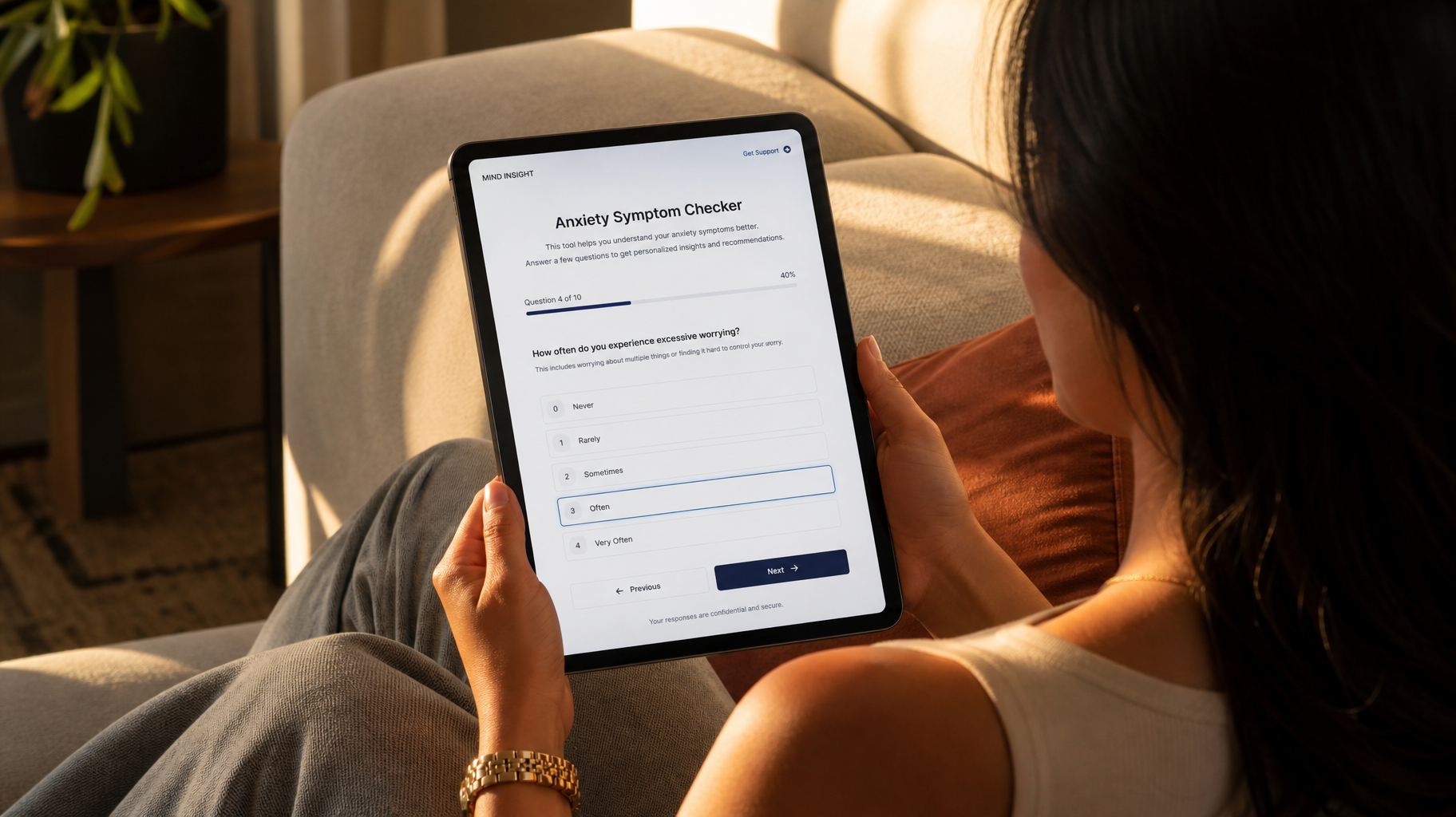
Understanding Anxiety with Our Symptom Checker Tool
Mental health matters, and recognizing the signs of anxiety early can make a huge difference in how you manage day-to-day life. Many of us experience moments of worry or stress, but when those feelings linger or intensify, they might point to something more. That’s where a tool like our Anxiety Symptom Checker comes in handy—it’s a quick, private way to reflect on your emotional and physical state.
Why Check for Anxiety Symptoms?
Anxiety can show up in sneaky ways: a racing heart, trouble sleeping, or just feeling on edge more often than not. These signs don’t always mean there’s a problem, but paying attention to them is a proactive step. Our online quiz asks targeted questions about your recent experiences, helping you gauge if what you’re feeling aligns with common patterns of nervousness or tension. It’s not about labeling yourself; it’s about gaining insight.
Taking the Next Step
If your results suggest you might be dealing with heightened stress or worry, remember that you’ve got options. Talking to a friend, practicing mindfulness, or seeking a professional opinion can be powerful moves. Tools like this are just the beginning—your well-being is worth the extra care.
FAQs
Can this tool diagnose anxiety?
No, this Anxiety Symptom Checker isn’t a diagnostic tool. It’s designed to help you reflect on your feelings and physical symptoms over the past couple of weeks and give you a general sense of whether anxiety might be a concern. Think of it as a starting point—if your results suggest a moderate or high likelihood, it’s a good idea to reach out to a therapist or doctor for a proper evaluation.
How accurate is the scoring system?
The scoring is based on common anxiety symptoms and a simple scale that reflects how often you experience them. While it’s grounded in widely recognized signs of anxiety, it’s not a clinical assessment. Everyone’s experience is unique, so use this as a guide, not a definitive answer, and consider professional support for clarity.
What should I do if my score indicates a high likelihood of anxiety?
If your results suggest a high likelihood of anxiety, don’t panic—it’s a sign to take your mental health seriously. Start by reaching out to a healthcare provider or therapist who can offer personalized guidance. In the meantime, small steps like deep breathing, limiting caffeine, or talking to a trusted friend can help. You’re not alone, and support is out there.
