

Omega-3 fatty acids are crucial for brain health, but most people in the U.S. don’t get enough. Understanding how Omega-3s improve brain function is essential for anyone looking to support memory, learning, and mood while reducing inflammation linked to depression and cognitive decline. These fats, particularly DHA and EPA, are vital for maintaining the brain’s structure from childhood through adulthood.
Here’s what you need to know:
- Key Omega-3s: DHA (structural support) and EPA (anti-inflammatory).
- Daily Intake: 1,000–2,000 mg of EPA/DHA for optimal cognitive benefits.
- Top Sources: Fatty fish (salmon, sardines), algae oil (vegan option), and Omega-3-fortified foods.
- Supplements: Useful if dietary intake is low; look for high-quality fish or algae oil.
Start with two servings of fatty fish weekly or consider supplements to meet your needs. Small changes in your diet can significantly impact your brain health over time.
How Omega-3s Affect Brain Function
What Are Omega-3 Fatty Acids?
Omega-3s come in three main forms: alpha-linolenic acid (ALA), eicosapentaenoic acid (EPA), and docosahexaenoic acid (DHA). ALA is found in plant-based foods like flaxseeds and walnuts, while EPA and DHA are primarily sourced from fatty fish and algae.
Here’s the catch: your body can only convert about 5–10% of ALA into the brain-ready forms, EPA and DHA. For optimal mental health, marine-based EPA and DHA are far more effective since they’re already in the form your brain can directly use.
How Omega-3s Support the Brain
DHA is a key player in the brain, making up roughly 40% of its polyunsaturated fatty acids and half of the plasma membrane weight of neurons. Its structure, with six double bonds, keeps cell membranes fluid and adaptable.
“When a membrane has abundant DHA, it’s flexible, responsive, and fast… When a membrane is low in DHA… it stiffens. Proteins get stuck. Channels slow down.” – AJ Keller, CEO, Neurosity
This flexibility is crucial – it impacts how ion channels open and close, how neurotransmitters are released, and how quickly signals move between brain regions. DHA also promotes the production of BDNF (Brain-Derived Neurotrophic Factor), a protein that helps form new neural connections and supports memory and learning. Research backs this up: a 2025 meta-analysis revealed that taking 2,000 mg of Omega-3s daily significantly enhanced cognitive abilities, attention, and visuospatial skills.
Omega-3s and Mental Health
Omega-3s don’t just build brain structure – they help manage inflammation and mood, too. While DHA focuses on structural support, EPA plays a critical role in fighting inflammation. EPA acts as a precursor to molecules called resolvins and protectins, which calm overactive microglia, the brain’s immune cells responsible for neuroinflammation. This anti-inflammatory action is particularly effective in addressing depression, which often involves neuroinflammation.
For instance, a 2021 meta-analysis of 26 randomized controlled trials with over 2,100 participants found that Omega-3 supplementation significantly reduced depressive symptoms. An Omega-3 Index below 4% – indicating that less than 4% of red blood cell membranes are composed of Omega-3s – is linked to higher risks of depression and cognitive decline.
This growing body of research highlights the importance of nutrition in mental health care. At Modyfi Health, clinical nutritionists and board-certified psychiatrists collaborate to address conditions like depression, anxiety, and ADHD. Their approach includes evaluating dietary factors, such as Omega-3 intake, as part of a personalized care plan rooted in addressing the underlying causes.
sbb-itb-23f89d4
Fish Is Brain Food: Omega-3s
How Much Omega-3 Do You Need Each Day?
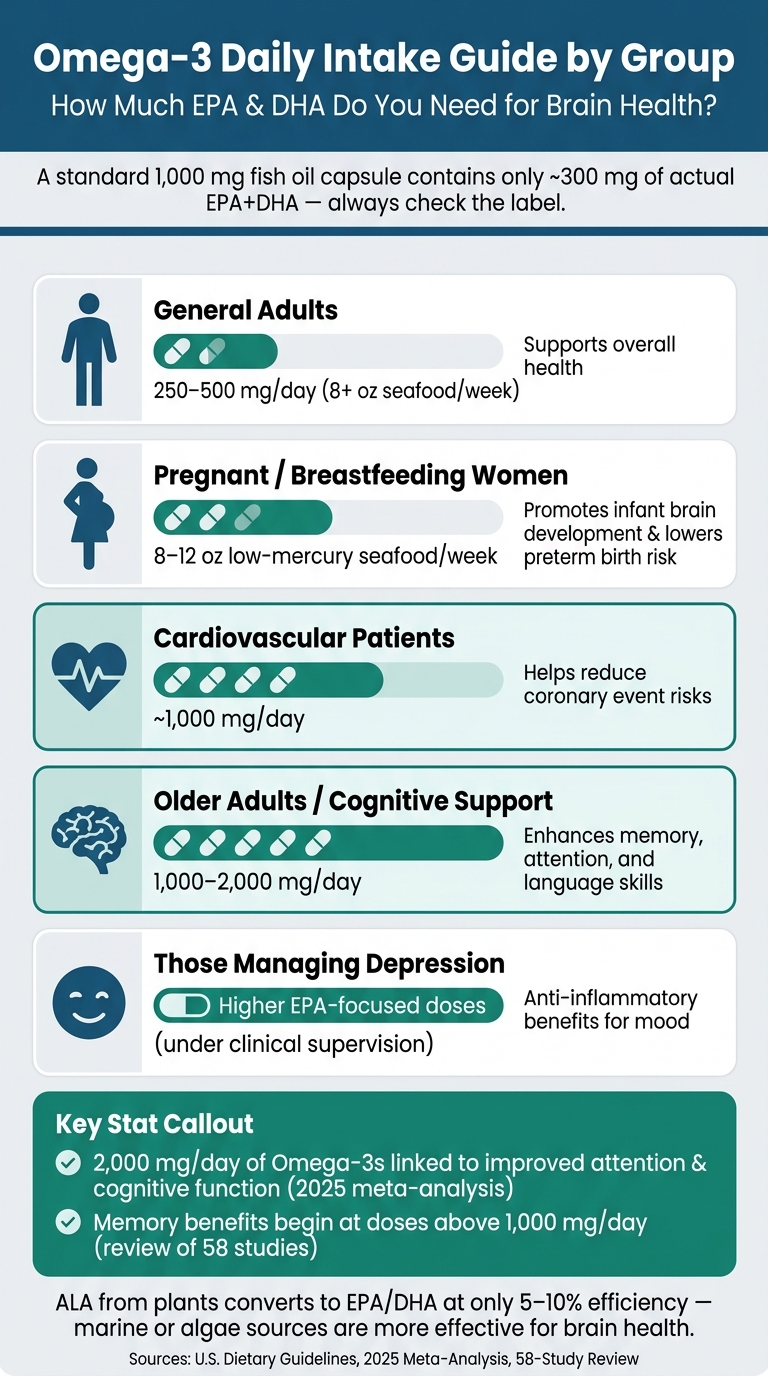
Omega-3 Daily Intake Guide by Group: How Much Do You Need?
Daily Intake Guidelines
For overall health, the U.S. recommends eating 8 or more ounces of seafood per week, which provides around 250–500 mg of EPA and DHA daily. However, if you’re aiming for specific health benefits, the numbers can be higher. For example, taking 2,000 mg of Omega-3s per day has been associated with better attention and cognitive function. It’s crucial to use higher doses only under medical supervision, as they can sometimes cause side effects like heartburn, nausea, or a fishy aftertaste.
Keep in mind, a standard 1,000 mg fish oil capsule often contains only about 300 mg of EPA and DHA combined. Always check the “Supplement Facts” label to see the exact breakdown of these key Omega-3s. This is also why relying solely on plant-based ALA (alpha-linolenic acid) isn’t enough for meeting your brain’s Omega-3 needs.
Why ALA from Plants Falls Short
Plant-based sources like flaxseeds, chia seeds, and walnuts are healthy, but they aren’t reliable for Omega-3 needs. This is because only 5–10% of ALA converts to EPA and DHA in the body. However, algal oil stands out as a good option for vegetarians and vegans. It’s a direct source of DHA (and sometimes EPA), making it an effective plant-based alternative.
Who May Need More Omega-3s?
Certain groups of people may require higher Omega-3 intake. Here’s a quick breakdown:
| Group | Recommended Intake | Primary Reason |
|---|---|---|
| General Adults | 8+ oz seafood/week (~250–500 mg/day) | Supports overall health |
| Pregnant/Breastfeeding Women | 8–12 oz low-mercury seafood/week | Promotes infant brain development and lowers preterm birth risk |
| Cardiovascular Patients | ~1,000 mg/day | Helps reduce coronary event risks |
| Older Adults / Cognitive Support | 1,000–2,000 mg/day | Enhances memory, attention, and language skills |
| Those Managing Depression | Higher EPA-focused doses (under clinical supervision) | Provides anti-inflammatory benefits for mood |
Older adults, in particular, benefit significantly from Omega-3s. A review of 58 studies found that taking 2,000 mg daily led to notable improvements in attention and overall cognitive function, with memory benefits becoming evident at doses above 1,000 mg/day. For people dealing with depression, supplements rich in EPA have shown promise when used alongside other treatments.
Understanding these recommendations can help you make informed dietary choices and prioritize the best sources of Omega-3s for your needs.
Best Food Sources of Omega-3s for Brain Health
When it comes to Omega-3s, not all sources are created equal. Some provide EPA and DHA directly, while others offer ALA, which the body converts less efficiently. Here’s a breakdown of the best options.
Marine Sources: Fatty Fish and Seafood
Fatty fish are a direct source of EPA and DHA, which are essential for brain health. A helpful way to remember the top choices is the acronym SMASH: Salmon, Mackerel, Anchovies, Sardines, and Herring. These fish not only rank high in Omega-3 content but also tend to have lower mercury levels compared to larger fish like tuna or swordfish.
Experts recommend eating at least two servings of fatty fish per week, with each serving being 3–4 oz cooked. Research even shows that adults over 60 who consume three servings weekly reduce their risk of Alzheimer’s dementia by 44% compared to those who rarely eat fish.
When preparing fish, methods like roasting, grilling, or poaching are best. As registered dietitian Talia Follador, RDN, LDN, explains:
“Fried fish or heavily processed seafood (like breaded fish or fish sticks) may be higher in sodium, saturated fat or added ingredients that take away from the brain-health benefits fish is known for.”
Be cautious of high-mercury fish such as swordfish, shark, king mackerel, and albacore tuna. This is especially important for pregnant women and children.
For those who avoid seafood, plant-based options can provide an alternative source of Omega-3s.
Plant-Based Sources: ALA-Rich Foods
Foods like flaxseeds, chia seeds, walnuts, soybeans, Brussels sprouts, and spinach are great plant-based sources of ALA, the plant form of Omega-3. However, the body converts ALA to EPA and DHA inefficiently, so supplementing with algae-based DHA might be a good idea.
To maximize the benefits, grind flaxseeds before eating to improve absorption, or try incorporating walnuts into salads and chia seeds into yogurt for easy, nutrient-packed meals.
For additional Omega-3 intake, fortified foods can help bridge the gap.
Fortified Foods for Omega-3 Intake
Fortified foods won’t replace the benefits of fatty fish but can be a convenient way to supplement your diet. Many U.S. grocery stores offer Omega-3-fortified options like eggs, milk, yogurt, orange juice, and soy beverages, most of which are enriched with DHA.
One simple way to include these in your diet is by swapping regular eggs or milk for fortified versions during breakfast. Just remember to check the nutrition labels, as Omega-3 content can vary between brands.
| Source Category | Top Foods | Omega-3 Type | Quick Tip |
|---|---|---|---|
| Marine (SMASH) | Salmon, Mackerel, Anchovies, Sardines, Herring | EPA & DHA | Grill or roast; aim for 2 servings (3–4 oz cooked) |
| Low-Mercury Seafood | Trout, Cod, Skipjack Tuna | EPA & DHA | Perfect for salads or light pasta dishes |
| Plant-Based | Flaxseeds, Chia seeds, Walnuts, Soybeans | ALA | Grind flaxseeds to boost nutrient absorption |
| Fortified Foods | Eggs, Milk, Yogurt, Soy milk, OJ | DHA (mostly) | Swap breakfast staples for fortified versions |
How to Build a Brain-Healthy Omega-3 Meal Plan
Check Your Current Omega-3 Intake
Take a moment to evaluate how much Omega-3 you’re currently getting. Most Americans don’t meet the recommended seafood intake of 8 ounces per week – only about 19% hit this target. To get a clearer picture, consider asking your doctor about an Omega-3 Index test. This blood test measures the percentage of Omega-3s in your red blood cell membranes. Ideally, your index should be above 8% for optimal brain health. If it’s below 4% – where many Americans fall – it indicates a deficiency. Once you know your starting point, you can use these meal suggestions to easily increase your Omega-3 levels.
Meal Ideas for More Omega-3s
Adding more Omega-3s to your diet doesn’t have to be complicated. Small, everyday swaps can make a big difference. For breakfast, try mixing ground flax or chia seeds into your oatmeal or smoothies. Snack on walnuts or edamame for an extra boost.
Lunch and dinner are perfect opportunities to step up your Omega-3 game. For example, a 3–4-ounce serving of canned sardines paired with rice or pasta is a great choice. Just one 3.5-ounce tin can provide 1,500–2,000 mg of EPA and DHA. Grilled or baked salmon, mackerel, and herring are also excellent options. If you prefer something lighter, toss some anchovies into your salad dressing for a savory, umami flavor.
“Fish, especially fatty fish like salmon, is rich in omega-3 fatty acids, which have been linked to improved learning, memory and overall cognitive function.” – Sarah Anzlovar, M.S., RDN, LDN
Tips for Different Diets and Budgets
Your dietary habits and budget play a big role in how you can incorporate Omega-3s into your meals. Here’s a quick guide to help you tailor your choices:
| Dietary Pattern | Best Omega-3 Sources | Easy Meal Idea |
|---|---|---|
| Pescatarian | Salmon, sardines, mackerel, herring | Grilled salmon with leafy greens; sardines on toast |
| Vegetarian | Omega-3-fortified eggs, walnuts, chia seeds, fortified dairy | Chia seed pudding; yogurt topped with walnuts and flaxseed |
| Vegan | Algae-based DHA/EPA supplements, flaxseed oil, edamame | Algae oil capsules; edamame snacks; chia in smoothies |
| Budget-Friendly | Canned sardines, canned light tuna, canola oil | Sardine and rice bowl; tuna salad on whole-grain bread |
For vegetarians and vegans, algae-based supplements are a reliable way to get DHA and EPA directly. If you’re on a budget, canned sardines and mackerel are affordable options that pack a similar Omega-3 punch as fresh fish. Canned skipjack tuna is another accessible, low-mercury alternative.
Keep in mind that boosting your Omega-3 intake takes time to show results. Studies suggest it may take 8–12 weeks of consistent consumption before you notice improvements in cognitive function.
When to Consider Omega-3 Supplements
If your diet still doesn’t provide enough Omega-3s, supplements can help fill the gap. This is especially important for people who rarely eat fatty fish, follow vegan or vegetarian diets, or have conditions that make it harder to absorb nutrients. When meal planning isn’t enough, supplements offer a targeted way to support brain health.
Omega-3 Supplements and Mental Health
Supplements can play a key role when food sources aren’t sufficient. Studies have shown that higher Omega-3 levels are linked to better mental health. For example, genetic markers tied to higher EPA levels are associated with a 0.92 odds ratio for a lower risk of Major Depressive Disorder. Clinical guidelines often recommend taking 1–2 grams daily, with a ratio of EPA to DHA of at least 2:1.
Additionally, taking 2,000 mg of Omega-3s daily has been shown to improve cognitive abilities, attention, and visuospatial skills. These findings highlight how supplements can effectively address dietary gaps in Omega-3 intake.
Types of Omega-3 Supplements
The source of your Omega-3 supplement matters. Marine-based options, like fish oil, are the most researched and widely used. For those who follow vegan or vegetarian diets, algae-based supplements are a great alternative. They provide EPA and DHA directly, bypassing the need for plant-based conversion.
Safety and When to Consult a Clinician
While Omega-3 supplements are generally safe, their quality can vary. Some products may oxidize over time, reducing their effectiveness and potentially causing harm. Factors like the EPA:DHA ratio, dosage, and how long you take them are crucial for getting the best results. This makes personalized advice invaluable.
Root-Cause Psychiatry: Clinical Nutrition Therapy at Modyfi Health
At Modyfi Health, clinical nutritionists and board-certified psychiatrists collaborate closely to address mental health conditions like depression, anxiety, and ADHD by looking through a root-cause lens.
Instead of one-size-fits-all supplementation, Modyfi Health utilizes advanced functional diagnostic tools—such as comprehensive nutrient panels, Omega-3 Index testing, and inflammation markers—to assess your biological baseline. Their expert care team blends conventional psychiatric diagnostics and medications with a lifestyle approach, creating data-driven nutrition strategies tailored to your body mass index (BMI), current medications, and mental health goals.
👉 Schedule a comprehensive evaluation with Modyfi Health today to find your exact nutritional gaps and build an integrated plan for lasting mental wellness.
Conclusion: Start Supporting Your Brain Through Diet
The structural and functional integrity of your brain is built directly from the dietary fats you consume. Making thoughtful adjustments to your daily routine is one of the most powerful steps you can take for your mental and cognitive health.
To give your brain’s neuronal membranes time to adapt and remodel, focus on these consistent changes over the next 8 to 12 weeks:
- Prioritize Marine Sources: Aim to eat high-quality fatty fish (like the SMASH options) at least twice a week to hit the recommended cognitive dosage.
- Reduce Pro-Inflammatory Fats: Cut back on heavily processed foods that are high in Omega-6, which often crowd out your Omega-3 intake.
- Respect Your Bio-Individuality: Factors like your baseline Omega-3 Index, BMI, and current mental health status all play a role in how your body responds.
By focusing on these brain-nourishing foods and tracking your personal levels, you can maximize your long-term cognitive function and emotional resilience.
FAQs
How can I tell if I’m actually low in omega-3s?
There isn’t a single definitive symptom to pinpoint low omega-3 levels, but certain signs can give you clues. Issues like dry or sensitive skin, frequent acne breakouts, or struggles with focus and memory could suggest a deficiency. If you want a clear and precise picture, blood tests like the Omega-3 Index are available to measure the exact percentage of EPA and DHA in your red blood cells.
What’s the best omega-3 option if I don’t eat fish?
If fish isn’t part of your diet, algae oil is the absolute best alternative. It is entirely plant-based, packed with DHA and EPA, and provides the exact same brain-health benefits as fish oil without the need for seafood, making it highly effective and eco-friendly.
Can omega-3 supplements interact with medications or health conditions?
Yes. Omega-3 supplements have the potential to interact with certain medications and underlying health conditions. This is particularly important for individuals dealing with heart disease, elevated triglycerides, or blood-clotting/inflammatory disorders. To avoid complications, it is essential to take higher doses of omega-3 supplements under the guidance of a healthcare professional.