
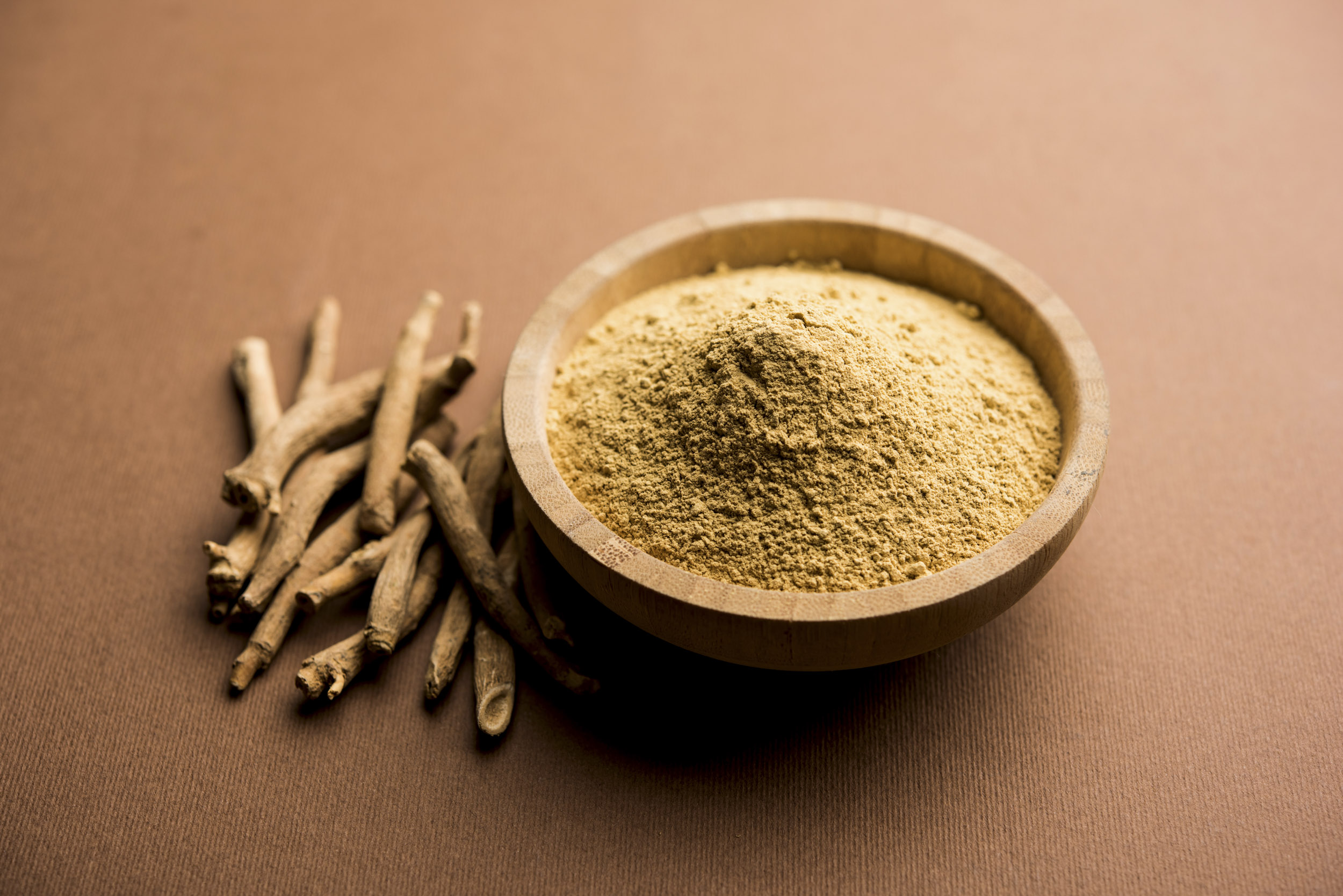

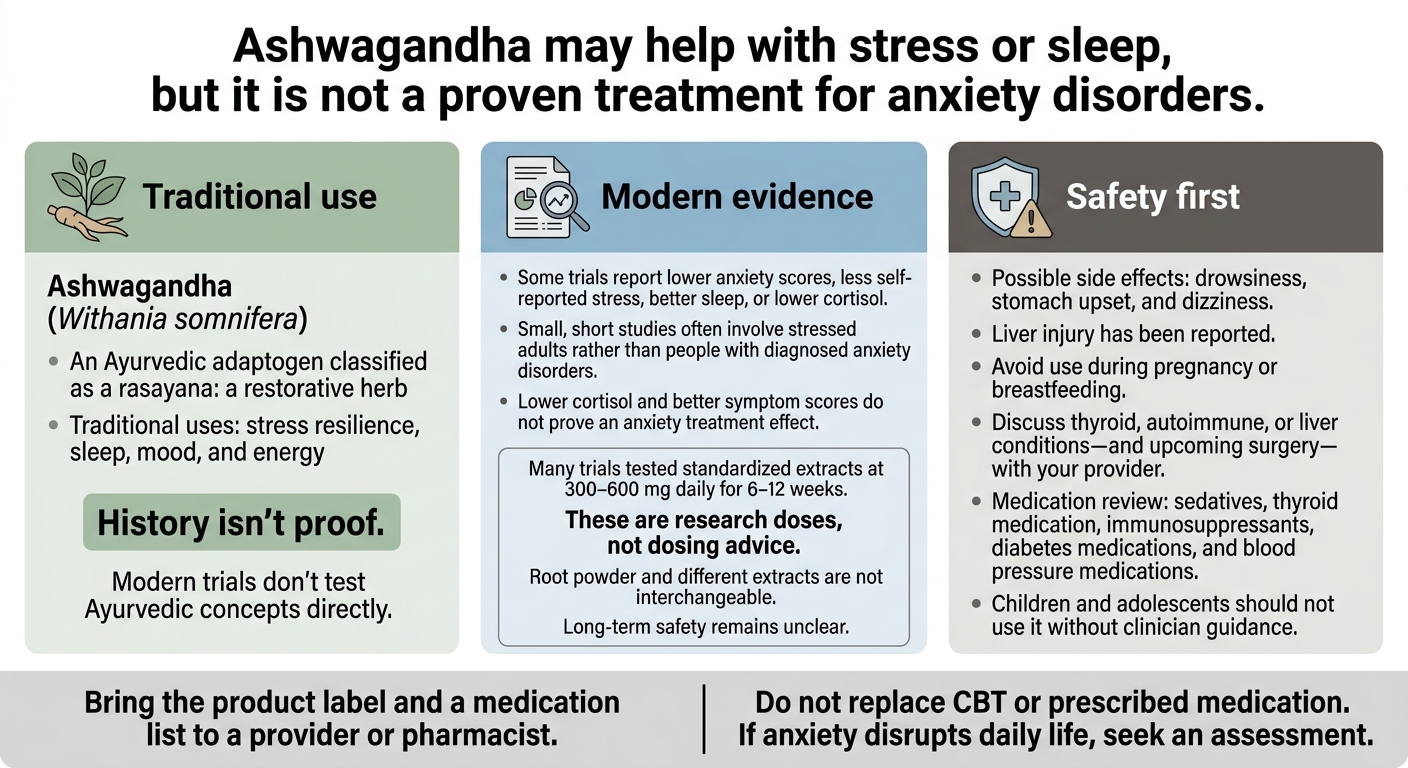
Ashwagandha for anxiety shows promise for stress and sleep, but it isn’t a proven treatment for anxiety disorders. Small trials suggest modest benefits. However, the NIH notes that the evidence on anxiety itself remains unclear. Talk with your healthcare provider before trying it. Don’t stop or replace CBT or a prescribed medication on your own.
Four points help weigh its Ayurvedic use against the research:
- History isn’t proof. Ayurvedic use offers context; clinical trials test symptoms, not Ayurvedic concepts of balance.
- The product matters. Many trials tested standardized extracts at 300–600 mg daily for 6–12 weeks. These are research doses, not dosing advice. Root powder and different extracts are not interchangeable.
- The research has limits. Small, short studies often involve stressed adults rather than people with diagnosed anxiety disorders. Long-term safety remains unclear.
- Safety comes first. Drowsiness, stomach upset, medication interactions, and reported liver injury warrant caution. Avoid use during pregnancy or breastfeeding, and discuss thyroid, autoimmune, or liver conditions with your provider.
Before you start, bring the product label and a medication list to a provider or pharmacist. If anxiety disrupts your daily life, seek an assessment rather than waiting to see whether a supplement helps.
What Research Shows About Ashwagandha for Anxiety
In the following video, physician Dr. Christy Risinger reviews the research on ashwagandha for stress and anxiety.
sbb-itb-23f89d4
Ayurvedic Uses vs. Research Findings
Ayurveda classifies ashwagandha (Withania somnifera) as a rasayana, a restorative herb. Practitioners have used it for thousands of years to support stress resilience, sleep, mood, and energy.
Modern trials don’t test Ayurvedic concepts directly. They measure symptoms, sleep, and stress markers.
Historical Claims vs. Studied Outcomes
Ayurvedic uses include stress, fatigue, disrupted sleep, and what Ayurveda describes as nervous-system imbalance. In contrast, clinical trials focus on narrower outcomes, using symptom questionnaires and biological measures. For example, a 2024 meta-analysis of 9 trials with 558 participants found lower stress and anxiety scores than placebo.
| Historical claim | Research measure | Observed finding | Evidence limitation |
|---|---|---|---|
| Relief from nervous-system imbalance | Validated anxiety scales | Lower anxiety scores in some trials | Better symptom scores do not prove treatment of diagnosed anxiety |
| Stress relief | Perceived Stress Scale (PSS) | Less self-reported stress in some studies | Small samples and short treatment periods |
| Sleep support | Insomnia and sleep-quality scales | Better sleep in some groups | Results vary widely across studies |
| Restored energy | Fatigue severity scores | Mixed findings; some reports of better energy or resilience | Studies often involve stressed volunteers rather than people with diagnosed anxiety disorders |
| A calmer stress response | Cortisol measurements | Lower cortisol in some trials | Hormone changes alone do not prove anxiety relief |
These differences in what studies measure make their results hard to compare.
Why the Research Is Still Limited
Most studies are small and short, and they enrolled adults, often stressed volunteers rather than people with diagnosed anxiety disorders. In one review, all seven trials took place in India. Both factors limit how well the findings apply to other groups, including children, adolescents, and older adults.
The preparations also differ, follow-up is limited, and meta-analyses show wide variation across trials. Those differences matter when comparing root powder, standardized extracts, and the doses used in research.
Ayurvedic Balance vs. Stress Measurements
Ayurvedic concepts and clinical measurements describe health in different ways. Proposed effects on the body’s stress response still need testing; they do not prove that researchers have measured Ayurvedic “balance”.
| Ayurvedic interpretation | Modern research interpretation |
|---|---|
| Rasayana: Restoring energy during stress | Measuring changes in stress scores and related fatigue or sleep problems |
| Resilience: Better ability to withstand stress | Testing perceived stress and possible changes in the hypothalamic-pituitary-adrenal (HPA) axis, which helps control the stress response |
| Nervous-system balance: Calming unsettled nervous energy | Studying cortisol changes and sleep outcomes alongside stress and anxiety symptoms |
Lower cortisol and better symptom scores do not prove an anxiety treatment effect. The specific preparations, doses, and treatment lengths also explain much of the difference between trials.
Preparations, Doses, and Durations Studied
Differences between studies go beyond dose. The product itself matters, too.
Root Powder vs. Standardized Extracts
Ayurvedic practice often uses whole-root powder. Clinical trials usually test standardized root or root-and-leaf extracts.
When comparing products with those studied, match the plant part, extraction method, withanolide content, and serving size.
Doses and Durations Used in Trials
Most anxiety and stress trials tested standardized extracts at about 300–600 mg per day for 6–12 weeks. Across studies, doses ranged more widely, from 240 to 1,250 mg a day. These are study doses, not dosing advice.
The table below shows the formats most often used in studies.
| Preparation | Studied dose range | Duration | Why it matters |
|---|---|---|---|
| Standardized root extract | 300–600 mg per day | 6–12 weeks | Most common in modern trials; findings apply only to the tested product |
| Root-and-leaf extract | Varied across trials | Varies | Used in some trials; not directly comparable to root-only extracts |
| Whole-root powder used in Ayurveda | Not standardized | Varies | Used in Ayurvedic practice; not standardized or directly comparable to extracts |
Bring the full product label to your healthcare provider. Third-party testing can help verify quality.
Dose alone doesn’t determine risk. Side effects and medication interactions also matter.
Possible Benefits vs. Safety Risks
Possible benefits don’t cancel out safety concerns, even at doses used in studies.
Ashwagandha may modestly ease stress or sleep symptoms, but results vary from person to person. According to the NIH, it appears well tolerated for up to about three months. However, its long-term safety isn’t known.
| Potential advantage | Uncertainty | Adverse effects | Interaction concerns | High-risk situations |
|---|---|---|---|---|
| Reduced stress symptoms | Results vary between people | Gastrointestinal discomfort, dizziness | Blood pressure and diabetes medications | Pregnancy, breastfeeding, children or adolescents |
| Improved sleep | Long-term safety is unclear | Drowsiness | Sedatives | Upcoming surgery |
| Possible mood support | Anxiety findings are mixed | Rare reports of liver injury | Thyroid medication, immunosuppressants | Thyroid, autoimmune, or liver disease; hormone-sensitive prostate cancer |
Side Effects and When to Seek Help
Ashwagandha can cause drowsiness, stomach upset, loose stools, and nausea. These effects are usually mild. Stop taking it and seek medical evaluation if you notice any of these signs:
- Yellow skin or eyes (jaundice), dark urine, or severe abdominal pain
- Severe vomiting or drowsiness
- An allergic reaction
- Worsening anxiety, depression, or agitation
- A racing heart, tremor, or heat intolerance, which can signal thyroid problems
Rare cases of liver injury have appeared in medical reports, often within weeks to months of starting. Most people improved after they stopped taking it.
Call 911 for breathing difficulties or a severe allergic reaction. Don’t wait for a routine appointment.
Health Conditions and Medication Interactions
Avoid ashwagandha during pregnancy and breastfeeding. Children and adolescents should not use it without clinician guidance. Talk with your provider first if you have thyroid disease, an autoimmune condition, liver disease, or hormone-sensitive prostate cancer. The same applies if you have surgery coming up.
Some countries have restricted its use. Denmark banned ashwagandha supplements in 2023 over concerns about pregnancy, thyroid, and hormone effects. In 2024, France’s food safety agency advised pregnant and breastfeeding women and people with hormone disorders to avoid it.
Before starting ashwagandha, ask your provider or pharmacist to review all your medications. It may increase sedation and interact with sedatives, thyroid medication, immunosuppressants, diabetes medications, and blood pressure medications.
Conclusion: Should You Discuss Ashwagandha With a Provider?
Talk with a provider before trying ashwagandha. Research is limited, and safety varies. Its use in Ayurveda offers context, not proof that it works. Use it only as an add-on to established anxiety care – not as a replacement for CBT or prescribed medication.
When Anxiety Needs Professional Assessment
Occasional stress differs from persistent worry, panic attacks, or anxiety that interferes with daily life. Don’t put off care to try supplements.
For suicidal thoughts, call or text 988. For immediate danger, call 911.
What to Bring to Your Provider Visit
Bring the product label, dose, how often you take it, a list of medications and supplements, relevant health history, and pregnancy status. The exact product matters: trial results depend on the preparation used. Work with your provider to set treatment goals and plan how to track benefits, side effects, and follow-up.
Ready to Turn This Research Into a Real Plan?
Ashwagandha questions often point to a bigger one: what’s driving the stress or anxiety in the first place? Modyfi’s network of providers looks at the whole person, drawing on mind-body, functional, and integrative medicine. Your provider can review your supplements and medications together and order relevant lab work when needed. Then you build a plan around your goals.
👉 Explore Providers to Book an Appointment and Start Your Care Plan
(Note: Modyfi proudly accepts most major commercial insurance plans.)
FAQs
How can I tell if ashwagandha is helping?
Keep track of your symptoms, daily functioning, sleep, and side effects. A simple weekly rating of stress and sleep, from 0 to 10, can make changes easier to see. Look for steady improvement over weeks, not days. Results depend on the person, dose, and supplement quality. A placebo effect is also possible.
If you don’t notice any improvement or have side effects, the supplement may not be right for you. Talk with a qualified provider before continuing or combining it with other treatments.
What does third-party supplement testing verify?
Third-party testing checks whether a supplement contains the ingredients and amounts listed on its label. It also screens for contaminants, including heavy metals. Independent organizations such as USP or NSF assess quality, purity, and consistency.
This matters because the FDA doesn’t review dietary supplements for safety or effectiveness before companies sell them. However, a quality seal doesn’t prove that a product works for anxiety. It only confirms what’s in the bottle.
When should I stop if I see no benefit?
Most trials lasted 6 to 8 weeks. If you’ve taken ashwagandha consistently for that long without meaningful improvement, it’s reasonable to stop. The same applies if side effects outweigh any possible benefit.
Stop sooner if your symptoms get worse or side effects appear. Also talk with your provider if a new health condition or medication raises the risk of interactions.
Can I take ashwagandha with antidepressants like SSRIs?
Research on combining ashwagandha with SSRIs or other antidepressants remains limited. Few studies have tested the combination for safety.
Ashwagandha can cause drowsiness, so it may add to the sedating effects of some psychiatric medications. It may also interact with sedatives and thyroid medication.
Ask your prescriber or pharmacist before combining them. Don’t stop or reduce an antidepressant to try a supplement instead.
Does ashwagandha affect your thyroid?
It can. In a small trial of 50 adults with mildly low thyroid function, ashwagandha raised thyroid hormone levels over 8 weeks.
A few case reports describe an overactive thyroid in people taking it. Symptoms improved after they stopped. Warning signs include a racing heart, tremor, weight loss, or heat intolerance.
If you take thyroid medication or have thyroid disease, talk with your provider first. Your provider may want to check your thyroid levels.
Can ashwagandha help with sleep?
It may help a little. A 2021 meta-analysis of five studies with 372 adults found a small but significant benefit for sleep compared with placebo.
Effects looked stronger in people with insomnia and in studies lasting 8 weeks or longer. Most trials were small, so the findings remain preliminary.
Sleep problems often have treatable causes, such as stress, mood changes, or sleep habits. Cognitive behavioral therapy for insomnia (CBT-I) can address many of them without medication.