


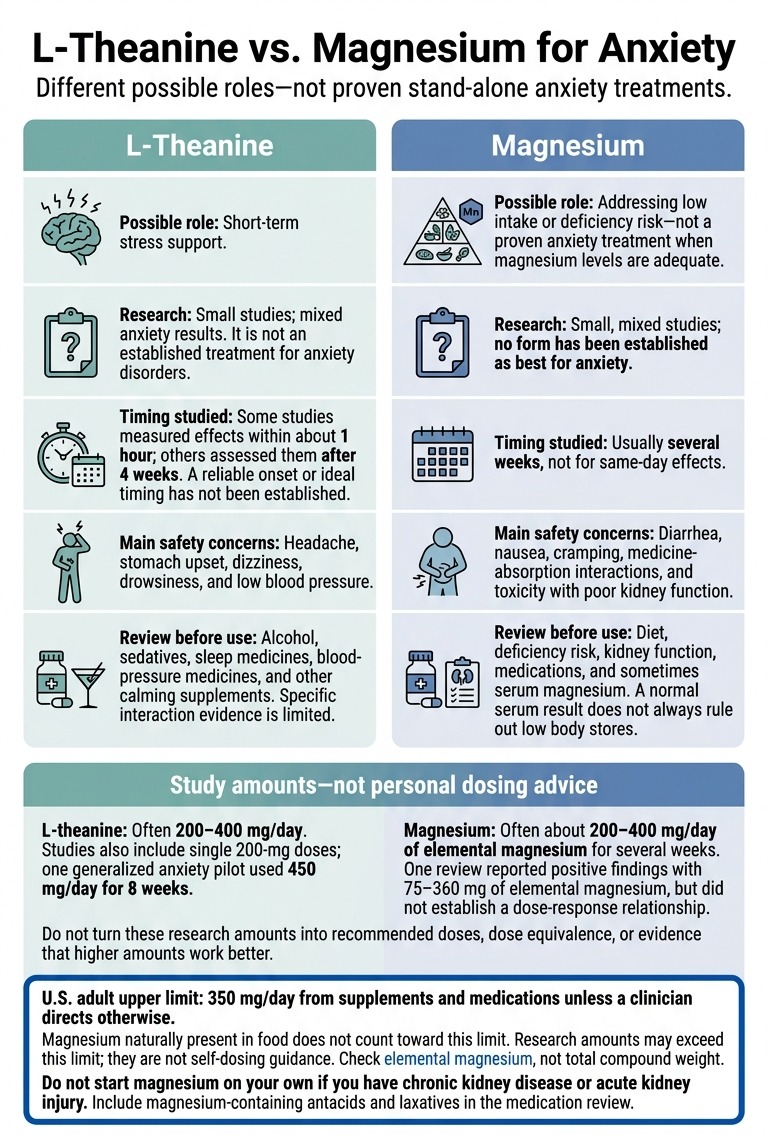
When comparing L-theanine vs. magnesium for anxiety, L-theanine may suit brief, situational stress. Magnesium may make more sense if your intake is low or deficiency is a concern. Neither is a proven stand-alone treatment for an anxiety disorder. Before choosing, review your symptoms, diet, medications, and kidney health with a clinician. Don’t stop or replace a prescribed medication on your own.
For magnesium, the U.S. adult upper limit is 350 mg a day from supplements and medications, unless a clinician directs otherwise. Magnesium in food doesn’t count toward that limit.
More isn’t automatically better. No head-to-head trial establishes a winner. No study shows added benefit from combining them, either. If your clinician supports a trial, start with one product and track symptoms and side effects.
Persistent or disruptive anxiety needs a professional evaluation. Therapy and prescribed medication, when appropriate, remain part of established anxiety care.
L-Theanine for Stress: What Research Shows
L-theanine is an amino acid found in green and black tea. It may ease short-term stress and usually doesn’t cause sedation. However, it isn’t an established treatment for anxiety disorders.
Occasional Stress vs. Anxiety Disorders
A 2026 meta-analysis of 31 randomized trials found only a modest effect on acute stress. Results for anxiety varied and didn’t reach statistical significance overall. In one trial of adults with generalized anxiety disorder, adding L-theanine to an antidepressant didn’t reduce anxiety more than placebo.
Persistent worry, panic attacks, avoidance, disrupted sleep, or trouble with daily activities call for a professional evaluation rather than self-treatment.
Studied Doses and Possible Effects
Studies have used 200–400 mg a day. One anxiety trial used 450 mg a day, increasing to 900 mg for some participants. These amounts reflect study protocols, not personal dosing advice.
Some studies measured effects within about 1 hour, while others assessed them after 4 weeks. Researchers haven’t established a reliable onset or ideal timing. When effects occur, they’re usually subtle. L-theanine may ease tension during a stressful event rather than stop worry or panic.
Side Effects and Medication Interactions
Possible side effects include headache, stomach upset, dizziness, drowsiness, and low blood pressure. Alcohol, sedatives, sleep medicines, blood-pressure medicines, and other calming supplements may increase drowsiness or lightheadedness. Evidence on specific interactions is limited, so ask a pharmacist or clinician to review the combination before use. Stop taking L-theanine and seek medical advice if you develop severe dizziness, fainting, allergic symptoms, or marked changes in alertness.
Discuss use with a clinician during pregnancy or breastfeeding, for children, or if you have low blood pressure or a major liver, kidney, neurologic, or psychiatric condition. Also check before use if you take stimulants, antidepressants, or multiple supplements. Product doses and purity vary, so choose independently tested products.
Magnesium differs: Its role depends more on intake, deficiency, and kidney safety than on short-term calming effects.
sbb-itb-23f89d4
Magnesium for Anxiety: Intake, Forms, and Safety
Unlike L-theanine, magnesium matters most when intake is low or there’s a risk of deficiency. It supports nerve signaling, muscle function, heart rhythm, and energy production. However, extra magnesium is not a proven anxiety treatment when magnesium levels are adequate. A systematic review of 18 studies found suggestive but low-quality evidence in people prone to anxiety. Before taking it, check your intake and kidney function.
When Low Magnesium May Matter
Deficiency risk can increase with:
- Low intake
- Prolonged diarrhea or vomiting
- Heavy alcohol use
- Poorly controlled diabetes
- Certain diuretics or long-term proton-pump inhibitor use
- Older age, or GI disease or surgery that limits absorption
Review these factors with a clinician. A diet review, kidney function check, and blood testing when appropriate can help assess your status. A normal serum magnesium result doesn’t always rule out low body stores. Also, cramps, constipation, or anxiety alone don’t prove deficiency. Food sources include pumpkin seeds, beans, nuts, whole grains, and leafy greens.
Magnesium Forms and Studied Amounts
No form has been established as best for anxiety. Check the Supplement Facts panel for elemental magnesium, not the total weight of the magnesium compound.
Trials that reported benefits used about 75 to 360 mg of magnesium a day, sometimes with vitamin B6. The review found no clear link between higher amounts and better results. These are research amounts, not an established anxiety dose.
The table below compares common forms. Small studies suggest citrate, lactate, and chloride absorb better than oxide.
| Form | Absorption and digestive considerations |
|---|---|
| Citrate | Relatively well absorbed; may loosen stools. |
| Glycinate | Marketed as gentler on digestion; not proven better for anxiety. |
| Chloride | Generally absorbable; may cause diarrhea. |
| Lactate | Generally absorbable and used in some research; not established as better for anxiety. |
| Oxide | Has a higher percentage of elemental magnesium by weight, but is less well absorbed; often has a greater laxative effect. |
The form can affect digestive tolerance. Kidney function helps determine whether you should take magnesium at all.
Kidney Risks, Side Effects, and Drug Interactions
Do not start magnesium on your own if you have chronic kidney disease or acute kidney injury. Kidney disease affects whether magnesium is appropriate at all, beyond how much to take. When the kidneys can’t clear magnesium well, it can build up and cause toxicity. Include magnesium-containing antacids and laxatives when reviewing products with your clinician.
Common side effects include diarrhea, nausea, and cramping. Persistent diarrhea can worsen dehydration. Stop use and seek urgent medical care for severe weakness, confusion, trouble breathing, or an irregular heartbeat.
Magnesium can reduce absorption of certain antibiotics, levothyroxine, and oral bisphosphonates such as alendronate. NIH guidance generally advises taking tetracycline or quinolone antibiotics at least 2 hours before or 4–6 hours after magnesium. Separate oral bisphosphonates from magnesium by at least 2 hours. Ask a pharmacist to confirm timing for your specific medicines, especially levothyroxine.
L-Theanine vs. Magnesium: Side-by-Side Comparison
These supplements have different roles. L-theanine may offer short-term support during stress, while magnesium may address low intake or a deficiency. Neither has enough strong evidence to serve as a stand-alone treatment for an anxiety disorder.
| Comparison point | L-theanine | Magnesium |
|---|---|---|
| Rationale and fit | May suit brief, situational stress | May suit low intake or deficiency risk |
| Anxiety evidence | Small stress studies; anxiety results remain inconsistent | Small, mixed studies; no best form established |
| Research amounts – not dosing advice | Studies have used single 200-mg doses and 200–400 mg/day; one anxiety trial used 450–900 mg/day for 8 weeks. | Trials reporting benefits used 75–360 mg of elemental magnesium; the review found no dose-response relationship. |
| Timing | Some studies examine acute stress responses, so any benefit may appear the same day. | Usually studied over weeks, not for same-day effects. |
| Side effects | Generally well tolerated in short studies; possible headache, dizziness, stomach symptoms, or excessive relaxation. | Mainly diarrhea, cramping, or nausea; kidney disease increases the risk of toxicity. |
| Interactions and precautions | Review sedatives, sleep medicines, alcohol, and blood-pressure drugs with a clinician or pharmacist. Additive effects are possible, but interaction data are limited. | Review medicine-absorption interactions and kidney health before use. |
| Testing | No routine blood test predicts whether it will help. | Medical history, diet, kidney function, and sometimes serum magnesium help guide the decision. Testing guides safety, not benefit. |
| Best role | Situational stress | Low intake or deficiency risk |
Feeling better matters more than a change in a lab result or brain-wave activity.
A stress-marker change does not equal symptom relief.
No head-to-head trial shows that one works better, and no trial shows added benefit from combining them. If a clinician agrees to a trial, start only one supplement at a time and track benefits and side effects. Pregnancy, breastfeeding, and taking multiple medications call for advice tailored to your situation.
L-Theanine vs. Magnesium: Choose With a Provider
Choose based on your symptoms, your risk of low magnesium, and safety. A supplement’s general “calming” appeal isn’t enough. In the L-theanine vs. magnesium choice, L-theanine may fit short-term stress support. Magnesium may fit low intake or suspected deficiency. Neither replaces anxiety care, and neither may be right for your situation.
Review Your Health History Before Choosing
Bring your clinician a list of symptoms, triggers, sleep patterns, diet, substance use, and all medications and supplements.
Check with a clinician before starting if you:
- Are pregnant or breastfeeding
- Are under 18
- Are older and take multiple medications
- Have kidney, heart, blood-pressure, gastrointestinal, or neurologic conditions
Ask a clinician or pharmacist to check for interactions, too.
If you try a supplement, agree on the product, dose, duration, goals, tracking method, and when to stop.
When Neither Supplement Is Appropriate
Symptoms that are persistent, severe, worsening, or interfering with daily life need a professional evaluation. A supplement decision alone isn’t enough. Mania or psychosis needs prompt assessment. Anxiety care should focus on psychotherapy, medication when appropriate, and checking for medical or substance-related causes.
For thoughts of self-harm, call or text 988. For immediate danger, severe confusion, or a suspected medical emergency, call 911 or seek emergency care.
Ready to Turn This Research Into a Real Plan?
Choosing between supplements is easier with someone who sees the full picture. Modyfi’s network of providers looks at the whole person, drawing on mind-body, functional, and integrative medicine. Your provider can review your diet, medications, and lab work, including kidney function and magnesium status when needed. Together, you can decide whether a supplement fits your anxiety care plan.
👉 Explore Providers to Book an Appointment and Start Your Care Plan
(Note: Modyfi proudly accepts most major commercial insurance plans. We do not accept Medicare or Medicaid.)
FAQs
How can I tell if either supplement is helping?
Track your stress levels, sleep quality, and mood each day for several weeks. A simple 0 to 10 rating makes changes easier to see. Then review the results with your provider.
Start only one supplement at a time, so you can tell which one makes a difference. Also note side effects, such as drowsiness with L-theanine or loose stools with magnesium.
If anxiety feels overwhelming or keeps interfering with daily life, contact your provider. Don’t wait for a supplement trial to end.
How long should I try a supplement before reassessing?
It depends on the supplement. L-theanine studies have measured effects from about 1 hour after a dose up to 8 weeks. Magnesium studies usually lasted several weeks.
Agree on a review date with your provider before you start. If you see no clear improvement by then, or side effects appear, the supplement may not be right for you.
Can I get enough magnesium through diet alone?
For many people, yes. Pumpkin seeds, chia seeds, almonds, spinach, black beans, and whole grains are good sources. One ounce of pumpkin seeds provides about 156 mg.
However, some groups are more likely to fall short. These include older adults and people with GI disease, type 2 diabetes, or heavy alcohol use. Long-term use of proton-pump inhibitors can also lower magnesium levels.
A diet review with a clinician or dietitian is a practical first step. Blood tests can help, but a normal serum level doesn’t always reflect total body stores.
Can I take L-theanine and magnesium together?
Some people do, but no study shows added benefit from combining them. Taking both at once also makes it harder to tell which one helps or causes side effects.
If your clinician agrees to a trial, start with one supplement first. Add the second only after reviewing how the first one worked.
Both can interact with other products. L-theanine may add to the effects of sedatives or blood pressure medicines. Magnesium can reduce absorption of some antibiotics and other drugs.
Which form of magnesium is best for anxiety?
No form has proven best for anxiety. Magnesium glycinate is popular and often marketed as gentle on digestion, but studies haven’t shown it works better for anxiety.
Small studies suggest citrate, lactate, and chloride absorb better than oxide. Oxide also tends to have a stronger laxative effect.
Whatever the form, check the label for elemental magnesium. Keep supplements and medications under 350 mg a day unless a clinician directs otherwise.
Is it safe to take L-theanine with antidepressants?
Interaction data remain limited. In one trial, adults taking antidepressants added L-theanine for 8 weeks under close study supervision. That trial didn’t show a benefit for anxiety.
L-theanine may add to drowsiness or lower blood pressure. These effects can matter if you also take sedating medications, sleep aids, or blood pressure drugs.
Ask your prescriber or pharmacist before combining them. Don’t stop or reduce an antidepressant to try a supplement instead.